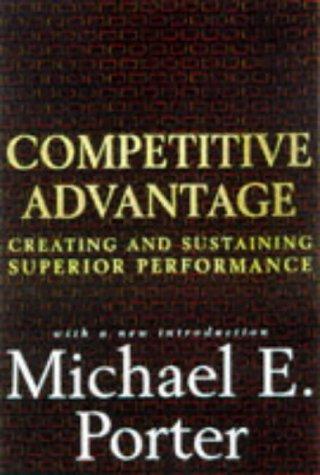
Competitive Advantage
by Michael Porter · 1985
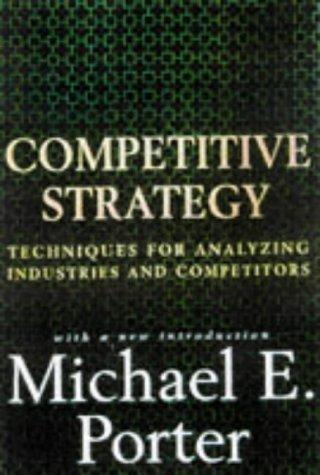
Porter's follow-up to Competitive Strategy, same rigor, shifted focus from analyzing an industry to explaining why one firm inside it wins and another doesn't.
Worth reading? Where Competitive Strategy explains why some industries are structurally more profitable than others, Competitive Advantage explains why one company inside that same industry consistently outperforms its direct competitors. The value chain framework, breaking a company's operations into discrete activities to find where real advantage is created, is the book's lasting contribution -- still standard vocabulary in strategy consulting forty years later. Read Competitive Strategy first; this is the natural second half.
| Full Title | Competitive Advantage: Creating and Sustaining Superior Performance |
|---|---|
| Author | Michael Porter |
| Published | 1985 |
| Category | Business & Money |
| Favorite quote | “Competitive advantage grows fundamentally out of value a firm is able to create for its buyers.” |
The Verdict
The value chain is the concept that’s outlasted the rest of the book in daily business vocabulary – “where in the value chain do we actually create advantage” is a question strategy teams still ask verbatim, whether or not they know it traces back to Porter. Dense reading, but it rewards the effort more than most strategy books from the same era.
you've read Competitive Strategy and want the firm-level companion: how a specific company builds an edge within a given industry structure
you haven't read Competitive Strategy yet, this book assumes that industry-analysis foundation and builds directly on top of it
Book Summary
Competitive advantage, per Porter, comes down to two fundamental sources: lower cost than competitors, or meaningful differentiation that lets you command a premium -- and sustained advantage requires that the advantage be difficult for competitors to replicate, not just present at a single point in time. Generic strategy alone (from Competitive Strategy) explains the choice; this book explains the execution.
The value chain is Porter's tool for finding where advantage is actually created: breaking a company into discrete primary activities (inbound logistics, operations, outbound logistics, marketing and sales, service) and support activities (procurement, technology, human resources, infrastructure), then analyzing which specific activities create disproportionate cost savings or differentiation value relative to competitors, rather than treating the company as one undifferentiated blob.
Top 7 Lessons from Competitive Advantage
- Competitive advantage comes from either lower cost or meaningful differentiation, sustained over time against replication.
- Use the value chain to break your company into discrete activities and find where real advantage is actually created.
- An advantage that competitors can easily copy isn't sustainable, however real it is in the moment.
- Cost advantage and differentiation advantage usually require different, sometimes conflicting, organizational choices.
- Support activities (technology, procurement, HR) can be as decisive to advantage as primary customer-facing activities.
- Linkages between activities in the value chain -- not just individual activities alone -- are often where advantage hides.
- Reassess your value chain as the industry and competitors evolve; advantage erodes if left unexamined.
Top 4 Quotes from Competitive Advantage
"Competitive advantage grows fundamentally out of value a firm is able to create for its buyers."
Michael Porter, Competitive Advantage
"A strategy is an internally consistent configuration of activities that distinguishes a firm from its rivals."
Michael Porter, Competitive Advantage
"Fit is important because discrete activities often affect one another. A sophisticated sales force, for example, confers a greater advantage when the company's product embodies premium technology and its marketing approach emphasizes customer assistance and support."
Michael Porter, Competitive Advantage
"Sustainable competitive advantage: a firm must deliver equal value at lower cost, or offer unique benefits that more than offset a higher price."
Michael Porter, Competitive Advantage
Frequently Asked Questions
Is Competitive Advantage worth reading?
Yes, especially as a follow-up to Competitive Strategy. The value chain framework for locating where a company actually creates advantage is still standard analytical vocabulary in strategy consulting.
What is the value chain in Competitive Advantage?
A framework breaking a company into primary activities (like operations, marketing, and service) and support activities (like technology and HR), used to identify which specific activities create disproportionate cost or differentiation advantage.
What are the two sources of competitive advantage according to Porter?
Lower cost than competitors, or meaningful differentiation that commands a premium price. Sustained advantage requires the source be difficult for competitors to replicate, not just present momentarily.
Do I need to read Competitive Strategy before Competitive Advantage?
It's strongly recommended. Competitive Strategy establishes the industry-analysis foundation (the Five Forces) that Competitive Advantage builds on when explaining firm-level performance within that industry.
Ready to read it?
Get Competitive Advantage on Amazon