Competitive Strategy
by Michael Porter · 1980
The book that gave the business world the Five Forces framework, and turned Porter into the most cited strategy academic alive.
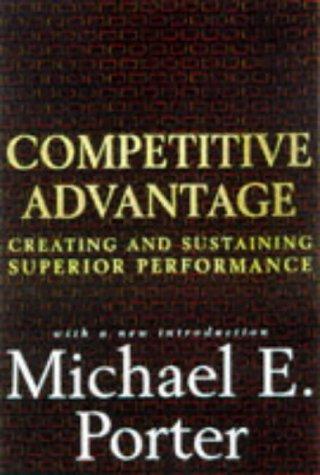
Worth reading? Competitive Strategy is dense and unglamorous, and it's also one of the few business books whose central framework -- the Five Forces (competitive rivalry, supplier power, buyer power, threat of substitution, threat of new entry) -- is still taught essentially unchanged in every MBA program forty-five years later. Pair it with Competitive Advantage, Porter's 1985 follow-up, which shifts from analyzing industry structure to analyzing what makes a specific firm within that industry actually outperform.
| Full Title | Competitive Strategy: Techniques for Analyzing Industries and Competitors |
|---|---|
| Author | Michael Porter |
| Published | 1980 |
| Category | Business & Money |
| Favorite quote | “The essence of strategy is choosing what not to do.” |
The Verdict
Porter writes as an economist and academic, and the book reads that way – dense, systematic, built on frameworks rather than anecdotes. It’s not an easy read, but the Five Forces model has survived forty-five years of business fads essentially intact, which very few management frameworks can claim.
you want the rigorous, foundational framework for analyzing an industry's structure and profitability before you build a strategy on top of it
you want a fast, story-driven read, this is dense, analytical, and academic in tone, closer to a textbook than a business parable
Book Summary
Industry profitability, per Porter, is shaped by five structural forces, not just how good any individual company's execution is: the intensity of competitive rivalry, the bargaining power of suppliers, the bargaining power of buyers, the threat of substitute products, and the threat of new entrants. Understanding these forces explains why some industries are structurally more profitable than others regardless of how well any single company in them is run.
Porter also lays out three generic strategies for competing within a given industry structure: cost leadership (winning on being the lowest-cost producer), differentiation (winning by being meaningfully distinct), and focus (winning by dominating a narrow segment). His central warning is that companies stuck "in the middle" -- pursuing none of the three with real commitment -- tend to underperform companies that pick one and commit.
Top 7 Lessons from Competitive Strategy
- Analyze industry structure using the Five Forces before assuming a strategy will work based on execution alone.
- Supplier and buyer bargaining power shape your margins independent of how well you run your business.
- The threat of substitutes can undercut an entire industry even without direct new competitors entering.
- Choose one generic strategy -- cost leadership, differentiation, or focus -- and commit, rather than splitting the difference.
- Companies 'stuck in the middle' between generic strategies tend to underperform committed competitors on either end.
- Barriers to entry (capital requirements, economies of scale, brand loyalty) protect industry profitability over time.
- Industry structure changes over time -- reassess the Five Forces periodically, not just once at entry.
Top 4 Quotes from Competitive Strategy
"The essence of strategy is choosing what not to do."
Michael Porter, Competitive Strategy
"Approaches to differentiating can take many forms: design or brand image, technology, features, customer service, dealer network, or other dimensions."
Michael Porter, Competitive Strategy
"If a firm can spot an industry in which the fragmented structure does not reflect the underlying economics of competition, this can provide a most significant strategic opportunity."
Michael Porter, Competitive Strategy
"Competitive strategy is about being different. It means deliberately choosing a different set of activities to deliver a unique mix of value."
Michael Porter, Competitive Strategy
Frequently Asked Questions
Is Competitive Strategy worth reading?
Yes, especially if you want the rigorous academic foundation behind modern strategic thinking. It's dense and textbook-like, but the Five Forces framework is still standard, unchanged, in business education decades later.
What is the Five Forces framework?
A model from Competitive Strategy for analyzing industry profitability based on five factors: competitive rivalry, supplier power, buyer power, threat of substitution, and threat of new entrants.
What are Porter's three generic strategies?
Cost leadership, differentiation, and focus. Porter argues companies that commit fully to one of the three outperform those 'stuck in the middle' trying to pursue all three at once.
Should I read Competitive Strategy or Competitive Advantage first?
Competitive Strategy (1980) first -- it establishes the Five Forces industry-analysis framework. Competitive Advantage (1985) builds on it, shifting focus to what makes a specific firm outperform within its industry.
Ready to read it?
Get Competitive Strategy on Amazon