The best business strategy book, if you want the rigorous foundation, is Competitive Strategy. Porter’s Five Forces (competitive rivalry, supplier power, buyer power, threat of substitution, threat of new entry) is still taught essentially unchanged in every MBA program, and it’s the industry-analysis lens every other book on this list either builds on or explicitly reacts against.
Blue Ocean Strategy is that reaction, and it’s the faster, more contrarian read if you’d rather start there: stop competing in bloody, contested markets and create uncontested ones instead. Read it after Porter for the full picture, first how to analyze a market’s structure, then how to escape a bad one entirely.
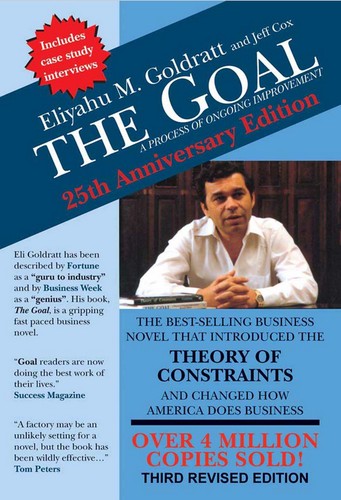
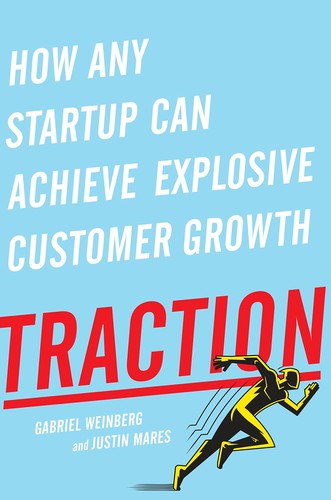
Business Model Generation is the design layer that follows. Osterwalder’s canvas turns “how does this business actually make money” into something you can sketch on one page and argue about with a team. The Goal and Traction are the operating and growth-channel disciplines: Goldratt on why fixing your system’s actual bottleneck beats optimizing everything else, Weinberg on testing all nineteen possible growth channels instead of guessing at one.
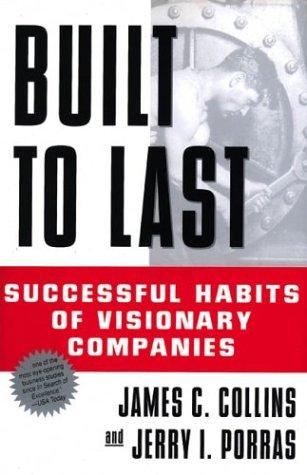
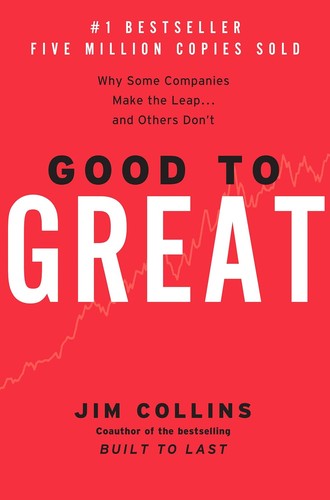
Built to Last and Good to Great close the list with Collins’s two studies of what separates companies that compound for decades from the ones that don’t. Built to Last is the “how do you build it to endure” study; Good to Great is the “how does an already-decent company become exceptional” follow-up.
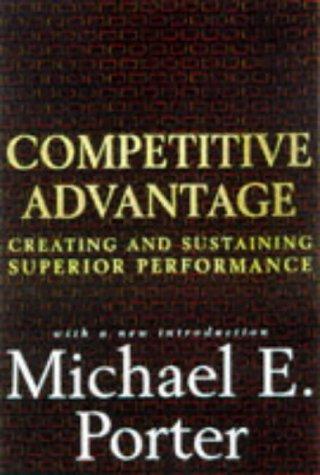
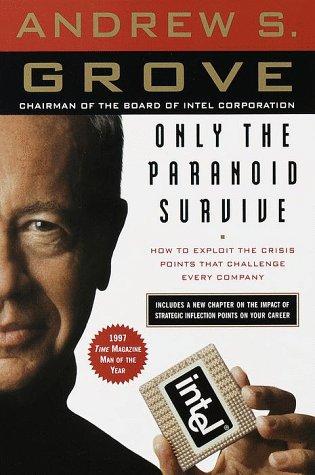
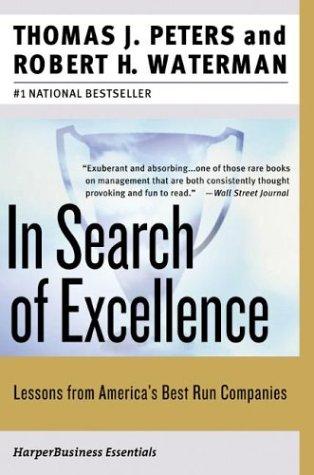
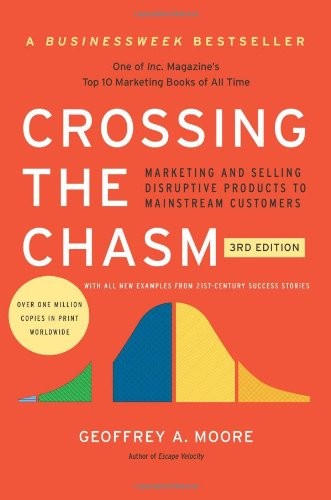
Seven more for specific gaps: Competitive Advantage is Porter’s own follow-up, more operational than Competitive Strategy. Good Strategy Bad Strategy is Rumelt’s blunt diagnosis of why most “strategy” is actually just goals restated as jargon. Only the Paranoid Survive and In Search of Excellence are both from operators (Andy Grove at Intel, Peters and Waterman studying dozens of companies), not academics. Crossing the Chasm and Play Bigger are narrower, go-to-market-specific: how a new product actually crosses from early adopters to the mainstream, and how category creation beats competing inside an existing one. The Innovator’s Solution is Christensen’s own answer to the disruption problem his first book only diagnosed.
One warning: strategy books are where people mistake having a framework for having a decision. Pick the one gap that matches your actual problem, apply it once, and skip collecting the rest as shelf decoration.
Michael Porter · 1980
The book that gave the business world the Five Forces framework, and turned Porter into the most cited strategy academic alive.
Porter writes as an economist and academic, and the book reads that way – dense, systematic, built on frameworks rather than anecdotes. It’s not an easy read, but the Five Forces model has survived forty-five years of business fads essentially intact, which very few management frameworks can claim.
Read it if: you want the rigorous, foundational framework for analyzing an industry's structure and profitability before you build a strategy on top of it
Skip it if: you want a fast, story-driven read, this is dense, analytical, and academic in tone, closer to a textbook than a business parable
Full verdict: Competitive Strategy →
Jim Collins · 2001
The companies that became great had no dream, no breakthrough, and no charismatic savior, they had discipline.
Collins built this on a 5-year research project, not a TED talk. The uncomfortable part for ambitious people is that the great companies weren’t heroic, they were relentlessly, boringly disciplined. The Hedgehog Concept alone (one thing, done better than anyone) will cut more from your to-do list than any productivity book.
Read it if: leaders and operators who want evidence-based strategy, not motivational leadership fluff
Skip it if: you want a fast narrative business book; this is a 300-page research study with charts
Full verdict: Good to Great →
Michael Porter · 1985
Porter's follow-up to Competitive Strategy, same rigor, shifted focus from analyzing an industry to explaining why one firm inside it wins and another doesn't.
The value chain is the concept that’s outlasted the rest of the book in daily business vocabulary – “where in the value chain do we actually create advantage” is a question strategy teams still ask verbatim, whether or not they know it traces back to Porter. Dense reading, but it rewards the effort more than most strategy books from the same era.
Read it if: you've read Competitive Strategy and want the firm-level companion: how a specific company builds an edge within a given industry structure
Skip it if: you haven't read Competitive Strategy yet, this book assumes that industry-analysis foundation and builds directly on top of it
Full verdict: Competitive Advantage →
Andy Grove · 1996
Intel's CEO on the strategic inflection point, the moment an industry shift can make or break a company, told through Intel's own near-death pivot from memory chips to processors.
Grove’s authority here comes from having made the actual bet, not just studied other people’s – Intel’s pivot from memory to processors is one of the genuinely consequential strategic decisions in tech history, and he narrates it with the specificity only someone who lived it can. Read it alongside The Innovator’s Dilemma for the theory that explains why most companies in Grove’s position don’t make the same call.
Read it if: you're leading a company or team through a fundamental industry shift and want a framework, plus a firsthand account, for navigating it
Skip it if: you want a general leadership book, this is specifically about recognizing and responding to industry-level disruption, not day-to-day management
Full verdict: Only the Paranoid Survive →
Tom Peters & Robert Waterman · 1982
The book that launched modern management-book publishing, built from McKinsey research into 43 'excellent' American companies, some of which later collapsed.
This is a foundational text in the modern business-book genre almost by accident of timing – it sold millions of copies and set the template that Good to Great, Built to Last, and dozens of others followed. Read it as management history and for the principles that genuinely held up (bias for action, staying close to the customer), but treat the specific company case studies as a cautionary tale about survivorship bias, not a blueprint.
Read it if: you want the historical foundation of modern management writing and the eight principles that shaped a generation of corporate strategy
Skip it if: you want a track record that held up, a notable share of the book's 43 'excellent' companies (including several tech and retail names) struggled or failed within a decade of publication
Full verdict: In Search of Excellence →
Geoffrey Moore · 1991
The book that explained why so many promising tech products win over early adopters and then die trying to reach everyone else.
Moore’s chasm concept explains a failure pattern that’s easy to see in hindsight and easy to miss while you’re living through it – a product with passionate early users that just can’t seem to break out further. The beachhead strategy (dominate narrow, then expand) has become close to standard doctrine in startup go-to-market planning for exactly that reason.
Read it if: you're building or marketing a tech product and need to understand why early traction doesn't automatically convert to mainstream adoption
Skip it if: you're not in tech or a disruptive-product category, the chasm framework is specifically about technology adoption lifecycle, less applicable to established, non-disruptive markets
Full verdict: Crossing the Chasm →
Clayton M. Christensen & Michael E. Raynor · 2003
The Innovator's Dilemma diagnosed why great companies die. This one tells you what to actually build instead.
Christensen wrote the Dilemma as an outside diagnosis of why companies fail. The Solution, co-written with Michael Raynor, is the inside job – what an actual executive does on Monday morning if they believe the diagnosis. It’s denser and more of a manual, but it’s the book that turns disruption theory from a warning into something you can run.
Read it if: you read The Innovator's Dilemma, believed it, and now want the 'so what do I do' playbook
Skip it if: you haven't read The Innovator's Dilemma yet -- start there, this book assumes you already know the disease
Full verdict: The Innovator's Solution →
Al Ramadan, Dave Peterson, Christopher Lochhead & Kevin Maney · 2016
The biggest companies didn't win their market -- they invented the market and made themselves synonymous with it.
The authors coined “category design” as their own term and clearly wrote this to make it stick, which means the book is part case study, part pitch for the framework itself. The case studies – Salesforce, Red Bull, Uber before “ridesharing” had a name – do more of the heavy lifting than any single quotable line.
Read it if: you're building a product that doesn't fit neatly into an existing category and need a framework for defining a new one instead of competing in an old one
Skip it if: you're selling into an established, well-defined market -- category design solves a different problem than competing well in one
Full verdict: Play Bigger →
Frequently Asked Questions
What is the best business strategy book to start with?
Competitive Strategy by Michael Porter, if you want the rigorous foundation everything else on this list either builds on or reacts against. If you want the faster, more contrarian read, start with Blue Ocean Strategy instead. Kim and Mauborgne's core idea is stop competing in bloody, contested markets and create uncontested ones.
Why is a 1980 academic book still the place to start?
Because Porter's Five Forces framework (competitive rivalry, supplier power, buyer power, threat of substitution, threat of new entry) is still taught essentially unchanged in every MBA program, and it's the industry-analysis foundation Blue Ocean Strategy is explicitly reacting against. Dense, but nothing since has replaced it.
I need to actually design a business model, not just a strategy. What's for me?
Business Model Generation. Osterwalder's canvas is the standard visual tool for mapping how a business actually makes money, on one page. Read it once you've decided which ocean you're swimming in and need to design the machine.
The Goal is a novel from 1984. Is it still useful?
Yes, and the story format is why it works. Goldratt teaches the Theory of Constraints through a factory manager's crisis instead of a textbook. The core insight (a system's output is limited by its slowest constraint, and optimizing anything else is wasted effort) applies to any operation, not just manufacturing.
How is Traction different from the strategy books?
It's the growth-channel version of the same discipline: instead of guessing at marketing, Weinberg's bullseye framework has you systematically test all nineteen possible channels to find the few that actually work for your specific business.