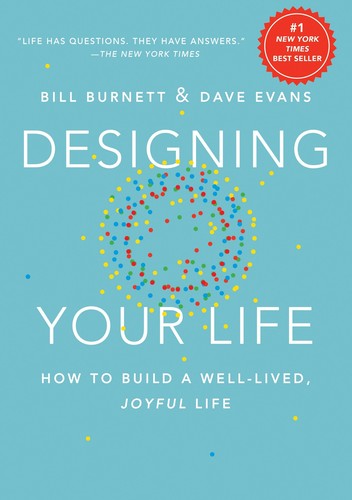
Designing Your Life
by Bill Burnett and Dave Evans · 2016
Two Stanford design professors treat your career like a design problem, not a decision you make once and live with.
Worth reading? Burnett and Evans borrow Stanford's design-thinking process (prototype, test, iterate) and apply it to career and life choices instead of products, and the reframe genuinely helps people who are stuck rather than lost. The exercises (odyssey plans, life design interviews) are concrete enough to actually do. Skip it if you already have clarity on your next move; the book is built for indecision, not confirmation.
| Full Title | Designing Your Life: How to Build a Well-Lived, Joyful Life |
|---|---|
| Author | Bill Burnett and Dave Evans |
| Published | 2016 |
| Publisher | Knopf |
| Category | Self-Improvement & Psychology |
| Favorite quote | “I won't always know where I'm going, but I can always know whether I'm going in the right direction.” |
The Verdict
The reframe here is the whole value: Burnett and Evans stop treating your career like a puzzle with one hidden correct answer and start treating it like a design problem you prototype your way toward. That single shift (from “figure it out” to “test it out”) is why this book helps people who feel stuck in a way pure introspection books don’t.
The Odyssey Plan exercise, sketching three different plausible five-year lives, is worth the price on its own. It kills the myth that you’re one big decision away from certainty and replaces it with something more honest: several good lives are available, and you get there by testing, not deliberating harder.
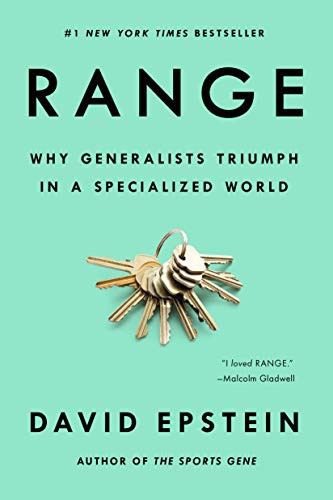
Skip it if you already know your next move; this book is for the genuinely undecided. Pair it with Range if you’re specifically wrestling with the specialize-versus-explore question, they complement each other well.
you're stuck, mid-career-change, or paralyzed by too many plausible paths and need a process, not more soul-searching
you already know exactly what you want to do next (this book is for the undecided, not the determined)
Book Summary
Career and life questions respond better to design thinking than to introspection alone. Instead of trying to figure out the one right answer through analysis, you prototype small, low-risk versions of possible futures and let real experience tell you what you actually want.
Some problems aren't solvable, they're "gravity problems," facts of life you have to work around rather than fix. Burnett and Evans insist on separating actionable problems from circumstances you're just going to have to accept.
The Odyssey Plan exercise (sketching three different five-year versions of your life) breaks the illusion that there's one correct path waiting to be discovered, and replaces it with the more useful idea that several good lives are available to you.
Top 9 Lessons from Designing Your Life
- Treat career uncertainty as a design problem to prototype, not a single decision to get right through analysis alone.
- Sketch multiple plausible five-year futures (the Odyssey Plan) instead of hunting for one correct path.
- Separate 'gravity problems' (unchangeable facts of life) from problems you can actually act on.
- Run small, low-risk prototypes, a conversation, a trial project, before committing to a big life change.
- Life design interviews with people already living a path you're considering beat imagining it from the outside.
- Being stuck usually means having too many good options, not too few; the fix is testing, not more thinking.
- Engagement and energy in daily activities are better signals than a five-year plan for what to pursue next.
- Reframing a problem changes what solutions become visible; if you're stuck, you may be solving the wrong problem.
- Wayfinding, following what genuinely engages you moment to moment, is a legitimate substitute for a master plan.
Top 4 Quotes from Designing Your Life
"I won't always know where I'm going, but I can always know whether I'm going in the right direction."
Bill Burnett and Dave Evans, Designing Your Life
"If it's not actionable, it's not a problem. It's a situation, a circumstance, a fact of life."
Bill Burnett and Dave Evans, Designing Your Life
"It has been our experience, in office hour after office hour, that people waste a lot of time working on the wrong problem."
Bill Burnett and Dave Evans, Designing Your Life
"Designers don't agonize. They don't dream about what could have been. They don't spin their wheels."
Bill Burnett and Dave Evans, Designing Your Life
Frequently Asked Questions
Is Designing Your Life worth reading?
Yes, if you're stuck between plausible paths or mid-career-change. Skip it if you already have clarity on your next move, the whole process is built for indecision, not confirmation of a plan you've already made.
What is the main idea of Designing Your Life?
Apply Stanford's design-thinking process, prototype, test, iterate, to career and life decisions instead of trying to reason your way to the one right answer.
Who should read Designing Your Life?
Anyone mid-career-change, recently graduated, or stuck choosing between several plausible directions and looking for a concrete process rather than more introspection.
What is a 'gravity problem' in Designing Your Life?
A fact of life you can't actually solve or change, like gravity itself. Burnett and Evans argue you should stop treating gravity problems as solvable and instead design around them.
Ready to read it?
Get Designing Your Life on Amazon