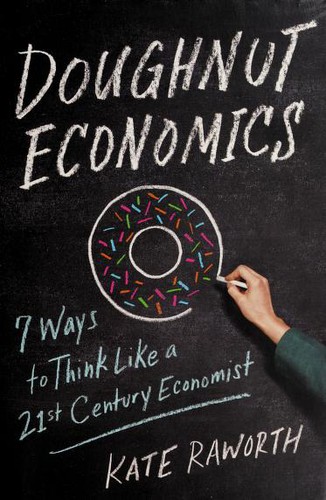
Doughnut Economics
by Kate Raworth · 2017
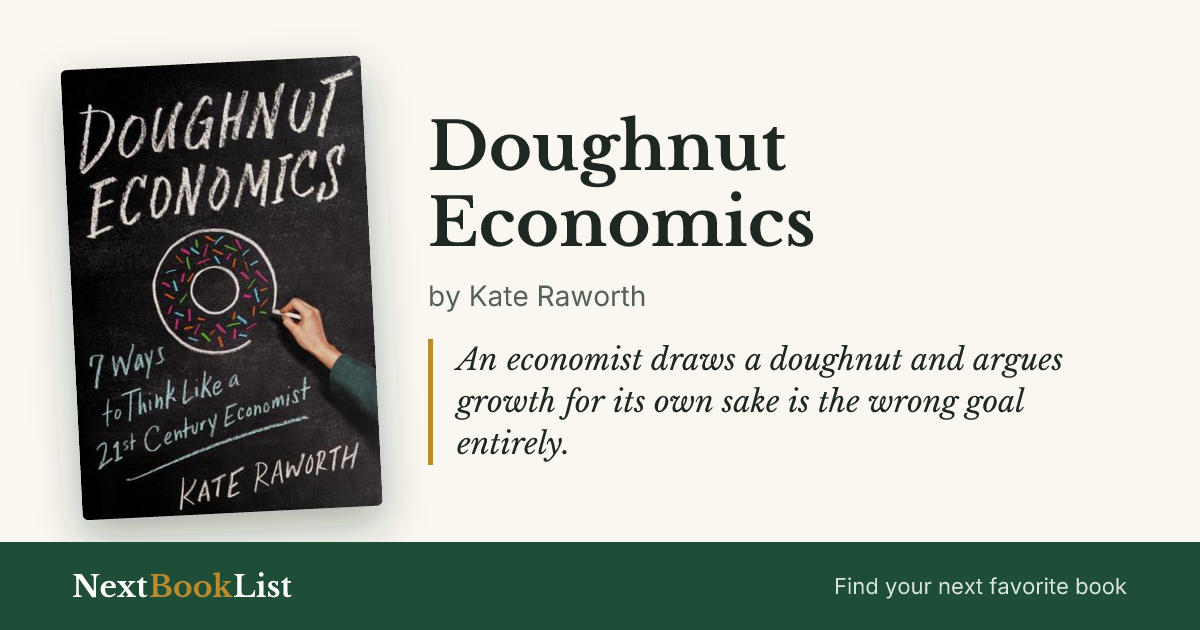
An economist draws a doughnut and argues growth for its own sake is the wrong goal entirely.
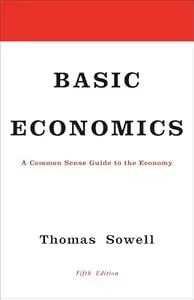
Worth reading? Doughnut Economics and Basic Economics start from opposite premises and both know it. Sowell's Basic Economics explains how prices, incentives, and markets work within the existing growth-oriented framework, mostly to defend it. Raworth's Doughnut Economics argues that framework is the problem: an economy built to grow forever ignores both the social floor people need and the ecological ceiling the planet enforces. Read Sowell if you want to understand how markets function. Read Raworth if you want to question whether "more growth" should be the goal markets are optimized for in the first place. Worth reading for the diagram alone -- the doughnut shape (a social floor inside, an ecological ceiling outside, safe space in between) is a genuinely useful way to picture the tradeoff. Skip it if you came in already convinced free-market growth is the correct default and aren't interested in having that challenged.
| Full Title | Doughnut Economics: Seven Ways to Think Like a 21st-Century Economist |
|---|---|
| Author | Kate Raworth |
| Published | 2017 |
| Category | Business & Money |
| Favorite quote | “We have economies that need to grow, whether or not they make us thrive; what we need are economies that make us thrive, whether or not they grow.” |
The Verdict
Raworth trained as an economist and writes like one arguing with her own profession – respectful of the tools, impatient with the goal they’ve been pointed at for a century. The doughnut diagram does more explanatory work in one image than most economics books do in a chapter, which is why it’s the thing people remember years after reading this.
you're open to questioning whether GDP growth should be the default measure of economic success
you want a defense of free-market growth economics -- this book is explicitly arguing against that framework
Book Summary
Raworth's central image is a doughnut: an inner ring marking the social foundation everyone needs (food, water, healthcare, income, education) and an outer ring marking the ecological ceiling the planet can't be pushed past (climate stability, biodiversity, ozone). The safe, just space for humanity is the doughnut itself, between the two rings, and Raworth argues that mainstream economics has no concept of either boundary because it was built around a single goal: growth, always upward, forever.
She traces this to what she calls outdated economic diagrams that shaped generations of policymakers, particularly the assumption that GDP growth is both inevitable and always desirable regardless of what's growing or who benefits. Economies, she argues, should be designed to make people thrive whether or not they grow, rather than designed to grow whether or not people thrive.
The seven "ways to think" reframe classic economic assumptions: change the goal from GDP to the doughnut itself, see the economy embedded in society and the living world rather than separate from it, expect systems to behave in unpredictable feedback loops rather than clean equilibriums, and design economies to be regenerative and distributive by design rather than hoping growth eventually trickles down and cleans up after itself.
Top 10 Lessons from Doughnut Economics
- The doughnut has an inner social floor and an outer ecological ceiling -- the safe zone is between them.
- Mainstream economics optimizes for growth without asking growth of what, for whom.
- An economy should make people thrive whether or not it grows.
- GDP measures activity, not wellbeing, and conflating the two misleads policy.
- Markets are embedded in society and the environment, not separate from them.
- Economic systems behave like feedback loops, not clean supply-and-demand equilibriums.
- Design economies to distribute wealth by design, not redistribute it after the fact.
- Design economies to regenerate resources, not just extract and hope for cleanup later.
- Old economic diagrams shape policy assumptions long after their assumptions stop fitting reality.
- Being 'agnostic about growth' means judging policy by thriving, not by GDP change.
Top 2 Quotes from Doughnut Economics
"We have economies that need to grow, whether or not they make us thrive; what we need are economies that make us thrive, whether or not they grow."
Kate Raworth, Doughnut Economics
"Economics has been keeping to itself for far too long."
Kate Raworth, Doughnut Economics
Frequently Asked Questions
Is Doughnut Economics worth reading?
Yes if you're open to questioning GDP growth as the default measure of success. It's a genuine challenge to mainstream economic thinking, not a light restatement of it.
What is the main idea of Doughnut Economics?
Design economies to keep everyone above a social floor and below an ecological ceiling -- thriving in the safe space between the two -- instead of optimizing for growth as the goal itself.
Is Doughnut Economics anti-capitalist?
It's more anti-growth-as-the-only-goal than anti-market. Raworth argues markets are one tool among several, not the organizing principle an economy should be built around.
Who should read Doughnut Economics?
Readers interested in climate-conscious, wellbeing-focused economic thinking, and anyone willing to have the growth-is-always-good assumption challenged directly.
Ready to read it?
Get Doughnut Economics on Amazon