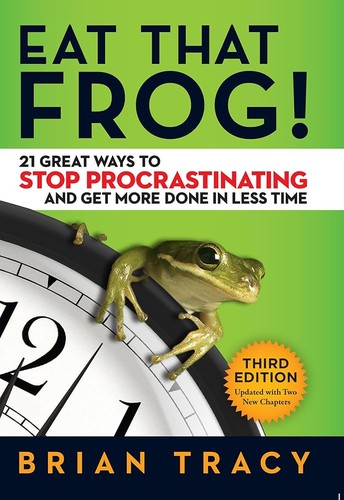
Eat That Frog!
by Brian Tracy · 2001
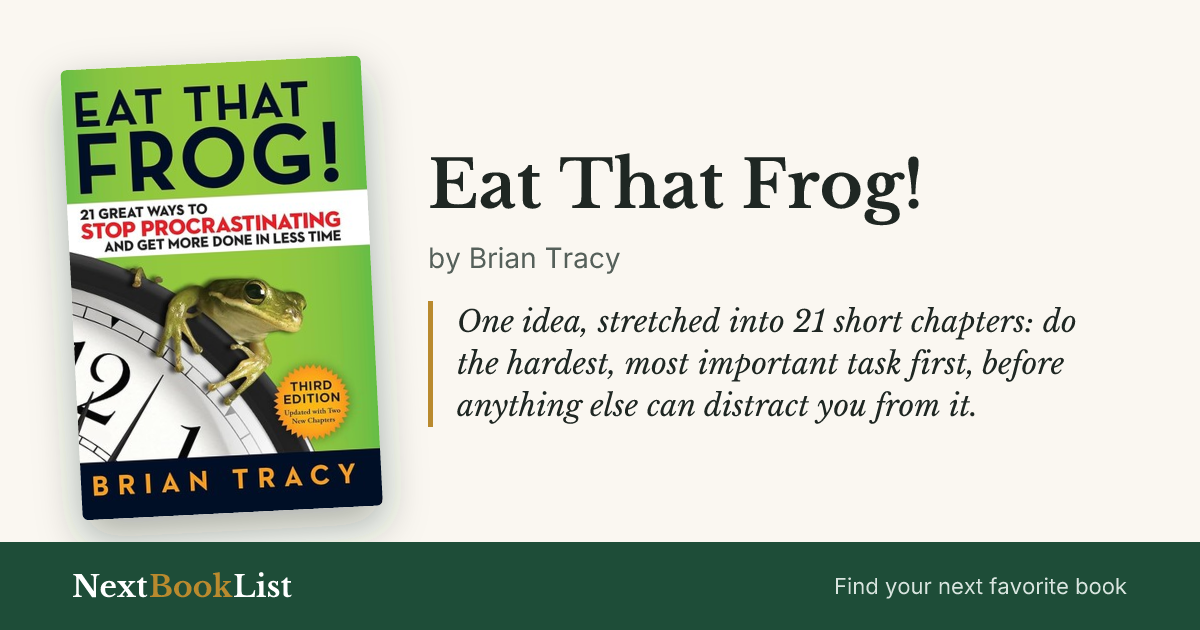
One idea, stretched into 21 short chapters: do the hardest, most important task first, before anything else can distract you from it.
Worth reading? Eat That Frog is one idea padded to book length, and the idea is genuinely good: identify your most important, most avoided task (the 'frog') and do it first, before checking email or anything else gives your brain an excuse to delay. It's a much lighter commitment than Getting Things Done -- no full external system required, just a prioritization habit -- which makes it the better starting point if GTD feels like too much overhead.
| Full Title | Eat That Frog!: 21 Great Ways to Stop Procrastinating and Get More Done in Less Time |
|---|---|
| Author | Brian Tracy |
| Published | 2001 |
| Category | Self-Improvement & Psychology |
| Favorite quote | “Eat a live frog first thing in the morning and nothing worse will happen to you the rest of the day.” |
The Verdict
Tracy doesn’t overcomplicate a simple idea, which is exactly the point – this is the book to hand someone who finds GTD’s full system intimidating and just needs one habit to actually change tomorrow morning. Read the first few chapters for the core idea; the rest is repetition and reinforcement more than new material.
you want a short, no-nonsense procrastination fix without committing to a full system like GTD
you already practice 'most important task first' consistently, there isn't much new material once you've got the core idea
Book Summary
Procrastination isn't usually about laziness, it's about avoiding the task that requires the most effort or carries the most discomfort, and defaulting instead to easy, low-value busywork that feels productive without moving anything important forward. Tracy's fix is blunt: identify your "frog," the single hardest and most important task on your list, and do it first thing, before anything else gets the chance to derail you.
The book also leans on the 80/20 principle applied to task lists: a small fraction of your tasks account for most of your actual results, so the discipline of correctly identifying which task is the real frog (not just the most urgent-feeling one) matters as much as the discipline of doing it first.
Top 7 Lessons from Eat That Frog!
- Identify your single most important, most avoided task (the 'frog') before starting your day.
- Do the hardest task first, before email or anything else gives you an excuse to delay.
- Apply the 80/20 rule to your task list -- a small fraction of tasks drive most of your results.
- Plan tomorrow's frog the night before so you start the day already knowing what to tackle.
- Break a large frog into smaller pieces if it feels too big to start, but still do the first piece first.
- Set a deadline for every task -- an open-ended task tends to get deprioritized indefinitely.
- Single-handle each task (start and finish before switching) rather than multitasking across several.
Top 4 Quotes from Eat That Frog!
"Eat a live frog first thing in the morning and nothing worse will happen to you the rest of the day."
Brian Tracy, Eat That Frog!
"If you have to eat two frogs, eat the ugliest one first."
Brian Tracy, Eat That Frog!
"Successful, effective people are those who launch directly into their major tasks and then discipline themselves to work steadily and single-mindedly."
Brian Tracy, Eat That Frog!
"There is never enough time to do everything, but there is always enough time to do the most important thing."
Brian Tracy, Eat That Frog!
Frequently Asked Questions
Is Eat That Frog worth reading?
Yes, as a fast, low-commitment procrastination fix. It's essentially one strong idea (do the hardest task first) stretched across 21 short chapters, which makes it an easy read but light on additional depth.
What does 'eat that frog' mean?
It's Tracy's term for your single hardest, most important, and most avoided task -- the one you're most tempted to procrastinate on. The advice is to do it first thing, before anything else.
How is Eat That Frog different from Getting Things Done?
Eat That Frog is a lightweight prioritization habit: do the hardest task first. Getting Things Done is a full external system for capturing and organizing everything you have to do. Eat That Frog is the better starting point if GTD feels like too much setup.
Does Eat That Frog work for procrastination generally, or just work tasks?
The framework applies to any avoided task, not just professional work, though Tracy writes primarily from a workplace productivity angle.
Ready to read it?
Get Eat That Frog! on Amazon