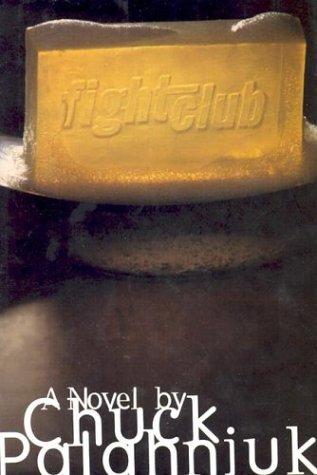
Fight Club
by Chuck Palahniuk · 1996
An unnamed, insomniac narrator numbed by consumer culture starts an underground fight club with a soap salesman named Tyler Durden, and the club quietly mutates into something far more dangerous than either of them intended.
Worth reading? Fight Club is a genuinely well-constructed novel underneath its reputation as a cult provocation. Palahniuk's aphoristic style is imitable on the surface (a hundred quote-graphic accounts have proven that) but hard to actually replicate, and the twist holds up better on a reread than most twist-driven books manage.
| Author | Chuck Palahniuk |
|---|---|
| Published | 1996 |
| Publisher | W.W. Norton |
| Category | Fiction |
| Favorite quote | “It's only after we've lost everything that we're free to do anything.” |
The Verdict
The prose style is the thing everyone remembers, and it’s earned – Palahniuk’s short, aphoristic sentences are genuinely well-built for the narrator’s numbness, not just quotable for their own sake. A hundred worse books have tried to copy the style without understanding why it’s doing that specific job here.
The twist holds up better than most. Palahniuk plants the impossibility of Tyler and the narrator ever being seen together carefully enough that a reread changes how you read nearly every scene, rather than just landing as a single cheap reveal.
Where the book gets more interesting than its reputation suggests is its actual ambivalence about Project Mayhem. It’s not a manifesto – it reads more like a diagnosis of a specific kind of alienated masculine rage than an endorsement of what that rage does once it’s organized.
Read it if you want the sharp, well-constructed novel underneath the cult-classic reputation. Skip it if you’re looking for a straightforward thriller rather than a book about dissociation wearing one’s clothes.
you want a genuinely sharp, angry satire of consumer culture and masculine identity, written in a propulsive, aphoristic style that a lot of imitators have tried and failed to copy
you're looking for a straightforward thriller -- this is a novel about dissociation and identity as much as it is about violence, and the twist reframes everything that came before it in ways some readers find more gimmicky than earned
Book Summary
The unnamed narrator, numbed by his consumer job and insomnia, meets Tyler Durden, and the two start an underground fight club as an outlet for a kind of violence and physical honesty their sanitized lives don't otherwise allow. The club spreads to other men experiencing the same numbness, and Tyler steers it toward "Project Mayhem," an increasingly organized campaign of anti-consumerist sabotage and terrorism.
The novel's twist, that Tyler Durden is a dissociated identity generated by the narrator's own insomnia and repressed rage, recontextualizes everything before it: the narrator has been Tyler the entire time, and the fight club's escalation reflects his own psychological unraveling rather than an external charismatic leader's influence.
Palahniuk's satire targets consumer identity directly -- IKEA catalogs, brand loyalty, the narrator's apartment full of furniture standing in for a personality -- and Project Mayhem's anti-corporate terrorism is presented with real ambivalence: neither fully condemned nor endorsed, closer to diagnosis than prescription.
Top 10 Lessons from Fight Club
- The twist works because Palahniuk plants Tyler's impossibility carefully throughout (nobody ever sees the narrator and Tyler together), rewarding a reread rather than depending on a single cheap reveal.
- The novel treats consumer identity (brand loyalty, catalog furniture, career status) as a genuine psychological wound, not just a target for easy satire.
- Project Mayhem's violence is presented with real ambivalence -- the book neither fully endorses nor fully condemns it, functioning more as diagnosis of alienation than as a political manifesto, despite how it's sometimes read.
- Tyler Durden as a dissociated identity reframes the entire novel as being about the narrator's own psychological collapse, not about a charismatic outside figure radicalizing him.
- The book's aphoristic, quotable style is central to its cultural spread, but Palahniuk uses that style in service of the narrator's numbness, not just for quotability's own sake.
- Marla Singer functions as the one figure the narrator can't fully dissociate from, tying his fractured identity back to something real.
- The narrator attends support groups for illnesses he doesn't have just to feel something real, a coping habit Marla's presence in the same groups disrupts, which is part of what pushes him toward creating Tyler.
- Fight club's rules, starting with 'you do not talk about fight club,' build identity through shared secrecy, giving alienated men structure and belonging their regular lives don't otherwise provide.
- Tyler's soap-making, done partly with stolen liposuction fat, literalizes the novel's argument that consumer beauty culture and physical self-destruction are two sides of the same coin.
- The narrator's white-collar job, calculating cost-benefit recall decisions for a car company, establishes his numbness as tied to corporate work that treats human injury as a line-item expense before Tyler ever appears.
Top 7 Quotes from Fight Club
"The things you own end up owning you."
Chuck Palahniuk, Fight Club
"It's only after we've lost everything that we're free to do anything."
Chuck Palahniuk, Fight Club
"I am Jack's complete lack of surprise."
Chuck Palahniuk, Fight Club
"This is your life, and it's ending one minute at a time."
Chuck Palahniuk, Fight Club
"You are not your job, you're not how much money you have in the bank. You are not the car you drive. You're not the contents of your wallet."
Chuck Palahniuk, Fight Club
"We're consumers. We are by-products of a lifestyle obsession."
Chuck Palahniuk, Fight Club
"On a long enough timeline, the survival rate for everyone drops to zero."
Chuck Palahniuk, Fight Club
Frequently Asked Questions
Is Fight Club worth reading if I've seen the movie?
Yes -- the novel's aphoristic prose style and the twist's construction reward reading even if you already know the ending.
What is Fight Club about?
An unnamed, insomniac narrator starts an underground fight club with Tyler Durden, only to discover Tyler is a dissociated identity generated by his own repressed psyche.
Is the twist in the book the same as in the movie?
Yes, the film is unusually faithful to the novel's central twist and structure.
Is Fight Club a critique or endorsement of Project Mayhem's violence?
It's ambivalent -- Palahniuk presents the violence as a symptom of alienation rather than clearly endorsing or condemning it as politics.
Do I need context on 1990s consumer culture to understand the satire?
No, though the novel's targets (brand identity, catalog living, career numbness) are specifically rooted in that decade's version of consumer culture.
Ready to read it?
Get Fight Club on Amazon