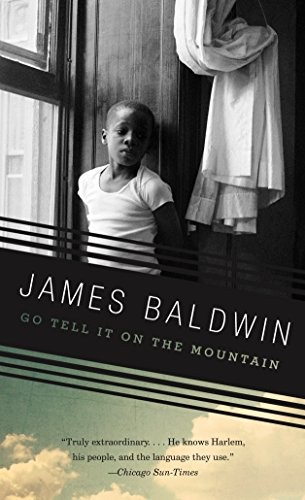
Go Tell It on the Mountain
by James Baldwin · 1953
Baldwin's semi-autobiographical debut compresses one Harlem teenager's agonized conversion night into a book-length reckoning with his family's buried history of migration, sex, and religious guilt.
Worth reading? Go Tell It on the Mountain works because Baldwin refuses to let you read it as a simple redemption story. John Grimes's conversion on the church floor is staged as both a genuine spiritual event and an escape from a violent stepfather, and the book never tells you which one it really is. The three flashback chapters that interrupt the single night are where the novel earns its power -- without them, John's crisis is just a boy crying in a church.
| Author | James Baldwin |
|---|---|
| Published | 1953 |
| Publisher | Vintage International |
| Category | Fiction |
| Favorite quote | “It was his hatred and his intelligence that he cherished, the one feeding the other.” |
The Verdict
Baldwin doesn’t write this as a coming-of-age novel with a conversion tacked on. He writes it as a family’s entire buried history detonating inside one boy’s body on one night, and the three flashback chapters are where the book actually lives. Skip them or skim them and John’s collapse on the church floor reads as melodrama instead of the inevitable result of three generations of unresolved damage.
Gabriel is the character that makes the book more than a period piece. A preacher who abandoned a child he fathered outside his marriage, demanding purity from everyone but himself, he’s Baldwin’s clearest indictment of religious authority as self-protection. You don’t need to share Baldwin’s specific religious background to recognize the type.
The prose is deliberately built on sermon rhythm and repetition, which means it rewards reading some passages aloud more than it rewards skimming for plot. That’s a real ask of a reader in 2026, and it’s why this isn’t a book you hand someone looking for a quick, propulsive read.
Read it if you want a literary classic that treats religion, race, and sexuality as inseparable and earns its density. Skip it if you want narrative momentum – this is a book you sit with, not one that pulls you forward.
you want literary fiction that earns its reputation -- dense, lyrical, sermon-cadenced prose built around real psychological pressure, not a plot-driven read
you want fast pacing or scene-to-scene momentum -- long stretches move through interior memory instead of forward action, and the structure asks for patience before it pays off
Book Summary
The novel covers one night: John Grimes's fourteenth birthday, spent in his stepfather's Harlem storefront church, ending in his collapse and conversion on the "threshing floor." But that single night is scaffolded by three long flashback chapters -- Florence's, Gabriel's, and Elizabeth's -- that trace the family back through the Jim Crow South.
Gabriel Grimes, the preacher stepfather John both fears and craves approval from, is the book's central contradiction: a man who preaches redemption while having fathered and abandoned a child outside his marriage. Baldwin uses him to show how religious authority can become a cover for personal failure rather than a check on it.
Baldwin drew directly on his own adolescence and his stepfather, a Harlem preacher, which is why the novel's psychological detail -- the resentment, the desperate hunger for a father's approval, the conflation of religious ecstasy with sexual awakening -- reads closer to memoir than most debut novels manage.
Top 8 Lessons from Go Tell It on the Mountain
- The novel's single 'present' night (John's conversion) only makes sense once you have the three flashback chapters revealing Florence, Gabriel, and Elizabeth's pasts -- the structure makes history load-bearing, not decorative.
- Gabriel Grimes preaches redemption while having fathered a child outside his marriage and effectively abandoned it, making him the book's clearest case of religious authority used to cover personal failure.
- The 'threshing floor' conversion scene fuses religious ecstasy with sexual awakening and shame, refusing to separate John's spiritual crisis from his emerging awareness of his own body and desire.
- Florence's storyline traces the family's flight from a Jim Crow South that punished ambition in Black women, and shows that leaving the South didn't erase the wounds it caused.
- The storefront church is treated as both a genuine refuge from a hostile world and a site of control and inherited guilt -- Baldwin doesn't resolve that tension in the church's favor or against it.
- Elizabeth's backstory with Richard, John's biological father, ties a personal tragedy (his arrest and suicide) directly to a justice system stacked against Black men, and shows how that trauma reshapes the next generation's family.
- Baldwin never confirms whether John's conversion is real faith, a performance to survive Gabriel's household, or both at once -- the refusal to resolve it is the novel's most honest choice.
- The book's prose borrows the rhythm of Black church sermons and spirituals directly, so the style itself is doing the same work as the plot: showing how deeply religious language shaped everyone in this family, believer or not.
Top 3 Quotes from Go Tell It on the Mountain
"His mind was like the sea itself: troubled, and too deep for the bravest man's descent, throwing up now and again, for the naked eye to wonder at, treasure and debris long forgotten on the bottom -- bones and jewels, fantastic shells, jelly that had once been flesh, pearls that had once been eyes."
James Baldwin, Go Tell It on the Mountain
"It was his hatred and his intelligence that he cherished, the one feeding the other."
James Baldwin, Go Tell It on the Mountain
"There are people in the world for whom 'coming along' is a perpetual process, people who are destined never to arrive."
James Baldwin, Go Tell It on the Mountain
Frequently Asked Questions
Is Go Tell It on the Mountain worth reading?
Yes, if you want dense literary fiction -- it's Baldwin's debut and the psychological groundwork for everything he wrote after, built around a family's religious and sexual history rather than a fast plot.
What is Go Tell It on the Mountain about?
A Harlem teenager's conversion night in his stepfather's storefront church, told alongside flashback chapters revealing his stepfather, aunt, and mother's pasts in the Jim Crow South.
Is Go Tell It on the Mountain autobiographical?
Largely -- Baldwin based John Grimes and Gabriel Grimes on his own adolescence and his stepfather, a Harlem preacher.
Is Go Tell It on the Mountain a religious novel?
It's a novel about religion's grip on a family, not a book of religious instruction -- it treats the church as both a real refuge and a source of guilt and control.
Do I need to read this before other Baldwin books?
No, but it helps -- it's his first novel and lays out the family and psychological material he returns to across his career.
Ready to read it?
Get Go Tell It on the Mountain on Amazon