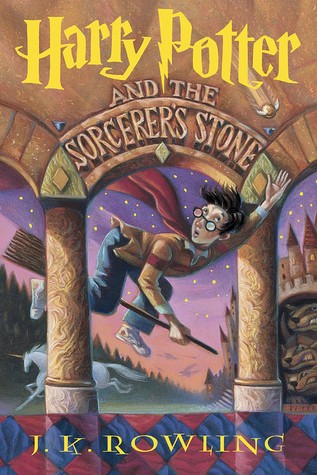
Harry Potter and the Sorcerer's Stone
by J.K. Rowling · 1997
An orphan raised in a cupboard under the stairs finds out on his eleventh birthday that he's a wizard, and the book that launched the biggest publishing phenomenon in a generation starts as small and warm as a bedtime story.
Worth reading? Harry Potter and the Sorcerer's Stone earns its place as a genuine modern classic, not just a commercial phenomenon. Rowling builds a fully imagined world efficiently, structures the plot as a clean mystery with real clues, and never once talks down to the age group she's writing for.
| Full Title | Harry Potter and the Sorcerer's Stone (Harry Potter, Book 1) |
|---|---|
| Author | J.K. Rowling |
| Published | 1997 |
| Publisher | Scholastic |
| Category | Fiction |
| Favorite quote | “It takes a great deal of bravery to stand up to our enemies, but just as much to stand up to our friends.” |
The Verdict
What holds up best on a reread as an adult is the plot discipline. This is a real mystery, with clues about the stone and its guardian planted early and paid off cleanly, not a book coasting purely on world-building charm.
The world-building itself is efficient rather than exhaustive – Rowling gives you just enough Hogwarts detail to feel immersed without stalling the plot for pages of exposition, a skill later entries in the series don’t always maintain.
The emotional throughline, an unwanted kid finding a place that wants him specifically, is why this connected as widely as it did. That’s not incidental to the wizarding-school setting; it’s the actual point of it.
Read it if you want the tightest, most self-contained entry in the series, mystery plot and all. Skip it if you’re looking for the saga at its most ambitious – that comes later.
you want the book that reintroduced an entire generation to reading for pleasure -- a tightly constructed children's mystery-adventure that doesn't condescend to its young readers
you're looking for the series at its most ambitious -- this first book is deliberately simple and self-contained compared to where Rowling takes the later, longer volumes
Book Summary
Harry Potter, orphaned and mistreated by his aunt and uncle, learns on his eleventh birthday that his parents were wizards killed by the dark wizard Voldemort, and that he's been enrolled at Hogwarts School of Witchcraft and Wizardry. The bulk of the book is Harry's first year there, forming his central friendships with Ron Weasley and Hermione Granger and finding his place in a world built specifically to make an unloved child feel, for the first time, wanted.
Structurally, the book is a mystery: something is hidden at Hogwarts, guarded by a three-headed dog, and Harry spends the year piecing together clues about what it is and who wants it, culminating in a confrontation that ties back directly to his parents' deaths. Rowling plants and pays off those clues with real discipline for a children's book.
Underneath the wizarding-school setting, the book's actual emotional core is about found family and belonging -- Harry goes from a cupboard under the stairs to a house, a set of friends, and a place in the world that wants him specifically, and that emotional throughline is why the book connected as widely as it did.
Top 10 Lessons from Harry Potter and the Sorcerer's Stone
- The novel structures its plot as a genuine mystery, with clues about the Sorcerer's Stone planted and paid off with real discipline rather than being resolved by coincidence.
- Rowling builds the wizarding world's rules and texture efficiently, establishing enough detail to feel lived-in without slowing the plot for exposition.
- The book's emotional core is belonging and found family -- Harry's arc from unwanted orphan to valued friend is the throughline underneath the mystery plot.
- Ron and Hermione are given real functions in the plot's resolution, not just sidekick roles, setting up the series' pattern of the trio needing all three of their skills together.
- The book doesn't condescend to its child readers -- real stakes, real fear, and a real villain are present without being softened into toothlessness.
- Compared to the later, much longer books in the series, this first volume is deliberately compact and self-contained, resolving its central mystery within its own pages.
- The Mirror of Erised scene introduces one of the series' most important recurring lessons early: that dwelling on what you desire most, rather than living in reality, is its own kind of danger, a warning Dumbledore states outright.
- Snape is set up as Harry's likely antagonist for most of the book, then revealed to have been protecting him all along, establishing the series-long pattern of misdirection and moral ambiguity around his character.
- Voldemort's first direct appearance, possessing the seemingly harmless Professor Quirrell, establishes a recurring series pattern: real danger hiding behind a trusted, familiar face rather than an obvious villain.
- Hagrid's role as Harry's first real adult ally outside his blood family sets up the series' broader pattern of found-family figures who step in where Harry's own relatives failed him.
Top 4 Quotes from Harry Potter and the Sorcerer's Stone
"It takes a great deal of bravery to stand up to our enemies, but just as much to stand up to our friends."
J.K. Rowling, Harry Potter and the Sorcerer's Stone
"It does not do to dwell on dreams and forget to live, remember that."
J.K. Rowling, Harry Potter and the Sorcerer's Stone
"To the well-organized mind, death is but the next great adventure."
J.K. Rowling, Harry Potter and the Sorcerer's Stone
"Ah, music. A magic beyond all we do here!"
J.K. Rowling, Harry Potter and the Sorcerer's Stone
Frequently Asked Questions
Is Harry Potter and the Sorcerer's Stone worth reading as an adult?
Yes -- the plot construction and emotional core hold up well past the age group it's written for.
What is Harry Potter and the Sorcerer's Stone about?
An orphaned boy discovers he's a wizard, enrolls at Hogwarts, and uncovers a mystery about a hidden magical stone that ties back to his parents' deaths.
Do I need to read the whole series to enjoy this book?
No, the first book resolves its own central mystery and works as a self-contained story, though the series builds significantly from here.
Is this the same book as Harry Potter and the Philosopher's Stone?
Yes -- Sorcerer's Stone is the title used for the U.S. edition; Philosopher's Stone is the original U.K. title of the same book.
Is Harry Potter and the Sorcerer's Stone appropriate for young readers?
Yes, it's written for middle-grade readers and is the gentlest, least intense book in the series.
Ready to read it?
Get Harry Potter and the Sorcerer's Stone on Amazon