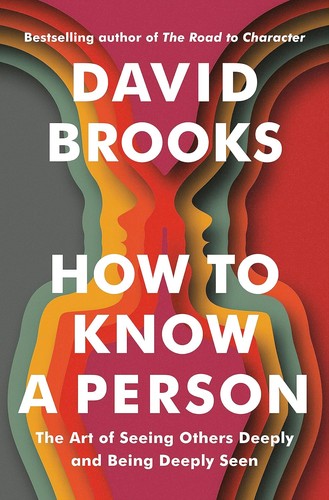
How to Know a Person
by David Brooks · 2023
Most people you talk to don't feel seen by you, and Brooks will show you exactly why.
Worth reading? How to Know a Person is less a self-help book than a diagnosis: most of us are 'diminishers' who half-listen, interrupt, and steer conversations back to ourselves, and we don't even notice we're doing it. Brooks separates that from 'illumination' -- actually paying attention to another person's experience -- and gives you concrete moves to close the gap. It's a slower, deeper companion to How to Win Friends and Influence People rather than a replacement for it; Carnegie teaches you to be liked, Brooks teaches you to actually understand someone. Read this if you want the second skill, not the first.
| Full Title | How to Know a Person: The Art of Seeing Others Deeply and Being Deeply Seen |
|---|---|
| Author | David Brooks |
| Published | 2023 |
| Category | Self-Improvement & Psychology |
The Verdict
Brooks’s core move is naming something you’ve probably felt but never labeled: the difference between a conversation that leaves you energized and one that leaves you feeling unheard. He calls the second kind “diminishing,” and most of us do it constantly without noticing.
The book is slower and more reflective than a typical productivity-flavored self-help title, which is the point. If you want a skill you can practice today, start with his advice on sitting with someone’s pain instead of solving it – that alone changes how people experience you.
you want to get better at real conversation, not networking small talk, and you're willing to sit with someone else's pain instead of fixing it
you want tactics for winning people over or being more likeable -- this is about depth, not charisma
Book Summary
There are two ways to move through a conversation: as a 'diminisher,' who makes others feel small through inattention, interruption, or turning every topic back to yourself, or as an 'illuminator,' who makes people feel bigger and more understood just by talking to you. Most people default to diminishing without realizing it.
Knowing someone deeply requires curiosity as a discipline, not a personality trait. You have to actively ask better questions, tolerate silence, and resist the urge to relate everything back to your own story.
People in pain, grief, or a difficult life passage need to be accompanied, not advised. The instinct to problem-solve someone else's suffering usually does more harm than sitting with them in it.
Real understanding of another person means holding their complexity and contradictions without flattening them into a single trait or label. Brooks calls this seeing someone in full, not just in category.
Top 9 Lessons from How to Know a Person
- Most conversations fail because one person is 'diminishing' the other without meaning to.
- Ask follow-up questions that build on what someone just said instead of pivoting to your own story.
- Silence in a conversation is not a problem to fill -- it's often where the real thing is about to be said.
- People going through hard times want company, not solutions -- resist the urge to advise.
- Good questions are specific and open-ended, not yes/no fact-checks.
- Labeling someone ('she's the ambitious one') is a shortcut that blocks actually knowing them.
- Eye contact and undivided attention are rarer than they should be, and people notice instantly when they're missing.
- Understanding someone means tolerating their contradictions, not resolving them into a tidy story.
- How you make someone feel in a five-minute conversation is a real skill, and it's learnable.
Frequently Asked Questions
Is How to Know a Person worth reading?
Yes, if you want to get better at real conversation and paying attention to people. It's less about tactics and more about a mindset shift from diminishing to illuminating.
What is the main idea of How to Know a Person?
Most people unintentionally make others feel unseen in conversation. Brooks teaches the skills of 'illumination' -- deep listening, better questions, and sitting with someone's pain instead of fixing it -- to actually know people.
How is How to Know a Person different from How to Win Friends and Influence People?
Carnegie's book is about being liked and persuasive. Brooks's book is about genuinely understanding another person, even when it's uncomfortable or slow. They solve different problems.
Who should read How to Know a Person?
Anyone who wants deeper relationships or better conversations -- managers, partners, friends. Skip it if you're looking for quick social tactics rather than a real shift in how you listen.
Ready to read it?
Get How to Know a Person on Amazon