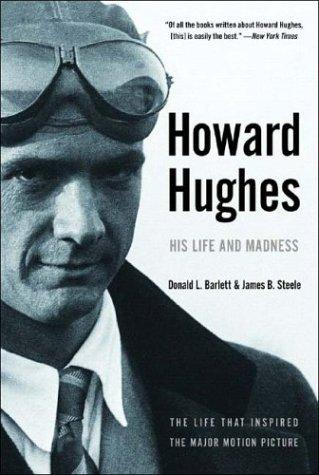
Howard Hughes
by Donald L. Barlett and James B. Steele · 1979
Two Pulitzer-winning investigative journalists trace how an aviation and film mogul's genuine brilliance curdled into paranoid isolation, a cautionary tale Elon Musk himself has cited.
Worth reading? Barlett and Steele, both Pulitzer-winning investigative reporters, trace Howard Hughes from genuinely brilliant aviation engineer and Hollywood mogul to reclusive, germaphobic addict who spent his final years isolated in hotel penthouses, controlled by aides, disconnected from the empire he'd built. Musk has called it a 'cautionary tale' worth reading precisely because Hughes' story shows how the same traits (obsessive focus, risk tolerance, disregard for convention) that build an empire can, unchecked, also destroy the person who built it. Read it as a sobering counterweight to more triumphant founder biographies. Skip it if you want inspiration rather than a warning.
| Full Title | Howard Hughes: His Life and Madness |
|---|---|
| Author | Donald L. Barlett and James B. Steele |
| Published | 1979 |
| Category | Biographies & Memoirs |
The Verdict
This isn’t a hero’s-journey founder biography, it’s a warning, and Musk citing it alongside his more aspirational picks says something about how seriously he takes the risk of unchecked isolation. Read it as the necessary counterweight to every other ambitious-founder book on this list.
readers who want an unflinching account of how unchecked wealth and eccentricity can spiral into genuine dysfunction
you want an inspirational founder biography, this one is explicitly a cautionary tale
Book Summary
The authors' central argument is that Hughes' decline wasn't a sudden break from his earlier brilliance, it was a continuation of the same traits, obsessive control, extreme risk tolerance, disregard for social convention, that made him a successful aviator and film producer, but without the guardrails (partners, accountability, changing course when wrong) that had kept those traits productive earlier in his career.
Built from extensive investigative reporting rather than an authorized or sympathetic account, the book documents how isolation compounded itself: as Hughes grew more erratic, he trusted fewer people, which removed the very checks that might have caught his decline earlier, a feedback loop the authors present as a specific, avoidable failure mode for anyone with enough wealth to insulate themselves from outside reality.
Top 7 Lessons from Howard Hughes
- The same traits that build an empire (obsession, risk tolerance, unconventional thinking) can destroy the person who built it without the right guardrails.
- Isolation compounds itself, fewer trusted outside checks lead to more erratic decisions, which lead to further isolation.
- Extreme wealth can insulate a person from the reality checks that would catch a decline earlier.
- Genuine early brilliance doesn't guarantee immunity from later dysfunction, they can coexist in the same life.
- Surrounding yourself only with people who won't challenge you removes a critical safety mechanism.
- Investigative, unauthorized biography can surface patterns an authorized account would smooth over.
- Reading a cautionary tale alongside triumphant founder stories gives a more complete picture of what unchecked success can cost.
Frequently Asked Questions
Is Howard Hughes: His Life and Madness worth reading?
Yes, especially as a sobering counterweight to more celebratory founder biographies, tracing how Hughes' own obsessive traits eventually turned destructive without any accountability to check them.
What is Howard Hughes: His Life and Madness about?
Investigative journalists Donald Barlett and James Steele's account of aviation and film mogul Howard Hughes' decline from brilliant innovator to isolated, paranoid recluse in his final decades.
Why does Elon Musk recommend this book?
Musk has called it a cautionary tale, useful precisely because it shows how the same obsessive, risk-tolerant traits that build an empire can, without accountability, also destroy the person who built it.
Ready to read it?
Get Howard Hughes on Amazon