Elon Musk Book List: 11 Books That Changed His Thinking

Updated July 20, 2026 · 10 books

Elon Musk Book List: 11 Books That Changed His Thinking: ranked list of 10 books

Elon Musk has named the same handful of books across two decades of interviews, and the pattern splits cleanly into three buckets. Science fiction that shaped his sense of scale: Asimov’s Foundation series for long-horizon civilizational planning, Heinlein’s The Moon Is a Harsh Mistress and Stranger in a Strange Land for self-reliance and genuine outsider thinking. Start here if you want the books he cites as most formative to how he thinks, not just what he does.

Biography makes up the second bucket, and it’s more honest than most founder reading lists: Benjamin Franklin and Einstein for reinvention and productive nonconformity, but also Howard Hughes, which Musk calls a cautionary tale, not an aspirational one. Reading all three together is the point. Ambition and eccentricity built empires in each case; only accountability determined whether they stayed productive.

The last bucket is pure craft: Zero to One for startup strategy, Superintelligence for the stakes of the technology he’s now building AI products around, and Structures and Ignition! for the literal engineering intuition behind rockets and cars. These are the least glamorous picks on the list and the most obviously useful if you’re actually building something physical.

One honesty note: these are books Musk has named directly in interviews and public comments, not guesses about what an engineer-founder “would” read. Treat it as his stated canon, curated from our own catalog, not a transcript of every book he’s ever mentioned.

Quick Comparison

#BookBest for
1FoundationIsaac Asimovreaders who want big-idea, civilization-scale science fiction with almost no action, all ideasAmazon
2The Moon Is a Harsh MistressRobert A. Heinleinreaders who want hard sci-fi built around political philosophy and self-relianceAmazon
3Stranger in a Strange LandRobert A. Heinleinreaders who want countercultural, boundary-pushing sci-fi that questions Earth conventions from a genuine outsider's viewAmazon
4Benjamin FranklinWalter Isaacsonreaders who want a founder's biography focused on practical self-improvement and reinvention, not just political historyAmazon
5EinsteinWalter Isaacsonreaders who want a founder-style biography that connects intellectual rebellion directly to scientific breakthroughAmazon
6Howard HughesDonald L. Barlett and James B. Steelereaders who want an unflinching account of how unchecked wealth and eccentricity can spiral into genuine dysfunctionAmazon
7Zero to OnePeter Thielfounders and operators who want to think about monopoly, secrets, and definite optimismAmazon
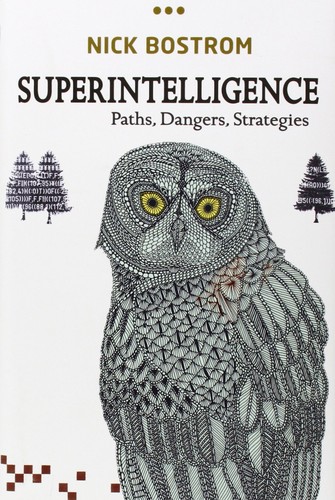
8SuperintelligenceNick Bostromreaders who want the philosophical foundation under every modern AI-safety argumentAmazon
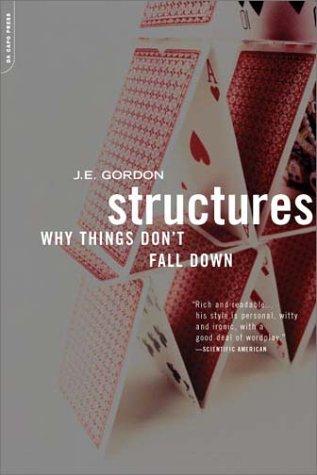
9StructuresJ.E. Gordonreaders who want a genuinely accessible introduction to structural engineering and materials scienceAmazon
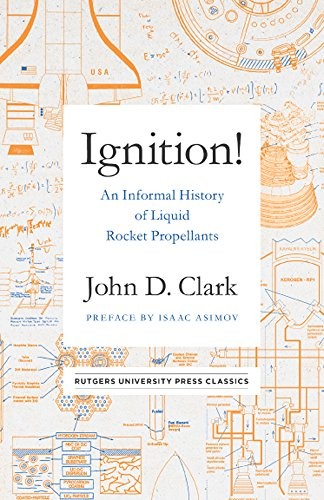
10Ignition!John D. Clarkreaders who want a firsthand, unfiltered account of the trial-and-error danger behind rocket scienceAmazon

The Books

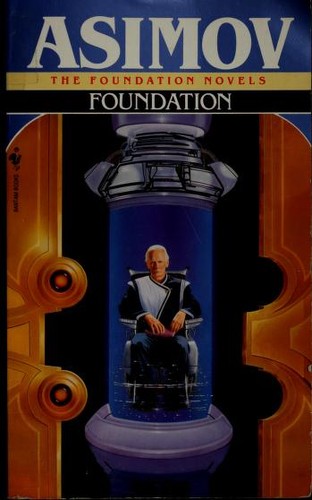
Foundation by Isaac Asimov book cover

1. Foundation

Isaac Asimov · 1951

A mathematician predicts the fall of a Galactic Empire and engineers a plan to shorten the coming dark age, the book that gave Elon Musk his blueprint for civilizational thinking.

This is the book Musk points to when explaining his own long-horizon thinking, and it’s not hard to see the throughline: a mathematician engineering a centuries-long plan to keep civilization’s knowledge alive. Read it as much for the big idea as for the story.

Read it if: readers who want big-idea, civilization-scale science fiction with almost no action, all ideas

Skip it if: you want fast-paced space opera, this is closer to political and historical theory in space-opera costume
Full verdict: Foundation →

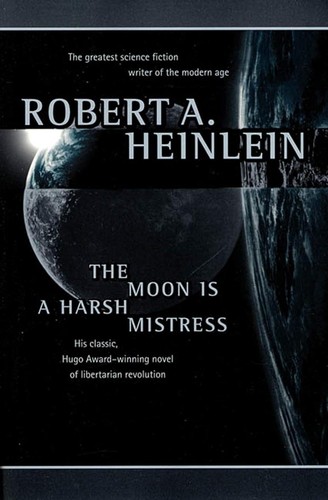
The Moon Is a Harsh Mistress by Robert A. Heinlein book cover

2. The Moon Is a Harsh Mistress

Robert A. Heinlein · 1966

A penal lunar colony, run partly by a sentient supercomputer, revolts against Earth in Heinlein's libertarian-leaning classic about self-governance and consequences.

Heinlein wasn’t shy about using fiction to argue politics, and this is his clearest case: a hostile moon, a revolution, and an AI character that still holds up as one of science fiction’s best. TANSTAAFL alone is worth knowing where it came from.

Read it if: readers who want hard sci-fi built around political philosophy and self-reliance

Skip it if: you're not interested in libertarian political themes woven through the plot

Full verdict: The Moon Is a Harsh Mistress →

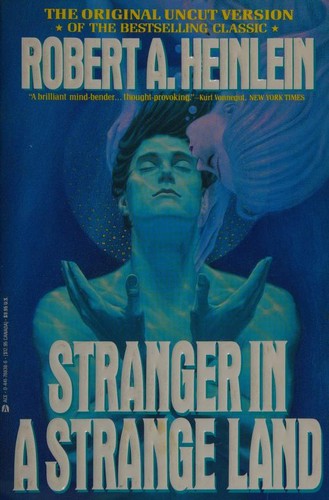
Stranger in a Strange Land by Robert A. Heinlein book cover

3. Stranger in a Strange Land

Robert A. Heinlein · 1961

A human raised entirely by Martians returns to Earth and starts a movement that upends human religion, sexuality, and social convention, in the novel that gave English the word 'grok.'

This is the novel that gave English a word it didn’t have before, and it earned that lasting impact by genuinely committing to its premise: a true outsider questioning everything Earth takes for granted. It was radical in 1961 and parts of it still are, approach it with that context.

Read it if: readers who want countercultural, boundary-pushing sci-fi that questions Earth conventions from a genuine outsider's view

Skip it if: the novel's treatment of sexuality and social convention was radical in 1961 and still divides readers today

Full verdict: Stranger in a Strange Land →

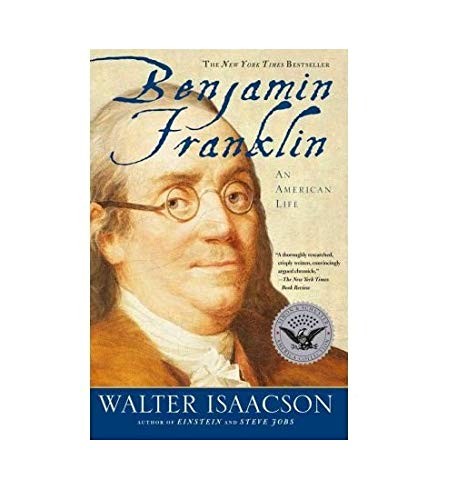
Benjamin Franklin by Walter Isaacson book cover

4. Benjamin Franklin

Walter Isaacson · 2003

Isaacson's biography of the founding father who was simultaneously a printer, scientist, diplomat, and self-made businessman, the original American polymath.

Isaacson’s real subject here isn’t the kite and the key, it’s the deliberate, almost engineering-minded approach Franklin took to his own character and career across multiple, genuinely different fields. It’s the founder biography entrepreneurs actually reread.

Read it if: readers who want a founder's biography focused on practical self-improvement and reinvention, not just political history

Skip it if: you want a narrow political biography, Isaacson covers Franklin's science and business life just as thoroughly

Full verdict: Benjamin Franklin →

Einstein by Walter Isaacson book cover

5. Einstein

Walter Isaacson · 2007

Isaacson traces how a rebellious, unemployable patent clerk became the mind that rewrote physics, arguing his nonconformity wasn't incidental to his genius, it was the source of it.

Isaacson’s real thesis isn’t “here’s what Einstein discovered,” it’s “here’s why the same trait that made him hard to employ also made him willing to question what everyone else assumed was settled.” That’s the founder-biography lens that makes this land differently than a standard science history.

Read it if: readers who want a founder-style biography that connects intellectual rebellion directly to scientific breakthrough

Skip it if: you want deep physics equations explained in technical detail, Isaacson keeps the science accessible

Full verdict: Einstein →

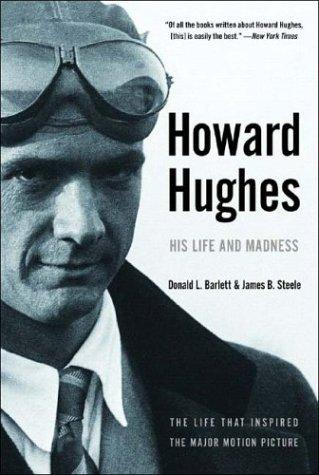
Howard Hughes by Donald L. Barlett and James B. Steele book cover

6. Howard Hughes

Donald L. Barlett and James B. Steele · 1979

Two Pulitzer-winning investigative journalists trace how an aviation and film mogul's genuine brilliance curdled into paranoid isolation, a cautionary tale Elon Musk himself has cited.

This isn’t a hero’s-journey founder biography, it’s a warning, and Musk citing it alongside his more aspirational picks says something about how seriously he takes the risk of unchecked isolation. Read it as the necessary counterweight to every other ambitious-founder book on this list.

Read it if: readers who want an unflinching account of how unchecked wealth and eccentricity can spiral into genuine dysfunction

Skip it if: you want an inspirational founder biography, this one is explicitly a cautionary tale

Full verdict: Howard Hughes →

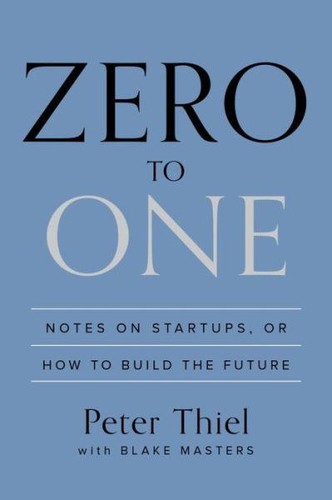
Zero to One by Peter Thiel book cover

7. Zero to One

Peter Thiel · 2014

Competition is for losers. The most contrarian startup book worth arguing with.

Thiel doesn’t teach you how to run a company. He teaches you how to think about what’s worth building: go from zero to one instead of copying what works, find secrets others ignore, aim for monopoly instead of competition. You’ll disagree with a third of it. That’s the point. Few business books make you think this hard per page.

Read it if: founders and operators who want to think about monopoly, secrets, and definite optimism

Skip it if: you're running a small business, not a startup (Thiel's advice targets venture-scale bets)

Full verdict: Zero to One →

Superintelligence by Nick Bostrom book cover

8. Superintelligence

Nick Bostrom · 2014

The dense, academic book that got Elon Musk and Bill Gates publicly worried about AI, still the most rigorous case for why a superintelligent AI is a control problem, not a features problem.

This is the book that turned AI safety from a fringe worry into a boardroom topic. Bostrom writes like a philosopher, not a journalist, so it’s slower going than anything else on this list, but the orthogonality thesis and the control problem are load-bearing ideas for the entire field that followed. Read it once you’ve got your footing from something friendlier, then come back for the rigor.

Read it if: readers who want the philosophical foundation under every modern AI-safety argument

Skip it if: you want something readable on a beach, this is a philosophy textbook in disguise

Full verdict: Superintelligence →

Structures by J.E. Gordon book cover

9. Structures

J.E. Gordon · 1978

A structural engineer explains, in plain and often funny English, why bridges stand, why bones don't shatter, and why some materials are strong in ways that have nothing to do with how 'strong' they sound.

This is the rare technical book that a total beginner and a working engineer can both learn from, because Gordon builds real intuition instead of hiding behind equations. If you’ve ever wondered why a bridge doesn’t just fall down, this is the book that actually answers it.

Read it if: readers who want a genuinely accessible introduction to structural engineering and materials science

Skip it if: you already have formal engineering training, this is written for total beginners

Full verdict: Structures →

Ignition! by John D. Clark book cover

10. Ignition!

John D. Clark · 1972

A rocket chemist's gleefully candid, occasionally terrifying history of the decades-long, frequently explosive search for propellants that could actually get a rocket off the ground.

This is a cult classic among people who actually build rockets for a reason: Clark doesn’t clean up the story. It’s candid about the explosions, the near-misses, and the genuinely dangerous chemistry that got humanity to reliable propellant, written by someone who lived through the trial and error himself.

Read it if: readers who want a firsthand, unfiltered account of the trial-and-error danger behind rocket science

Skip it if: you want a general-audience space book, this is written by and for people who actually work with propellant chemistry

Full verdict: Ignition! →

Frequently Asked Questions

What book does Elon Musk recommend most?

He's cited Isaac Asimov's Foundation series most consistently over the decades, crediting its long-horizon "psychohistory" concept as formative to how he thinks about civilizational-scale planning.

Which Elon Musk-recommended book should I read first?

Foundation, if you want the sci-fi that shaped his thinking about long-term planning, or Zero to One if you want the business book most directly relevant to building a company.

Why does Elon Musk recommend Structures and Ignition!, books about engineering, not business?

Musk is an engineer as much as a founder, and both books build genuine physical intuition, Structures for why things hold together, Ignition! for the trial-and-error history behind rocket propellant, directly relevant to his work at SpaceX and Tesla.

Why is Howard Hughes on this list? It's about a founder's decline, not his success.

Musk has explicitly called it a cautionary tale, useful because it shows how the same obsessive, risk-tolerant traits that build an empire can, without accountability, also destroy the person who built it.

Keep Reading