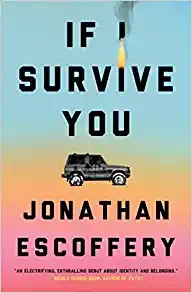
If I Survive You
by Jonathan Escoffery · 2022
A Jamaican-American family in Miami, told in linked stories instead of one straight line.
Worth reading? This is a linked short-story collection, not a conventional novel -- worth knowing going in, because the chapters jump around in time and occasionally in narrator. It follows a Jamaican immigrant family through hurricanes, recessions, and Miami's racial economics, centered mostly on the younger son, Trelawny, trying to figure out where he fits when he's not fully accepted as Jamaican or as Black American. It was a National Book Award finalist and won the PEN/Hemingway Award, and the hype is earned -- Escoffery writes economic precarity and family friction without a wasted sentence.
| Author | Jonathan Escoffery |
|---|---|
| Published | 2022 |
| Category | Fiction |
The Verdict
Escoffery doesn’t write one continuous novel here – he writes linked stories that circle the same Miami family from different years and sometimes different narrators. Know that going in, because if you’re expecting a single throughline you’ll be adjusting for the first few chapters.
What holds it together is Trelawny, the younger son, caught between his Jamaican family and a Black American identity nobody quite hands him cleanly. Read it for the voice and the specificity. Skip it if fragmented structure isn’t your thing – this book asks you to do some assembly.
readers who want sharp, voice-driven short fiction about race, money, and belonging -- and don't need a single continuous plot to feel satisfied
you specifically want a traditional novel -- this is a linked short-story collection, and each chapter resets time, focus, or narrator
Book Summary
Identity isn't one clean category. Trelawny spends the book getting sorted and re-sorted by people around him -- too American for his Jamaican relatives, treated as an outsider by other Black Americans -- and the book refuses to resolve that into a tidy answer.
Money pressure shapes family loyalty as much as love does. Several stories turn on who owes who, who left who behind economically, and how precarity turns siblings and parents into something closer to creditors and debtors.
The linked-story format mirrors the theme. Instead of one throughline, you get overlapping, sometimes contradictory angles on the same family -- which mimics how family history actually gets told, in fragments and disagreements, not one master narrative.
Top 7 Lessons from If I Survive You
- Uses linked stories instead of a single plot to show the same family from multiple angles and years.
- Puts economic precarity at the center of family conflict rather than treating money as background detail.
- Refuses to resolve its narrator's identity into one clean label -- that discomfort is the point, not a flaw.
- Switches narrators and time periods between chapters, which asks more of the reader than a linear novel would.
- Uses Miami's specific racial and immigrant landscape instead of a generic American-city backdrop.
- Balances dark, precarious material with real comic timing -- it's not a grim read despite the subject matter.
- Builds toward a final section that pulls the earlier stories into sharper focus without forcing a neat bow.
Frequently Asked Questions
Is If I Survive You a novel or short stories?
It's a linked short-story collection -- the chapters follow the same family but aren't one continuous plot, and some jump narrator or time period.
Is If I Survive You worth reading?
Yes. It won the PEN/Hemingway Award and was a National Book Award finalist for good reason -- sharp voice, real economic and racial specificity, no filler.
What is If I Survive You about?
A Jamaican immigrant family in Miami across several decades, centered on a son navigating race, identity, and money pressure within his own family.
Do I need to read the stories in order?
Yes -- they're not standalone in the usual short-story-collection sense. Read in order; later chapters depend on earlier ones for full effect.
Ready to read it?
Get If I Survive You on Amazon