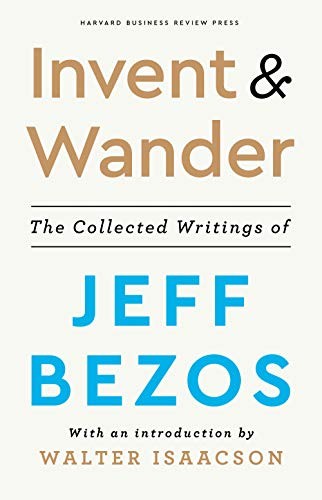
Invent and Wander
by Jeff Bezos & Walter Isaacson · 2020
Twenty-five years of Amazon shareholder letters, collected into the closest thing to a Bezos owner's manual.
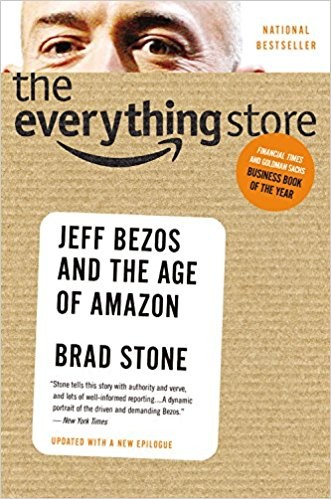
Worth reading? Compare it to Brad Stone's "The Everything Store" and the difference is obvious: Stone reports on Bezos from the outside, this is Bezos's own record, year by year, of what he actually believed while building the thing. The shareholder letters hold up remarkably well -- "Day 1," customer obsession, and the two-way-door decision framework all trace straight back to specific years and specific pressures, not retrofitted talking points. Read it if you want primary-source thinking instead of a narrative arc imposed by a biographer. Skip it if you've genuinely read the annual letters already -- Isaacson's introduction adds context, but the letters themselves are freely available and this book doesn't add new material beyond a handful of speeches and interviews.
| Full Title | Invent and Wander: The Collected Writings of Jeff Bezos |
|---|---|
| Author | Jeff Bezos & Walter Isaacson |
| Published | 2020 |
| Publisher | Harvard Business Review Press |
| Category | Business & Money |
| Favorite quote | “Day 2 is stasis. Followed by irrelevance. Followed by excruciating, painful decline. Followed by death.” |
The Verdict
This isn’t a biography – it’s the primary source. Twenty-five years of Bezos explaining, in his own words and in real time, why Amazon made the bets it made. Read the letters chronologically and you can watch “Day 1” go from a slogan to a tested operating principle.
you want Bezos's actual operating principles in his own words, not a biographer's secondhand summary of them
you've already read the shareholder letters on Amazon's investor relations page -- this is the same text plus a foreword
Book Summary
"Day 1" is the organizing idea of the whole collection: the moment a company starts acting like it has arrived, decline has already begun. Bezos treats this not as a slogan but as an operating discipline -- fighting proxies for customer obsession over competitor obsession, and fighting the natural pull toward risk-aversion that creeps into any large organization.
The letters build a consistent decision-making framework over two and a half decades: separate reversible decisions ("two-way doors") from irreversible ones and move fast on the former; write full-sentence narrative memos instead of bullet-point decks to force clearer thinking; and accept being misunderstood for long stretches as the price of pursuing genuinely new bets like AWS or Prime, which looked financially irrational for years before they weren't.
Long-term thinking is the throughline that ties it together -- Bezos repeatedly argues that if every decision can be justified in a quarterly earnings call, you're not actually taking the kind of risk that produces outsized outcomes.
Top 11 Lessons from Invent and Wander
- 'Day 1' means staying start-up minded permanently -- acting like Day 2 is where decline quietly begins.
- Chase what customers want, not what competitors are doing -- customer obsession beats competitor obsession.
- Long-term thinking justifies investments (AWS, Prime) that look irrational on a single quarterly earnings call.
- Sort decisions into reversible ('two-way doors') and irreversible -- move fast on the former, slower on the latter.
- 'Disagree and commit' lets a team move forward without full consensus, as long as everyone commits once the call is made.
- Being willing to be misunderstood for years is the price of pursuing a genuinely new idea.
- The flywheel (lower prices, more customers, more sellers, more selection) compounds slowly, then suddenly.
- High standards are teachable and domain-specific -- what counts as high standards differs by task.
- Use the regret-minimization framework: picture yourself at 80 looking back, and choose what you won't regret not trying.
- Full-sentence narrative memos force clearer thinking than bullet-point slide decks.
- Invention requires being willing to fail, repeatedly and often, in public.
Top 5 Quotes from Invent and Wander
"Day 2 is stasis. Followed by irrelevance. Followed by excruciating, painful decline. Followed by death."
Jeff Bezos & Walter Isaacson, Invent and Wander
"If you never want to be criticized, for goodness' sake don't do anything new."
Jeff Bezos & Walter Isaacson, Invent and Wander
"We are not competitor obsessed, we are customer obsessed. We start with what the customer needs and we work backwards."
Jeff Bezos & Walter Isaacson, Invent and Wander
"I encourage folks to wander. Wandering is an essential counterbalance to efficiency."
Jeff Bezos & Walter Isaacson, Invent and Wander
"Your brand is what other people say about you when you're not in the room."
Jeff Bezos & Walter Isaacson, Invent and Wander
Frequently Asked Questions
Is Invent and Wander worth reading?
Yes, especially if you want Bezos's reasoning in his own words rather than a biographer's interpretation of it. Skip it if you've already read Amazon's shareholder letters directly.
What is the main idea of Invent and Wander?
A collection of Bezos's shareholder letters and writings built around 'Day 1' thinking -- staying long-term, customer-obsessed, and willing to be misunderstood while pursuing new bets.
Who should read Invent and Wander?
Founders, operators, and investors who want a primary-source view of how Bezos actually thought about decisions, not a secondhand retelling.
Is this the same as reading Amazon's shareholder letters online?
Mostly yes -- the letters are the core of the book and are publicly available. The value-add is Isaacson's framing and a handful of speeches and interviews collected alongside them.
Ready to read it?
Get Invent and Wander on Amazon