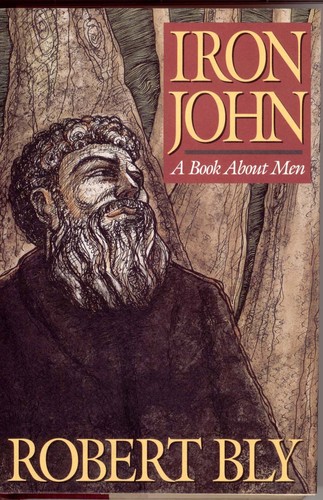
Iron John
by Robert Bly · 1990
The book that kicked off the mythopoetic men's movement, built around a Grimm fairy tale about a wild man in the forest.
Worth reading? Iron John is unlike most books on this list: Bly, a poet, uses a Grimm Brothers fairy tale as scaffolding to explore male initiation, absent or wounded fathers, and grief that men in modern life rarely have ritual space to process. It's dense, symbolic, and reads more like literary criticism crossed with therapy than a self-help book -- read it if the mythopoetic approach appeals to you, but don't expect exercises or a direct action plan the way you would from Boundaries or Getting Things Done.
| Full Title | Iron John: A Book About Men |
|---|---|
| Author | Robert Bly |
| Published | 1990 |
| Category | Self-Improvement & Psychology |
| Favorite quote | “A man's growth can sometimes be measured by the number and quality of his male initiators.” |
The Verdict
Bly writes as a poet, not a therapist or a consultant, and the book asks you to sit with myth and metaphor rather than hand you a checklist. It’s the odd one out on most self-improvement shelves for exactly that reason – worth reading if the mythopoetic lens interests you, skippable if you want something more direct and contemporary.
you want a poetic, mythology-based exploration of masculinity and father-son wounds, told through fairy tale and folklore
you want a practical, contemporary framework. Bly writes as a poet drawing on Jungian archetypes and myth, not as a self-help author giving direct steps
Book Summary
Bly uses the fairy tale of "Iron John" -- a wild, hairy man found at the bottom of a pond, who becomes a mentor to a young prince -- as an extended metaphor for a stage of male development that industrialized society has largely lost: initiation into mature masculinity, historically guided by older men, now often missing entirely from modern boys' upbringing.
A central theme is the "father wound" -- grief over an absent, emotionally distant, or otherwise inaccessible father, which Bly argues many men carry unprocessed because modern culture offers no ritual space for that grief. Recovering a full, integrated masculinity, in his framing, requires acknowledging that wound and finding forms of male mentorship and community that industrial-era fatherlessness has largely eliminated.
Top 7 Lessons from Iron John
- Recognize the 'father wound' -- unprocessed grief over an absent or emotionally distant father figure.
- Modern culture largely lacks ritual structures for male initiation that earlier societies provided.
- Grief needs space and expression, not suppression -- Bly treats unprocessed grief as a source of ongoing dysfunction.
- Male mentorship from older men outside the family can partially substitute for an absent father figure.
- Myths and fairy tales encode psychological truths that direct, literal advice often misses.
- Integrated masculinity, per Bly, includes both fierce and gentle qualities, not one at the expense of the other.
- Avoiding difficult emotional material (grief, anger at a father) doesn't resolve it -- it just delays the reckoning.
Top 4 Quotes from Iron John
"A man's growth can sometimes be measured by the number and quality of his male initiators."
Robert Bly, Iron John
"Every modern male has, lying at the bottom of his psyche... a large, primitive being covered with hair down to his feet."
Robert Bly, Iron John
"Men are taught over and over when they are boys that a wound that hurts is shameful. A wound that stops you from continuing to play is a girlish wound."
Robert Bly, Iron John
"The love unit most damaged by the Industrial Revolution has been the father-son bond."
Robert Bly, Iron John
Frequently Asked Questions
Is Iron John worth reading?
It depends on your appetite for mythopoetic, Jungian-influenced writing. It's dense and symbolic rather than practical, so it rewards readers interested in myth and archetype more than readers wanting direct advice.
What is Iron John about?
Robert Bly uses a Grimm Brothers fairy tale as an extended metaphor to explore masculine initiation, father-son wounds, and grief that Bly argues modern culture provides little ritual space to process.
Is Iron John a self-help book?
It's usually shelved as one, but it reads closer to literary and psychological analysis of myth than to a conventional advice-driven self-help book. There's no direct step-by-step method.
Is Iron John still relevant today?
The mythopoetic men's movement it helped launch has faded from mainstream visibility since the 1990s, but the underlying themes -- father wounds, lack of male mentorship, grief -- still resonate with many readers.
Ready to read it?
Get Iron John on Amazon