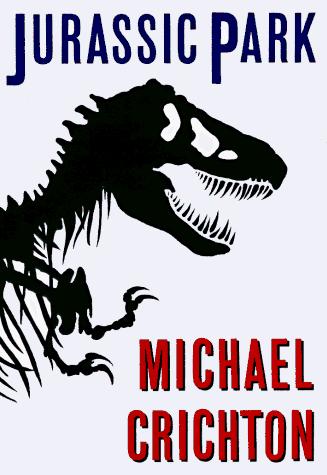
Jurassic Park
by Michael Crichton · 1990
A billionaire clones dinosaurs for a theme park, brings in scientists to bless the idea before opening day, and the park's own automated systems start the collapse before a single dinosaur does.
Worth reading? Jurassic Park holds up because Crichton wasn't writing a monster movie, he was writing a warning about the gap between what technology can do and what anyone bothers to control for. The book is meaner and smarter than its reputation as source material for a summer blockbuster suggests.
| Author | Michael Crichton |
|---|---|
| Published | 1990 |
| Publisher | Knopf |
| Category | Fiction |
The Verdict
Crichton’s real trick is making the science lectures load-bearing instead of decorative. Malcolm’s chaos-theory speeches sound like padding on a first read and turn out to be the book’s actual thesis statement, delivered before the plot proves him right.
The park’s failure is the smartest part of the book: it’s not dinosaurs breaking a fence, it’s cost-cutting, a disgruntled employee, and an unaccounted-for breeding loophole. The dinosaurs just exploit gaps humans already opened.
It’s also meaner than people remember. The film softened plenty of this, especially around the kids and around how the story treats confidence as a liability – the characters most sure of their expertise are usually the ones most wrong.
Read it if you want the sharper, colder original behind a movie you already know. Skip it if you want the film’s warmth and you’d rather not have that expectation undercut.
you want a science thriller that actually shows its work -- Crichton explains chaos theory, genetics, and systems failure in enough detail that the disaster feels earned, not just spectacular
you've only seen the film and expect the same tone -- the book is colder, more cynical about technology and profit, and considerably harder on its characters
Book Summary
John Hammond builds a theme park stocked with cloned dinosaurs on a remote island, and before opening to the public he brings in a paleontologist, a mathematician, and a lawyer to validate the park's safety. Ian Malcolm, the mathematician, is the one voice arguing from the start that a complex system this novel cannot be controlled, only delayed from failing.
The book's real subject is chaos theory in practice: small, unaccounted-for failures (a disabled employee sabotaging security for a corporate rival, dinosaurs breeding despite being engineered as all-female, an understaffed control room) compound into total systems collapse well before any dinosaur physically breaks loose.
Crichton is explicitly cynical about the commercial incentive driving the whole project -- Hammond isn't a mad scientist, he's a showman who genuinely believes he's improved on nature and refuses to hear otherwise until people start dying, which makes him a sharper villain than a cackling supervillain would have been.
Top 7 Lessons from Jurassic Park
- Malcolm's chaos-theory monologues aren't filler -- they're the book's thesis, stated outright before the plot proves them right.
- The park's failure isn't caused by the dinosaurs -- it's caused by cost-cutting, understaffing, and one disgruntled employee, with the dinosaurs simply exploiting the resulting gaps.
- Crichton treats 'we can, therefore we should' as the actual danger, not genetic engineering itself -- Hammond's real flaw is refusing to ask whether the park should exist at all.
- The dinosaurs breeding despite being engineered female (via frog DNA used to fill genome gaps) is the book's clearest metaphor for the limits of controlling complex biological systems.
- Characters who are confident in their expertise (the park's own engineers, Hammond himself) are consistently the ones most wrong about the park's actual risk.
- The novel is harder on its child characters than the film -- Crichton doesn't soften the danger just because kids are present.
- Ian Malcolm survives the novel in worse shape and with a bleaker outlook than his film counterpart, reinforcing that the book isn't interested in a tidy redemption arc for the park's premise.
Frequently Asked Questions
Is Jurassic Park worth reading if I've seen the movie?
Yes -- the book is colder and more cynical, with more of the science and systems-failure logic that the film compresses or drops.
What is Jurassic Park about?
A billionaire's plan to open a dinosaur theme park collapses when a combination of corporate sabotage, understaffing, and unplanned dinosaur breeding overwhelms the park's safety systems.
Is Jurassic Park hard science fiction?
It leans hard science in its explanations of genetics and chaos theory, though the cloning premise itself is speculative.
How different is the book from the 1993 film?
Significantly -- the book is bleaker, several character fates differ, and Ian Malcolm's role as chaos-theory critic is even more central on the page.
Do I need to read the sequel, The Lost World?
No, Jurassic Park stands alone and resolves its own plot.
Ready to read it?
Get Jurassic Park on Amazon