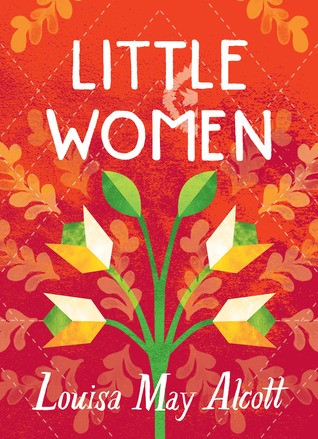
Little Women
by Louisa May Alcott · 1868
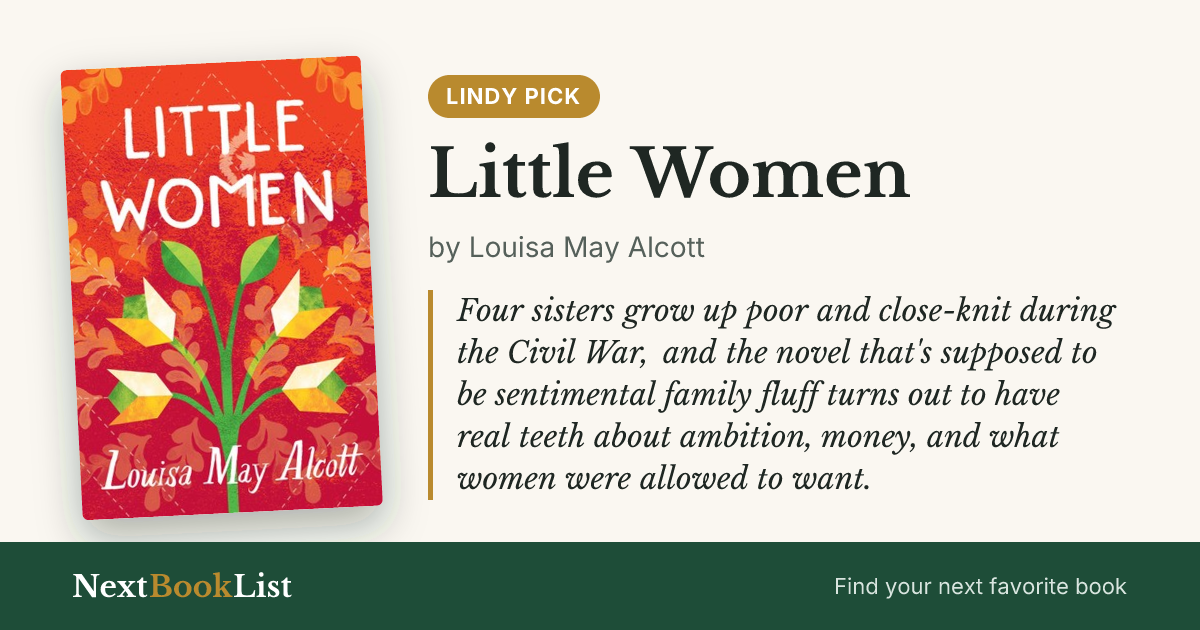
Four sisters grow up poor and close-knit during the Civil War, and the novel that's supposed to be sentimental family fluff turns out to have real teeth about ambition, money, and what women were allowed to want.
Worth reading? Little Women survives because Jo March refuses to be a simple romantic heroine -- she wants to write, she resents the limits placed on her, and Alcott lets that ambition breathe even inside a novel that has to end with marriages to satisfy its era. It's more clear-eyed about money and constrained choices than its cozy reputation suggests. Read it for Jo, tolerate the parts written to please 1868 publishers.
| Author | Louisa May Alcott |
|---|---|
| Published | 1868 |
| Publisher | Little, Brown and Company |
| Category | Fiction |
| Favorite quote | “I am not afraid of storms, for I am learning how to sail my ship.” |
The Verdict
Alcott had to marry Jo off to satisfy her publisher and readers, and it’s the one place the book visibly strains against its own better instincts. Everything before that compromise – Jo’s temper, her writing ambition, the sisters’ arguments over money and vanity – is sharper and more honest than the “sentimental classic” label suggests.
you want the coming-of-age novel that gave generations of readers (and writers) permission to want a career as much as a marriage, through Jo March
you want a plot-driven story -- this is episodic and domestic by design, following the March sisters' daily lives more than any single dramatic arc
Book Summary
Jo March wants a writing career and genuine independence in a world that offers women almost no acceptable path to either. Alcott, writing partly from her own life, uses Jo to smuggle real ambition into a domestic novel, even though the plot ultimately has to compromise with marriage to satisfy her Victorian readership.
The novel treats poverty and financial precarity as constant, unglamorous pressure on the March family -- not a plot device but a daily condition shaping every sister's choices, from Meg's marriage to Amy's calculated one.
Each sister represents a different negotiation with the limited roles available to women -- Meg accepts domesticity, Jo resists it, Beth is almost too good for the world, and Amy pursues security and beauty deliberately and unapologetically. Alcott refuses to rank them; the novel argues there's no single correct answer to being a woman in that era.
Top 8 Lessons from Little Women
- Jo March's ambition to write and be financially independent pushes against nearly every option her era offered women.
- Financial precarity shapes the March family's daily decisions throughout the novel, not just as backdrop but as constant pressure.
- Each sister negotiates the limited roles available to women differently, and the novel refuses to declare one choice superior.
- Beth's illness and death force the family (and the reader) to confront loss without sentimentalizing it away.
- Amy's pragmatic pursuit of financial security through marriage is treated with more respect than a simpler novel would give it.
- Sisterly loyalty and conflict (especially between Jo and Amy) are portrayed with real friction, not just idealized harmony.
- Marmee's steady moral guidance shapes all four sisters without the novel pretending she's a flawless or infallible model.
- The novel's ending compromises Jo's independence with marriage, reflecting the publishing pressures Alcott herself faced, not a clean thematic resolution.
Top 5 Quotes from Little Women
"I am not afraid of storms, for I am learning how to sail my ship."
Louisa May Alcott, Little Women
"I like good strong words that mean something."
Louisa May Alcott, Little Women
"Women, they have minds, and they have souls, as well as just hearts."
Louisa May Alcott, Little Women
"I want to do something splendid before I go into my castle, something heroic or wonderful that won't be forgotten after I'm dead."
Louisa May Alcott, Little Women
"I'd rather take coffee than compliments just now."
Louisa May Alcott, Little Women
Frequently Asked Questions
Is Little Women worth reading?
Yes -- it's more clear-eyed about money, ambition, and constrained choices for women than its cozy reputation suggests, especially through Jo March's arc.
Is Little Women hard to read?
No, it's an accessible, episodic novel, though it's more domestic and slower-paced than plot-driven fiction.
What is the main theme of Little Women?
Four sisters negotiating the limited roles available to women in their era, with real attention to financial pressure and personal ambition alongside family love.
Why is Jo March such a beloved character?
She wants a writing career and real independence in a world offering women almost no acceptable path to either, and Alcott lets that ambition and frustration feel genuine rather than tidy.
Ready to read it?
Get Little Women on Amazon