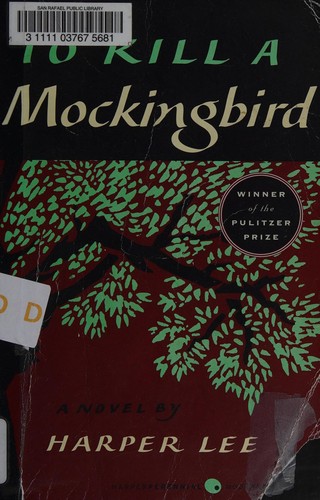
To Kill a Mockingbird
by Harper Lee · 1960
A young girl in Depression-era Alabama watches her father defend a Black man falsely accused of rape -- and learns exactly how much decency costs in a town that doesn't want it.
Worth reading? To Kill a Mockingbird earns its Lindy status the honest way: it's been in print for over 60 years, assigned in classrooms every year since, and it still lands because Lee never lets the moral argument overwhelm the story. Atticus Finch is almost too good to be true, and the book's second half (the trial, the aftermath) is stronger than its meandering first half, but as an entry point to American literature on race and conscience, nothing else has matched its combination of readability and staying power.
| Author | Harper Lee |
|---|---|
| Published | 1960 |
| Category | Fiction |
| Favorite quote | “You never really understand a person until you consider things from his point of view... until you climb into his skin and walk around in it.” |
The Verdict
Lee wrote only this one novel for over 50 years (Go Set a Watchman was an earlier draft, published later under murky circumstances), which makes Mockingbird’s staying power even more remarkable – it’s not propped up by a body of work, just this single book doing all the work itself. If you only read one novel about the Jim Crow South, this is still the correct default, six decades in.
you want the single most durable American novel about moral courage and racial injustice, told through a child's eyes so it never lectures you
you want fast plot or moral ambiguity -- Atticus Finch is basically a fixed point of goodness, and the book moves at a slow, small-town pace for its first half
Book Summary
Scout Finch narrates her own childhood, which is the book's central trick: you get racism, mob violence, and a rigged trial filtered through a kid who's still working out what the adults around her actually believe. That distance is what keeps the book from turning into a sermon.
The title image does real work. Mockingbirds "don't do one thing but make music for us to enjoy" -- they're harmless, so killing one is pure cruelty. Tom Robinson and, in a smaller way, Boo Radley are the book's mockingbirds: people destroyed or nearly destroyed for existing outside what the town is comfortable with.
Atticus's line about climbing into someone's skin and walking around in it is the book's actual thesis on empathy -- not a call to agree with everyone, but to understand them before judging. The novel spends 300 pages testing whether Maycomb is capable of that, and mostly proves it isn't.
Top 7 Lessons from To Kill a Mockingbird
- Courage isn't winning -- Atticus takes the Robinson case knowing he'll lose, because doing right isn't contingent on the outcome.
- Empathy requires actually inhabiting someone else's situation, not just acknowledging it exists.
- Institutions (courts, schools, churches) reflect the biases of the people running them, not some neutral standard of fairness.
- Reputation and rumor (Boo Radley) can be more distorted than reality -- proximity kills prejudice faster than argument does.
- Children absorb the moral behavior of adults around them long before they can articulate why it matters.
- Doing the right thing in a small, watching community carries real social cost -- Lee doesn't pretend Atticus's choice is free.
- Justice and legality aren't the same thing -- the verdict is legal and still wrong.
Top 6 Quotes from To Kill a Mockingbird
"You never really understand a person until you consider things from his point of view... until you climb into his skin and walk around in it."
Harper Lee, To Kill a Mockingbird
"Shoot all the blue jays you want, if you can hit 'em, but remember it's a sin to kill a mockingbird."
Harper Lee, To Kill a Mockingbird
"Real courage is when you know you're licked before you begin but you begin anyway and you see it through no matter what."
Harper Lee, To Kill a Mockingbird
"I wanted you to see what real courage is, instead of getting the idea that courage is a man with a gun in his hand."
Harper Lee, To Kill a Mockingbird
"Most people are, Scout, when you finally see them."
Harper Lee, To Kill a Mockingbird
"The one thing that doesn't abide by majority rule is a person's conscience."
Harper Lee, To Kill a Mockingbird
Frequently Asked Questions
Is To Kill a Mockingbird worth reading?
Yes. It's one of the most enduring American novels for a reason -- accessible prose, a child narrator that makes heavy themes approachable, and a moral argument that still holds up.
What is the main message of To Kill a Mockingbird?
That empathy and moral courage matter more than social comfort, and that institutions meant to deliver justice can still fail when the people running them are prejudiced.
Is To Kill a Mockingbird appropriate for kids?
It's standard middle/high school curriculum, but it deals directly with racial violence, a rape trial, and prejudice -- most schools assign it around ages 13-14 with guided discussion, not as casual reading for younger kids.
Is there a sequel to To Kill a Mockingbird?
Go Set a Watchman, published in 2015, is an earlier draft of the same story featuring an adult Scout -- it's controversial among fans and not considered essential the way Mockingbird is.
Ready to read it?
Get To Kill a Mockingbird on Amazon