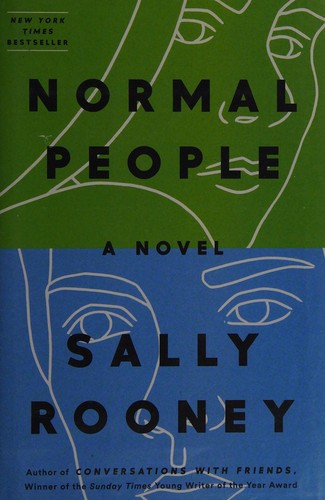
Normal People
by Sally Rooney · 2018
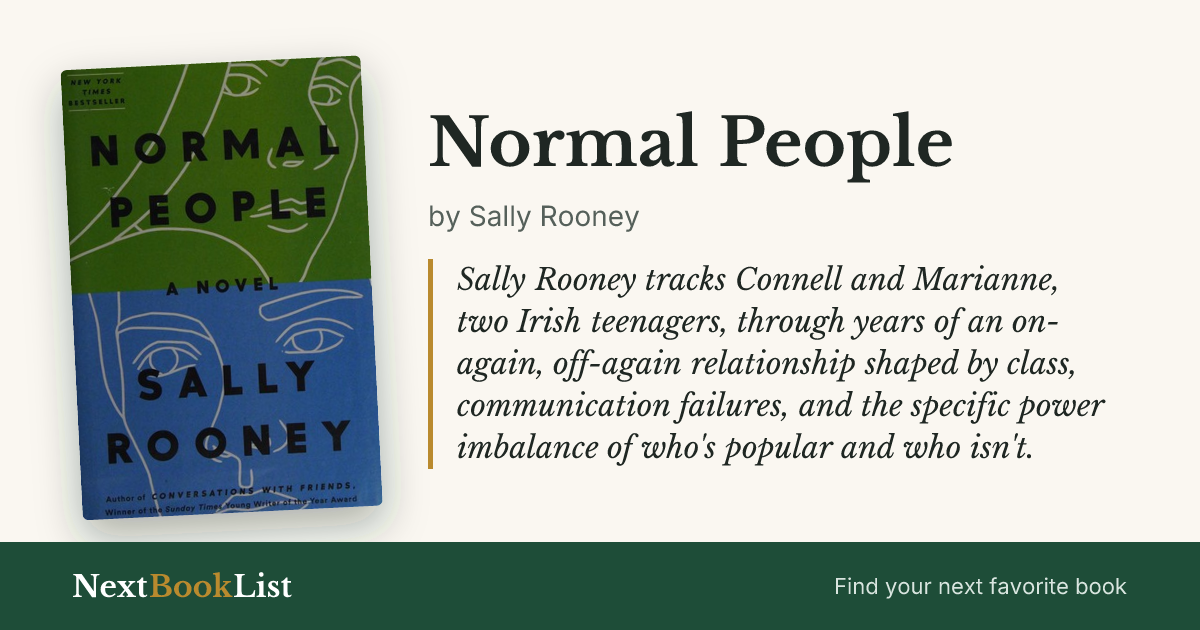
Sally Rooney tracks Connell and Marianne, two Irish teenagers, through years of an on-again, off-again relationship shaped by class, communication failures, and the specific power imbalance of who's popular and who isn't.
Worth reading? Normal People is precise about something a lot of relationship novels get vague about: how class and social status quietly shape who feels entitled to ask for what they want. Connell and Marianne's dynamic flips across the book -- popular versus outsider in school, then reversed at university -- and Rooney tracks how that status shift changes what each of them is willing to say out loud. The prose is spare almost to a fault; readers wanting more interiority or plot momentum will find the minimalism a real obstacle, not just a style choice.
| Author | Sally Rooney |
|---|---|
| Published | 2018 |
| Publisher | Hogarth |
| Category | Fiction |
The Verdict
Rooney’s real subject is status, not romance in the conventional sense. Connell and Marianne’s positions flip completely between school and university, and watching that reversal reshape what each of them feels entitled to say out loud is the book’s sharpest move.
The spare prose style is a real commitment, not a gimmick – no quotation marks, minimal exposition, long stretches of internal observation instead of incident. It rewards patient reading and will frustrate anyone wanting more plot momentum.
Read it if you want a precise, quietly devastating novel about class, status, and two people who keep failing to say the thing that would fix everything. Skip it if you want a plot-driven story or a clean, satisfying resolution.
you want a spare, dialogue-light literary novel about how two people can genuinely love each other and still keep failing to say the thing that would fix everything
you want a plot-driven story or a clean, satisfying resolution -- Rooney's style is deliberately understated, and the relationship's central obstacle is repeated miscommunication that some readers find realistic and others find frustrating
Book Summary
Rooney follows Connell and Marianne from their final year of secondary school in a small Irish town, through university at Trinity College Dublin, tracking a relationship that repeatedly connects and disconnects across several years.
A central mechanism of the novel is a status reversal: Connell is popular and Marianne is a social outsider in school, but the dynamic flips almost entirely once they reach university, and Rooney uses that reversal to show how social standing shapes each character's confidence and willingness to publicly claim the relationship.
The novel's recurring obstacle isn't external plot events so much as repeated failures of direct communication -- both characters frequently want the same thing and fail to say so clearly, driven by insecurity, pride, and class-based self-consciousness (Connell's working-class background versus Marianne's wealthier one).
Rooney's prose style is deliberately spare and unadorned, largely avoiding quotation marks and dramatic incident, focusing instead on precise, close observation of two people's internal states and the small moments where a relationship shifts.
Top 9 Lessons from Normal People
- Social status and popularity are shown as contextual and unstable, not fixed traits -- the same person can be an outsider in one environment and the center of attention in another, which the novel uses to reshape Connell and Marianne's dynamic across settings.
- Class background shapes confidence and self-presentation in ways that operate underneath explicit conversation -- Connell's working-class background and Marianne's wealthier one inform how each moves through university even when it's never directly discussed.
- Two people can want the same outcome and still repeatedly fail to say so directly, and pride, insecurity, and fear of rejection are enough on their own to sustain that failure across years.
- Silence and unspoken assumption, more than any single dramatic betrayal, is presented as the recurring force keeping Connell and Marianne apart at various points.
- A relationship can be genuinely significant and formative for both people involved without following a clean, linear, or conventionally 'successful' arc.
- The absence of quotation marks and understated prose style in the novel mirrors its themes -- feelings and meaning are frequently present but not explicitly stated, mirroring how the characters themselves communicate.
- Rooney treats the years the two spend apart, dating other people and living separate lives, as just as formative to the relationship as the time they spend actually together.
- The novel resists framing either Connell or Marianne as simply right or wrong in their miscommunications -- both characters' insecurities are given equal narrative weight rather than one being cast as the obstacle.
- Marianne's family life is shown as genuinely damaging in ways that shape her self-worth independent of the relationship, so her struggles aren't reducible to Connell alone.
Frequently Asked Questions
Is Normal People worth reading?
Yes, if you want a spare, precise literary novel about class, status, and communication failure in a long-running relationship -- it's less plot-driven and more about interior states.
What is Normal People about?
Two Irish teenagers, Connell and Marianne, move in and out of a relationship across secondary school and university, shaped by shifting social status and repeated failures to communicate directly.
Does Normal People have a happy ending?
It's deliberately ambiguous and understated rather than a clean resolution, consistent with the novel's overall style.
Is Normal People based on the TV adaptation?
No -- the novel came first, published in 2018; the acclaimed BBC/Hulu television adaptation followed in 2020.
Ready to read it?
Get Normal People on Amazon