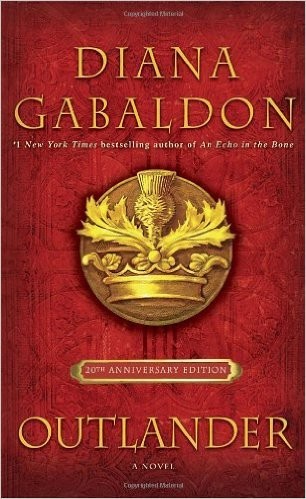
Outlander
by Diana Gabaldon · 1991
A WWII combat nurse touches a standing stone in Scotland and wakes up in 1743, married off to a Highland warrior for her own protection -- the book that fused historical fiction, romance, and time travel into a genre of its own.
Worth reading? Outlander earns its genre-founding reputation by refusing to pick a lane -- it's historical fiction, romance, and time-travel adventure at once, and Gabaldon's research into 18th-century Scotland gives the period detail real weight instead of costume-drama gloss. It's long, but the length is doing worldbuilding work, not padding.
| Author | Diana Gabaldon |
|---|---|
| Published | 1991 |
| Publisher | Dell |
| Category | Fiction |
The Verdict
Gabaldon’s research is the book’s real backbone – clan structures, period medicine, the texture of 18th-century daily life all feel lived-in rather than researched-and-inserted. That’s rarer in historical romance than the genre’s reputation suggests.
The slow build works if you let it. Claire and Jamie’s relationship earns its intensity through several hundred pages of proximity, respect, and shared danger, rather than being declared in a meet-cute and coasted on.
It’s genuinely long, and the pacing shows it – subplots get room to breathe that a tighter book wouldn’t allow, which is either a feature or a slog depending on your patience for doorstop novels.
Read it if you want deep historical immersion alongside a slow-burn romance and don’t mind committing to a long book (and probably a long series). Skip it if you want something fast – this is a book that takes its time on purpose.
you want a long, immersive historical romance with real research behind the 18th-century detail, and you don't mind a slow-building plot that takes its time on both the history and the relationship
you want a fast read -- this is the first of a famously doorstop-sized series, and the pacing is deliberately unhurried, especially through the first several hundred pages
Book Summary
Claire Randall, a former combat nurse on a 1945 second honeymoon in Scotland, touches a standing stone at Craigh na Dun and is thrown back to 1743, into the middle of clan tensions and the run-up to the Jacobite rising, where a forced marriage to the Highland warrior Jamie Fraser becomes her best protection.
Gabaldon builds the historical world with real specificity -- clan politics, period medicine, the mechanics of 18th-century daily life -- so the time-travel premise functions as a lens on a meticulously researched setting rather than a gimmick layered over a generic romance.
The Claire-Jamie relationship develops from practical arrangement to genuine partnership across the book, built on Claire's modern medical knowledge and blunt independence colliding with Jamie's 18th-century worldview, and neither character simply defers to the other by the end.
Top 9 Lessons from Outlander
- The time-travel premise is a delivery mechanism for historical immersion, not the plot's main engine -- once Claire's in 1743, the book is mostly interested in the period itself, not the mechanics of how she got there.
- Claire's modern medical training gives her genuine narrative agency in the 18th century rather than making her a passive fish-out-of-water observer -- she saves lives and earns respect through actual competence.
- The forced-marriage setup is used to build a relationship gradually through proximity and mutual respect rather than instant attraction, which is part of why the romance plot has stayed influential across the genre.
- Gabaldon doesn't sand down the period's violence or brutality (medical, political, sexual) to make 1743 more comfortable for a modern reader, which is part of what separates the book from lighter historical romance.
- The book's length lets subplots -- clan rivalries, the political runup to the Jacobite rising, secondary characters' full arcs -- breathe in a way a tighter historical romance wouldn't allow.
- Claire's dual loyalty (a husband waiting in 1945, a new life forming in 1743) is treated as a genuine unresolved tension for much of the book, not a foregone conclusion.
- Gabaldon grounds the fantasy premise in period-accurate medicine, letting Claire's modern nursing knowledge clash productively with 18th-century treatment methods instead of making her simply superior to everyone around her.
- Jamie is written with real vulnerability, including trauma from his own past, which keeps the 'warrior protector' archetype from flattening into a stock romance figure.
- The Highland clan system is depicted as a functioning political and social structure with its own internal logic, not just scenery for the romance plot.
Frequently Asked Questions
Is Outlander worth reading?
Yes, if you're prepared for the length and the slow build -- it's the book that launched a genre hybrid of historical fiction, romance, and time travel, and the research behind the period detail is genuinely deep.
What is Outlander about?
A 1945 combat nurse travels back to 1743 Scotland through a standing stone, marries a Highland warrior for protection, and gets pulled into clan politics ahead of the Jacobite rising.
Is Outlander appropriate for younger readers?
No -- it includes explicit sexual content and depictions of violence, including sexual violence, consistent with its adult historical-romance genre.
Do I need to watch the show or read the book first?
Either works, but the book has far more interior access to Claire's thinking and more period detail than the show can fit into episodes.
How many books are in the Outlander series?
This is the first of a long-running series (nine main novels as of the mid-2020s), and it stands alone reasonably well while setting up the larger story.
Ready to read it?
Get Outlander on Amazon