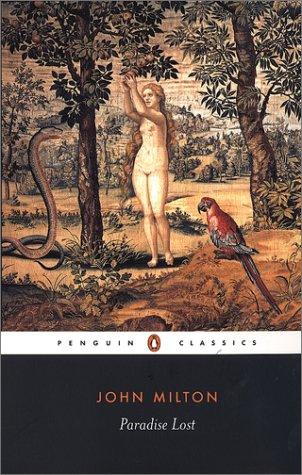
Paradise Lost
by John Milton · 1667
An epic poem about the fall of Adam and Eve that somehow makes Satan the most compelling character in it -- Milton spent 150 years' worth of readers arguing over whether that was intentional.
Worth reading? Paradise Lost earns its reputation because Milton wrote a genuinely great villain by accident, or maybe on purpose. Satan gets the poem's most quotable lines and its most compelling logic, and readers have been debating for three centuries whether Milton meant to make him this magnetic. The poem rewards slow reading; this isn't something you skim. Get an edition with footnotes, Milton assumed a reader fluent in classical and biblical reference most modern readers don't have on hand.
| Author | John Milton |
|---|---|
| Published | 1667 |
| Publisher | Penguin Classics |
| Category | Fiction |
| Favorite quote | “Better to reign in Hell, than serve in Heaven.” |
The Verdict
Satan steals the poem in its opening books, and that’s not a controversial reading, it’s the whole reason people still argue about Milton’s intent centuries later. He gets the best lines, the most seductive logic, and a level of interiority God and the angels never quite match.
The back half slows down considerably once the poem shifts to Adam, Eve, and Michael’s long lecture on human history. That stretch is where most readers who quit, quit. Push through it, the final image of Adam and Eve leaving Eden together is worth the slog.
Read it if you want the poem behind half the “sympathetic devil” archetypes in later fiction, and you’re willing to read slowly with footnotes. Skip it if dense 17th-century blank verse sounds like a chore rather than a challenge – this one won’t convert you if that’s the case.
you want the most influential English-language epic after the Bible itself, and you're willing to slow down for dense 17th-century blank verse to get it
you want prose or a quick read -- this is unrhymed iambic pentameter written for readers who already knew their Bible and classical mythology cold
Book Summary
Milton retells the biblical fall of man, Satan's rebellion and expulsion from Heaven, his temptation of Eve in the Garden of Eden, and humanity's resulting loss of paradise, in twelve books of blank verse, explicitly stating his goal as wanting to 'justify the ways of God to men.'
Satan, cast out of Heaven for pride and rebellion, gets some of the poem's most persuasive rhetoric, arguing it's 'better to reign in Hell, than serve in Heaven,' and generations of readers, including William Blake, have argued Milton was unconsciously, or deliberately, 'of the Devil's party.'
The poem treats the Fall less as a simple morality tale than a meditation on free will, Adam and Eve's choice matters precisely because Milton insists they were free to choose otherwise, which is also his theological answer for how a good God permits evil.
Top 7 Lessons from Paradise Lost
- Milton opens the poem in Hell, with Satan and the fallen angels regrouping after their defeat, a structural choice that gives Satan's perspective enormous weight before God or Adam even appear.
- Satan's rebellion is framed as rooted in pride and the refusal to serve, not simple malice, giving him a coherent (if self-serving) internal logic throughout.
- The poem insists on free will as the mechanism of the Fall, Adam and Eve choose to disobey, they aren't tricked into a predetermined outcome, which is central to Milton's theological argument.
- Eve's temptation by Satan, disguised as a serpent, plays on desire for knowledge and equality with God, echoing Satan's own original sin of pride.
- Adam's choice to eat the fruit after Eve, done knowingly and out of love rather than deception, is treated by Milton as a distinct and in some ways more culpable sin than Eve's.
- The poem ends not with despair but with Adam and Eve leaving Eden hand in hand, hopeful despite loss, 'The world was all before them.'
- Milton wrote the poem after going completely blind, dictating it to assistants, a biographical detail that shapes how readers have read the poem's themes of loss and endurance.
Top 5 Quotes from Paradise Lost
"Better to reign in Hell, than serve in Heaven."
John Milton, Paradise Lost
"The mind is its own place, and in itself can make a Heaven of Hell, a Hell of Heaven."
John Milton, Paradise Lost
"Long is the way and hard, that out of Hell leads up to light."
John Milton, Paradise Lost
"What though the field be lost? All is not lost."
John Milton, Paradise Lost
"Awake, arise, or be for ever fallen!"
John Milton, Paradise Lost
Frequently Asked Questions
Is Paradise Lost worth reading?
Yes, if you're up for dense 17th-century verse -- it's the most influential English epic after the Bible, and Milton's Satan is one of the most compelling characters in the language.
What is Paradise Lost about?
The biblical fall of man, told across twelve books of blank verse: Satan's rebellion against God, his temptation of Eve, and Adam and Eve's expulsion from Eden.
Is Paradise Lost hard to read?
Yes, more than most classics on this site. It's unrhymed verse written for a reader steeped in the Bible and classical mythology, so an annotated edition genuinely helps.
Is Satan the hero of Paradise Lost?
Milton never says so outright, and the poem punishes Satan's pride by the end, but he gets the most persuasive rhetoric, which is why readers have argued about Milton's intent for three centuries.
Do I need to know the Bible to understand Paradise Lost?
Basic familiarity with the Genesis story helps a lot. A footnoted edition fills in most of the classical and theological references Milton assumed his readers already had.
Ready to read it?
Get Paradise Lost on Amazon