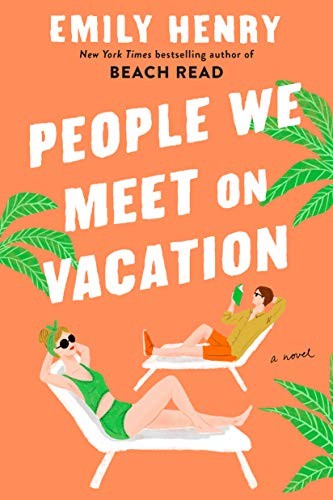
People We Meet on Vacation
by Emily Henry · 2021
Best friends since college, Poppy and Alex take one trip together every year -- until a disastrous vacation ends their friendship, and Poppy books one more trip to try to fix it.
Worth reading? Emily Henry's most emotionally layered romance, built on a friendship history you actually believe.
| Author | Emily Henry |
|---|---|
| Published | 2021 |
| Publisher | Berkley |
| Category | Fiction |
| Favorite quote | “Because, really, it's less about the places we go than the people we meet along the way. But most of all, it's about the ones who stay, who become home.” |
The Verdict
The dual timeline is the book’s biggest structural bet, and it pays off. Instead of asking you to believe Poppy and Alex’s chemistry in a single present-day meet-cute, Henry spends a decade of flashback trips earning it, so by the time the present-day plot catches up to whatever went wrong, you have real history to weigh against the fight.
That history also makes the central ache land harder than a typical friends-to-lovers setup: this isn’t two people slowly discovering feelings, it’s two people who’ve quietly loved each other for years and kept choosing not to say so, which is a more specific kind of longing than most romances bother writing.
Skip it if you want a straightforward, single-timeline plot – the constant cutting between past and present takes some adjustment. Read it if you want a friends-to-lovers romance with real stakes behind the friendship, not just chemistry standing in for history.
you want a friends-to-lovers romance built on genuine longtime friendship rather than instant chemistry, told through a dual timeline of past trips and the present-day attempt to repair things
you want a linear, single-timeline story -- the book constantly cuts between the current trip and flashbacks to prior summers, which some readers find disorienting rather than immersive

Book Summary
Poppy and Alex met as college roommates who seemed to have nothing in common -- she's restless and adventure-seeking, he's a homebody who teaches high school English -- and built a decade-long friendship anchored by one big trip together every summer. Two years before the novel opens, one of those trips went badly wrong and ended the friendship entirely, and the present-day plot follows Poppy convincing Alex to take one more trip to figure out what actually happened and whether they can get their friendship, or something more, back.
The dual-timeline structure lets Henry build the emotional case for Poppy and Alex slowly, trip by trip, rather than relying on instant attraction -- by the time the present-day plot catches up to the fight that ended things, the reader has a decade of shared history to weigh against it. That structure is doing real work: it makes the eventual romance feel earned by friendship rather than manufactured by proximity.
The book's real subject is the specific ache of loving someone as a best friend for years without naming it as anything more, and what it costs both people to keep choosing the friendship over the risk of saying so.
Top 8 Lessons from People We Meet on Vacation
- Poppy's restlessness and Alex's rootedness are shown as complementary rather than incompatible, which is what makes their friendship durable across a decade of very different life choices.
- The dual timeline forces the reader to build up a decade of shared history before the present-day conflict resolves, so the eventual romance reads as earned rather than sudden.
- Naming feelings out loud is treated as the real risk in the book, harder and scarier than any physical distance or life circumstance keeping Poppy and Alex apart.
- A friendship built around one recurring ritual (their annual trip) can quietly become the emotional center of someone's whole year without either person admitting that's what's happened.
- The fight that ended their friendship stays genuinely painful on the page rather than being revealed as a misunderstanding, which keeps the reconciliation from feeling too easy.
- Poppy's career as a travel writer is used to show how someone can look, from the outside, like they're living an enviable life while quietly being lonelier than anyone around her realizes.
- Choosing comfort and safety over romantic risk is shown as a real, understandable choice for Alex, not just cowardice -- the book has sympathy for why staying friends felt safer for years.
- The final trip works structurally as a deliberate echo of their first ones, letting the reader measure how much has changed in both characters without the book stating it outright.
Top 2 Quotes from People We Meet on Vacation
"Because, really, it's less about the places we go than the people we meet along the way. But most of all, it's about the ones who stay, who become home."
Emily Henry, People We Meet on Vacation
"On vacation you can be anyone you want. Like a good book or an incredible outfit, being on vacation transports you into another version of yourself."
Emily Henry, People We Meet on Vacation
Frequently Asked Questions
Is People We Meet on Vacation worth reading?
Yes -- the dual-timeline structure builds a decade of believable friendship before the romance resolves, which makes the payoff land harder than most friends-to-lovers books.
Is People We Meet on Vacation a standalone book?
Yes, it's a standalone novel with no direct connection to Beach Read beyond both being written by Emily Henry in a similar house style.
Is the dual timeline in People We Meet on Vacation confusing?
It takes a chapter or two to adjust to the switching between present-day and past-trip flashbacks, but each section is clearly labeled by year.
Does People We Meet on Vacation have a happy ending?
Yes -- it follows the genre's expected arc, resolving the central friendship rupture and the romantic tension by the end.
Ready to read it?
Get People We Meet on Vacation on Amazon