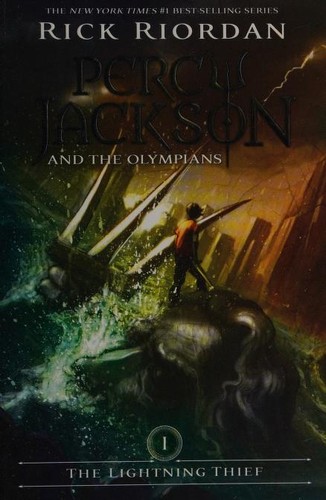
Percy Jackson and the Lightning Thief
by Rick Riordan · 2005
A twelve-year-old with ADHD and dyslexia discovers both conditions exist because he's secretly the son of a Greek god, and gets sent on a cross-country quest to stop a war between Zeus and Poseidon before it destroys the world -- middle-grade fantasy that turned Greek mythology into a gateway drug for a generation of young readers.
Worth reading? Percy Jackson and the Lightning Thief works as well as it does because Riordan built the premise directly out of his own son's experience with ADHD and dyslexia -- Percy's disabilities are reframed in-world as literal demigod traits (ADHD as battle reflexes, dyslexia as a brain wired for Ancient Greek), which is a genuinely useful reframe for a kid who's been told those things only as deficits. The mythology gets simplified for the age group, but the emotional core, a kid who doesn't fit in finding out there's a real reason why, is what actually made this a franchise.
| Author | Rick Riordan |
|---|---|
| Published | 2005 |
| Publisher | Disney-Hyperion |
| Category | Fiction |
| Favorite quote | “Look, I didn't want to be a half-blood.” |
The Verdict
The reason this book resonated with so many kids specifically isn’t the mythology, it’s the reframe. Riordan built Percy’s ADHD and dyslexia directly from his own son’s experience, and turning “you can’t sit still in class” into “your reflexes are too fast for a mortal classroom” is a genuinely smart, generous way to hand a struggling reader a hero who struggles the same way they do.
The mythology itself is simplified, and that’s the right call for the age group, not a failure of the book. Riordan trades the myths’ full moral complexity for speed and accessibility, and the modernized settings (Olympus above the Empire State Building, the Underworld’s entrance in LA) are more fun than rigorous.
As an adult reader, don’t expect depth beyond what a smart 10-year-old would want. This is a well-built, funny, fast adventure, not a book with much to unpack beneath the surface, and it doesn’t need to be.
Read it if you’re getting a kid into reading, especially one who’s struggled with ADHD or dyslexia being treated as a deficit elsewhere, or you want a quick, fun mythology romp yourself. Skip it if you want Greek mythology handled with real complexity or reverence – this is an accessible, modernized retelling, not a literary one.
you're reading it with (or buying it for) a kid roughly age 8-12, especially one who struggles in traditional school settings, or you want a fast, funny mythology-based adventure as an adult
you want mythology treated with reverence or complexity -- Riordan simplifies and modernizes the Greek myths considerably for a middle-grade audience, which is the right call for the age group but a real simplification if you want the source material's full weight
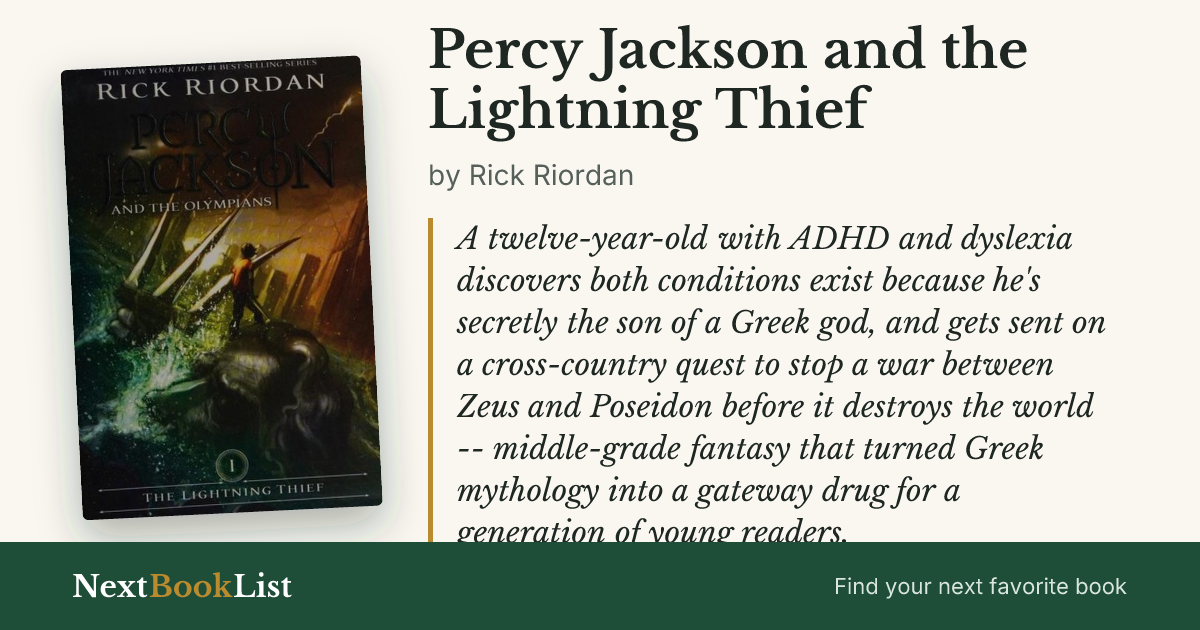
Book Summary
Percy Jackson, a twelve-year-old repeatedly expelled from schools for his ADHD and dyslexia, discovers both are because he's a demigod -- the son of Poseidon and a mortal woman -- and is thrust into Camp Half-Blood, a training ground for other children of Greek gods, right as Zeus's master lightning bolt goes missing and Percy gets blamed for stealing it.
Riordan built the premise directly from his own son Haley's ADHD and dyslexia diagnoses, reframing both conditions in-world as literal demigod traits: ADHD becomes battlefield reflexes too sharp for a normal classroom, and dyslexia becomes a brain hardwired for Ancient Greek rather than English.
The quest structure sends Percy and two companions, Grover the satyr and Annabeth, daughter of Athena, across America to modernized versions of figures and locations from Greek mythology, using the road-trip structure to map ancient myths onto contemporary American settings in a way middle-grade readers found genuinely fresh.
Top 9 Lessons from Percy Jackson and the Lightning Thief
- Percy's ADHD and dyslexia are directly reframed in-world as demigod traits (sharpened battle reflexes and a brain wired for Ancient Greek), a structural choice Riordan built specifically from his own son's diagnoses to give kids with the same conditions a more empowering story about them.
- The book modernizes Greek mythology by relocating gods and monsters into contemporary American settings (Mount Olympus above the Empire State Building, the entrance to the Underworld in Los Angeles), which is a deliberate simplification aimed at making the myths accessible rather than a literary reinterpretation of them.
- Percy's absent, godly father and his complicated relationship with his stepfather run as a real emotional throughline underneath the quest plot, giving the adventure a grounded family stake beyond just stopping a war between gods.
- The core friendship trio (Percy, Grover, Annabeth) is built around characters with distinct, well-defined strengths and insecurities, a structure Riordan sustains across the entire five-book series rather than treating the sidekicks as interchangeable.
- The book treats the Greek gods as genuinely flawed, petty, and human in their motivations, which is reasonably faithful to how the actual myths depict them, even as the surrounding plot and prose are simplified for a middle-grade reading level.
- Percy Jackson kicked off a wave of mythology-based middle-grade series, both from Riordan (expanding into Egyptian and Norse mythology in later series) and from other authors, reshaping a meaningful part of children's publishing for over a decade.
- Camp Half-Blood is structured as a place where kids who don't fit anywhere else finally belong, giving the found-family theme as much weight as the quest plot itself.
- Riordan uses first-person narration in Percy's own voice, including his self-deprecating humor about his own struggles, to make a kid who's been labeled a screwup at every school genuinely likable from page one.
- The book stops short of making Percy a chosen-one archetype without cost -- his demigod status brings real danger to people around him, not just power, which keeps the wish-fulfillment premise from feeling consequence-free.
Top 1 Quotes from Percy Jackson and the Lightning Thief
"Look, I didn't want to be a half-blood."
Rick Riordan, Percy Jackson and the Lightning Thief
Frequently Asked Questions
Is Percy Jackson and the Lightning Thief worth reading?
Yes, especially for kids roughly age 8-12 -- it's a fast, funny mythology adventure with a genuinely useful reframe of ADHD and dyslexia as strengths rather than deficits.
What age is Percy Jackson appropriate for?
Generally ages 8-12, marketed as middle-grade fiction, though it's a popular read for adults who want a quick, fun mythology-based adventure too.
Is Percy Jackson accurate to Greek mythology?
It's simplified and modernized for a young audience -- the gods' core personalities and conflicts are reasonably faithful, but the presentation trades complexity for accessibility, which is appropriate for the age group.
How many books are in the Percy Jackson series?
Five books in the original Percy Jackson and the Olympians series, followed by multiple sequel series continuing Percy's story and Riordan's other mythology-based series.
Is Percy Jackson good representation for ADHD and dyslexia?
Widely regarded as yes -- Riordan based Percy's traits directly on his own son's diagnoses, and the book's reframe of both conditions as demigod strengths has been praised by parents, educators, and readers with ADHD and dyslexia themselves.
Ready to read it?
Get Percy Jackson and the Lightning Thief on Amazon