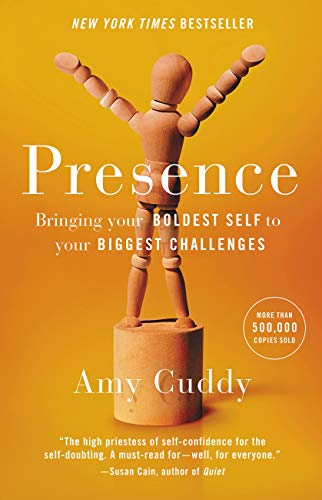
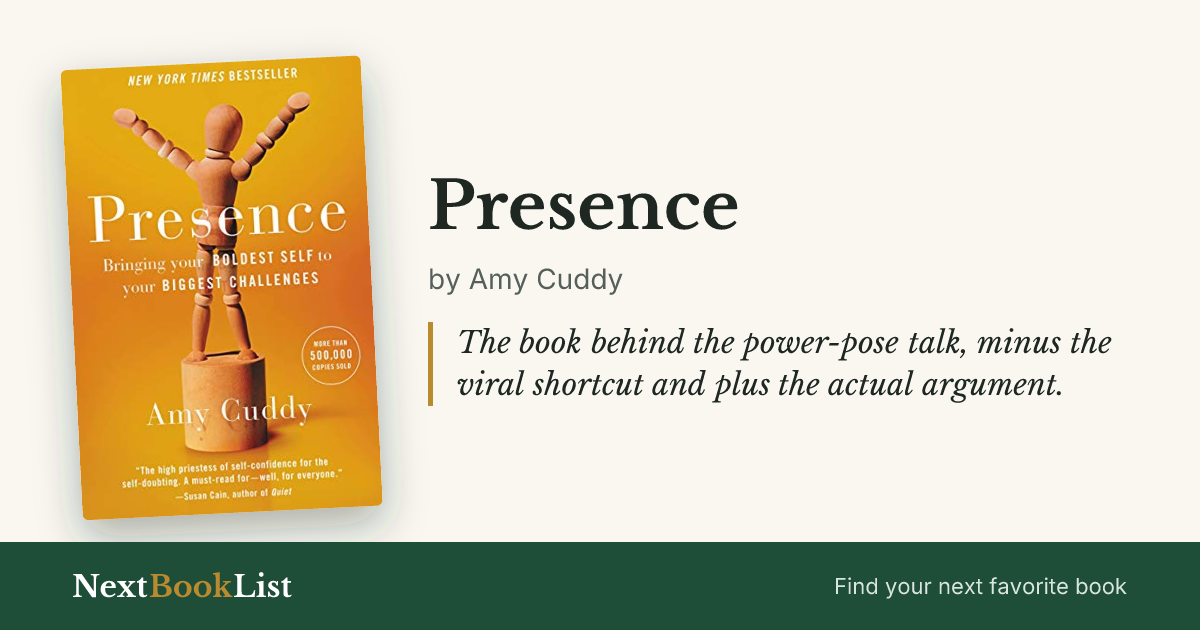
Presence
by Amy Cuddy · 2015
The book behind the power-pose talk, minus the viral shortcut and plus the actual argument.
Worth reading? Quiet makes the case that your natural temperament, introverted or not, is enough -- stop trying to perform extroversion. Presence makes a related but different argument: you can walk into a high-stakes moment as your true self and still feel powerful, not by faking a personality you don't have, but by reducing the fear that's crowding out your actual competence. Read Quiet if the problem is other people wanting you to be someone else; read Presence if the problem is your own nerves getting in the way of showing people who you already are. Skip it if the only reason you picked it up was the power-pose research -- that specific study has had real replication problems since publication, and if that's the entire pitch for you, the rest of the book's argument about "presence" as a state of mind stands on its own without needing that one study to hold up.
| Full Title | Presence: Bringing Your Boldest Self to Your Biggest Challenges |
|---|---|
| Author | Amy Cuddy |
| Published | 2015 |
| Publisher | Little, Brown Spark |
| Category | Self-Improvement & Psychology |
| Favorite quote | “Don't fake it till you make it. Fake it till you become it.” |
The Verdict
Amy Cuddy’s TED talk made “power poses” a household phrase, but the book underneath it is a broader, more careful argument about showing up as yourself when the stakes are high. It’s worth reading past the viral clip, including the part where she and other researchers questioned the power-pose data themselves. The real argument holds up better than the one study everyone remembers.
you shrink in high-stakes moments (interviews, negotiations, big meetings) and want to show up as yourself instead
you're only here for power poses -- the replication controversy around that specific study means you should treat it as one tool, not the whole book
Book Summary
Presence is the state of being fully aligned with your true thoughts, feelings, and values in a high-stakes moment, and Cuddy argues it's more valuable than confidence itself because it doesn't require faking anything. You don't need to become a different, bolder person for a big interview or negotiation -- you need to stop letting fear crowd out the person you already are.
Your body and mind run on a feedback loop: how you carry yourself affects how you feel, and how you feel affects how you carry yourself, which means small physical adjustments (posture, breathing, taking up space) can shift your internal state before a stressful moment, not just reflect it. This is the argument behind the power-pose material, even though that particular study's effect size has been disputed since publication.
The biggest threat to presence isn't lack of skill, it's self-doubt crowding out the moment -- performing for approval instead of being present with what's actually happening. Cuddy's fix is less about projecting confidence outward and more about reducing internal noise so your actual competence has room to show up.
Top 8 Lessons from Presence
- Presence means showing up as your true self under pressure, not performing a bolder version of you.
- How you carry your body affects how you feel, not just the other way around.
- Fear crowds out competence more often than lack of skill does.
- You don't need to become a different person for a big moment -- you need less self-doubt in the way.
- Small physical adjustments (posture, breathing) can shift your internal state before a stressful event.
- Performing for approval and being present are opposites, not the same skill.
- Confidence built on faking a personality doesn't hold up under real pressure.
- The goal isn't to eliminate nerves -- it's to stop letting them crowd out who you are.
Top 6 Quotes from Presence
"Don't fake it till you make it. Fake it till you become it."
Amy Cuddy, Presence
"Our bodies change our minds, and our minds can change our behavior, and our behavior can change our outcomes."
Amy Cuddy, Presence
"Presence emerges when we feel personally powerful, which allows us to be acutely attuned to our most sincere and true feelings, thoughts, values, and abilities."
Amy Cuddy, Presence
"The way you carry yourself is a source of personal power -- the kind of power that is the key to presence. It's the key that allows you to unlock yourself -- your abilities, your creativity, your courage, and even your generosity."
Amy Cuddy, Presence
"A truly confident person does not require arrogance, which is nothing more than a smoke screen for insecurity."
Amy Cuddy, Presence
"When you become present, you allow others to be present. Presence doesn't make you dominant in an alpha sense; it actually allows you to hear other people. And for them to feel heard."
Amy Cuddy, Presence
Frequently Asked Questions
Is Presence worth reading?
Yes, if you go blank or shrink in high-stakes moments like interviews or negotiations. It's a broader argument than the viral power-pose talk it's known for.
What is the main idea of Presence?
You perform best in high-stakes moments by being fully present as your true self, not by faking confidence -- and small physical and mental shifts can help you get there before it matters.
Is the power-pose research in Presence still credible?
That specific study has had real replication issues since publication, and it's fair to treat it skeptically. The book's broader argument about presence and reducing self-doubt doesn't depend on that one study holding up.
How is Presence different from Quiet?
Quiet argues your natural temperament is enough and you shouldn't perform extroversion. Presence argues you can feel powerful as your true self in a specific high-stakes moment by reducing fear, not changing your personality.
Ready to read it?
Get Presence on Amazon