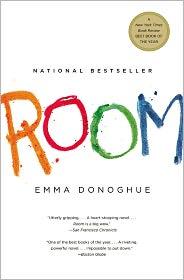
Room
by Emma Donoghue · 2010
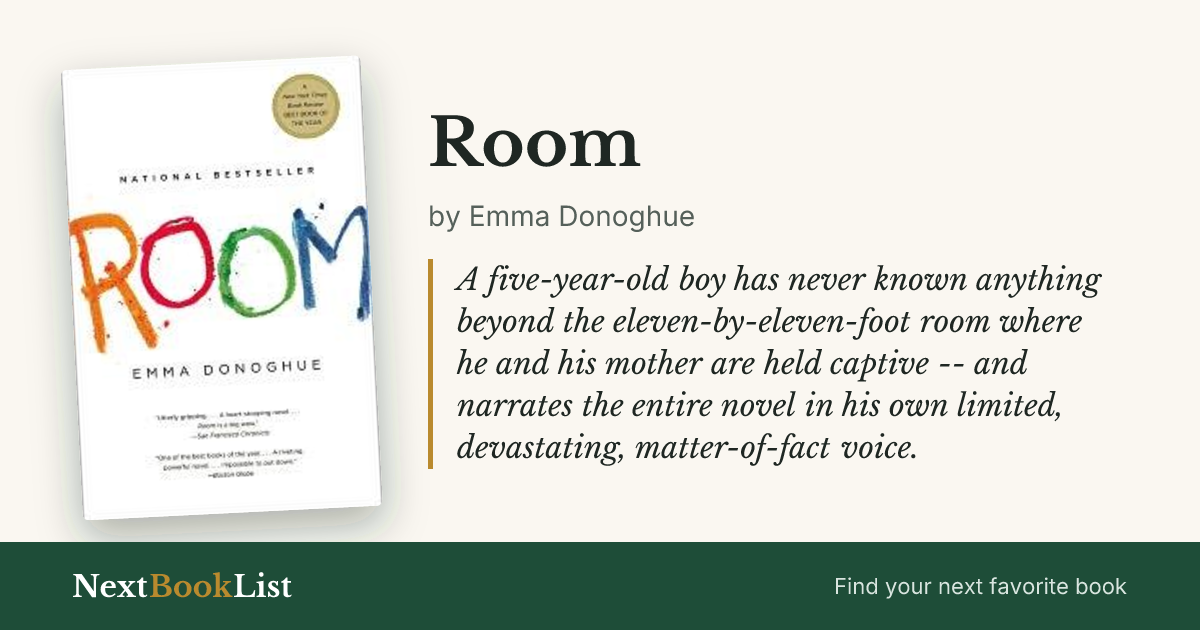
A five-year-old boy has never known anything beyond the eleven-by-eleven-foot room where he and his mother are held captive -- and narrates the entire novel in his own limited, devastating, matter-of-fact voice.
Worth reading? Room succeeds because Donoghue never breaks Jack's voice for convenience. He narrates his entire world, a single locked room, with the total sincerity of a kid who's never known anything else, which makes both the captivity and the harrowing escape land with a specificity a more conventional narrator couldn't deliver. The book's less-discussed second half, Jack's disorienting adjustment to the actual size of the world, is arguably more interesting than the escape itself.
| Author | Emma Donoghue |
|---|---|
| Published | 2010 |
| Publisher | Little, Brown and Company |
| Category | Fiction |
| Favorite quote | “Today I'm five.” |
The Verdict
Jack’s voice is the whole engine of this book, and Donoghue never cheats it for narrative convenience. He describes his single-room world with total, matter-of-fact sincerity, no dramatic irony winking at the reader, which is what makes both the captivity and the escape land as hard as they do.
The most underrated part of the novel is what happens after the escape. Most adaptations of this kind of premise would treat rescue as the finish line; Donoghue treats it as the start of an even harder process, and Jack’s disorientation at the sheer size and noise of the ordinary world is rendered with real specificity.
Read it if you want a novel that fully commits to a difficult narrative device and follows through past the obvious dramatic climax. Skip it if you want the captivity itself, rather than the aftermath, to be the book’s main focus.
you want a novel that commits fully to an unconventional narrator's limited understanding, Jack genuinely doesn't know the outside world exists as more than TV, and you're willing to sit with disturbing subject matter handled with real restraint rather than exploitation
you want the abduction and captivity itself to be the main dramatic focus -- the novel is more interested in Jack's psychological adjustment after escape than in the captivity as a thriller setup, and the pacing reflects that choice
Book Summary
Jack, narrating in his own five-year-old voice, has spent his entire life inside a single locked room where his mother, abducted seven years earlier by a man Jack calls "Old Nick," has raised him, having built an entire, coherent childhood world out of the room's few objects and a small television.
Jack's mother orchestrates a dangerous escape plan that relies entirely on Jack's ability to follow complicated instructions and convincingly play dead, a sequence Donoghue renders through Jack's confused, present-tense perception, making an objectively terrifying scene read as bewildering rather than conventionally suspenseful.
The novel's second half, often underdiscussed relative to the escape, focuses on Jack's disorienting readjustment to a world of unlimited space, strangers, and stimulation, arguing that trauma recovery for a child raised entirely inside captivity is its own long, difficult process distinct from the physical rescue itself.
Donoghue based the premise loosely on real captivity cases without depicting any single one directly, and deliberately narrates entirely through Jack rather than his mother, which spares the reader direct depiction of the sexual violence implied but never shown on the page.
Top 9 Lessons from Room
- Narrating entirely through Jack's limited five-year-old understanding lets the novel depict captivity and trauma without directly showing the worst of it, since Jack himself doesn't fully grasp what's happening to his mother.
- Jack's mother's effort to build a full, structured, even loving childhood for him inside a single room is used to show how thoroughly a parent can protect a child's sense of normalcy even under unbearable conditions.
- The escape sequence deliberately avoids conventional thriller pacing, Jack's confusion during the plan makes an objectively tense scene read as disorienting rather than pulse-pounding, which is a deliberate narrative choice, not a missed opportunity.
- The novel's second half argues that rescue is not the same as recovery, Jack's adjustment to unlimited space, strangers, and sensory overload is treated as its own long, difficult psychological process.
- Jack's mother's own struggle to reintegrate, guilt, family strain, media attention, is given real weight alongside Jack's story, refusing to let the novel become solely about the child's resilience while ignoring the adult survivor's harder road.
- By never showing the sexual violence directly and never fully explaining it to Jack within the text, the novel makes a deliberate choice about what trauma content actually needs to be shown to convey its weight.
- Jack's inability to distinguish TV from reality until the escape sets up the book's central idea: a child's sense of what's real is entirely shaped by the limits of their world.
- Ma's eventual decision to tell Jack the truth about the outside world is treated as one of the book's hardest parenting choices, showing what it cost her to protect his sense of normalcy for so long.
- The media attention that follows their rescue is portrayed as its own secondary trauma, exposure and public curiosity complicate a recovery that would already be difficult in private.
Top 1 Quotes from Room
"Today I'm five."
Emma Donoghue, Room
Frequently Asked Questions
Is Room worth reading?
Yes -- its commitment to a child narrator's limited perspective is genuinely well-executed and gives disturbing subject matter unusual emotional restraint.
What is Room about?
A five-year-old boy who has spent his entire life in a single locked room with his abducted mother, narrating their dangerous escape and his difficult adjustment to the outside world.
Is Room based on a true story?
It's fiction, though Donoghue has said the premise was loosely informed by real-world captivity cases without depicting any specific one.
Is Room appropriate for younger readers?
The subject matter, captivity and implied sexual violence, makes it more suitable for adult readers, even though it's narrated by a child.
Is there a movie version of Room?
Yes, a 2015 film adaptation starring Brie Larson, who won the Academy Award for Best Actress for her performance.
Ready to read it?
Get Room on Amazon