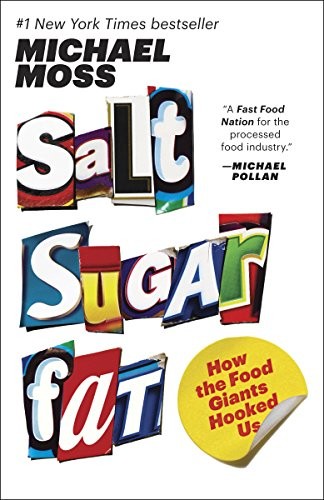
Salt Sugar Fat
by Michael Moss · 2013
Moss goes inside the processed food industry's own labs and internal memos to show how salt, sugar, and fat are engineered, tested, and combined specifically to make products impossible to stop eating.
Worth reading? Moss's advantage over most diet and nutrition books is that this isn't nutrition science, it's investigative journalism -- he got the internal memos, the former executives, the food scientists willing to talk about 'bliss points' on the record. That reporting makes the industry's intent concrete in a way that's hard to shrug off. It runs long across three separate deep dives (salt, sugar, fat), and by the fat section some of the momentum from the sugar chapters has worn off, but the case it builds is one of the most convincing pictures of why this food is so hard to eat in moderation.
| Full Title | Salt Sugar Fat: How the Food Giants Hooked Us |
|---|---|
| Author | Michael Moss |
| Published | 2013 |
| Publisher | Random House |
| Category | Health & Fitness |
| Favorite quote | “Some of the largest companies are now using brain scans to study how we react neurologically to certain foods, especially to sugar. They've discovered that the brain lights up for sugar the same way it does for cocaine.” |
The Verdict
Moss’s reporting does something most nutrition books can’t: it shows intent. Instead of arguing from population studies about what people happen to eat, he has the internal memos and the on-record food scientists explaining exactly how a “bliss point” gets calculated and why a snack is engineered to dissolve at a particular rate. That’s a different, harder-to-dismiss kind of evidence.
The structure (a long section each on salt, sugar, and fat) means the book runs long, and the fat section arrives after the sugar chapters have already made the sharpest version of the argument, so some momentum is gone by the end. It’s still worth finishing, but don’t expect the third act to hit as hard as the first two.
Read it if you want to understand why “just eat less” is harder than it sounds, and you want the industry’s own words as evidence. Skip it if you’re looking for nutrition science or a diet plan rather than a work of investigative reporting.
you want the reporting behind why processed food is so hard to eat in moderation, told through the executives and scientists who built it that way
you already know 'processed food is engineered to be addictive' and want new nutrition science rather than industry history and reporting
Book Summary
The book's core finding is that major food companies don't stumble into addictive products, they engineer them: teams of food scientists calculate the precise "bliss point" of sugar, the "mouthfeel" of fat, and the crunch and dissolve rate of salt to maximize how compulsively a product gets eaten, using the same rigor a pharmaceutical company would apply to a drug.
Moss traces this through the industry's own history, showing internal awareness (in some cases decades old) that these products were problematic for public health, alongside deliberate industry strategies to reformulate around health scares by swapping one problem ingredient for another (cutting fat while adding sugar, for instance) rather than making products genuinely healthier.
The throughline across the salt, sugar, and fat sections is that individual willpower is competing against organizations with enormous resources, dedicated science, and a direct financial incentive to make self-control as difficult as possible -- reframing "eat in moderation" advice as harder than it sounds, by design.
Top 8 Lessons from Salt Sugar Fat
- Major food companies employ food scientists specifically to calculate the 'bliss point' -- the precise level of sugar that maximizes craving and repeat consumption.
- The brain's response to concentrated sugar has been studied by food companies using brain-scan research similar to studies on responses to addictive drugs.
- Small, easy-to-overlook increases in daily consumption compound over time into significant weight gain -- the danger isn't one big binge, it's a slightly-too-much habit repeated daily.
- When a company reduces one 'bad' ingredient in a product (fat, for instance) for marketing purposes, it frequently increases another (sugar) to preserve the product's appeal, so 'improved' products aren't necessarily healthier overall.
- Some food industry insiders were aware decades ago that their products posed public health risks, based on internal documents and interviews with former executives.
- Government agricultural policy has, at points, actively helped industries offload a surplus of one ingredient (like dairy fat) into new products (like cheese) rather than encouraging less consumption.
- The 'crunch' and dissolve rate of salty snack foods is engineered as deliberately as their flavor, to extend how long a product keeps a person eating.
- Consumers retain real power in this dynamic -- purchasing decisions still ultimately drive what gets made, even against an industry built to exploit cravings.
Top 4 Quotes from Salt Sugar Fat
"They may have salt, sugar, and fat on their side, but we, ultimately, have the power to make choices. After all, we decide what to buy. We decide how much to eat."
Michael Moss, Salt Sugar Fat
"Some of the largest companies are now using brain scans to study how we react neurologically to certain foods, especially to sugar. They've discovered that the brain lights up for sugar the same way it does for cocaine."
Michael Moss, Salt Sugar Fat
"In a key--but commonly overlooked--aspect of obesity, weight gain can be caused by the slightest increases in consumption, if it continues day in and day out."
Michael Moss, Salt Sugar Fat
"Any improvement to the nutritional profile of a product can in no way diminish its allure, and this has led to one of the industry's most devious moves: lowering one bad boy ingredient like fat while quietly adding more sugar to keep people hooked."
Michael Moss, Salt Sugar Fat
Frequently Asked Questions
Is Salt Sugar Fat worth reading?
Yes -- it's investigative journalism rather than nutrition science, and the reporting (internal memos, former executives on the record) makes a concrete case for how deliberately processed food is engineered to be hard to stop eating.
What is Salt Sugar Fat about?
Michael Moss's inside account of how major food companies use food science to engineer the 'bliss point' of sugar, the mouthfeel of fat, and the crunch of salt to maximize cravings and repeat purchases.
Is Salt Sugar Fat still relevant today?
Yes -- the industry practices it documents (reformulating around health scares, engineering craving) are ongoing business strategies, not a one-time historical scandal.
Does Salt Sugar Fat recommend a diet?
No -- it's reporting on the food industry, not a nutrition plan. The practical takeaway is mostly about reading ingredient lists and understanding why processed food is hard to moderate, not a specific eating plan.
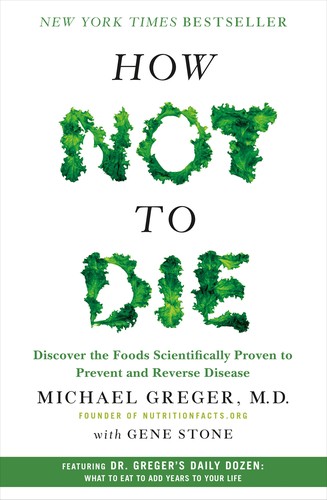
How does Salt Sugar Fat compare to How Not to Die?
Different genre -- Salt Sugar Fat is investigative journalism about the food industry's practices, while How Not to Die is a clinical evidence review of what to eat for disease prevention.
Ready to read it?
Get Salt Sugar Fat on Amazon