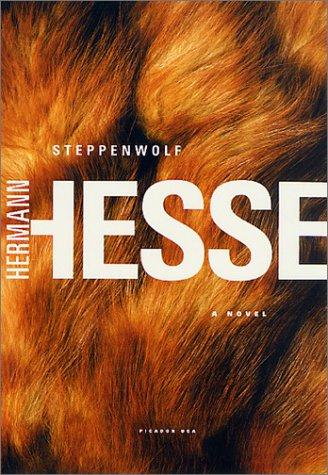
Steppenwolf
by Hermann Hesse · 1927
A middle-aged intellectual convinced he's split between a civilized man and a savage wolf gets pulled into a jazz club, a love affair, and a hallucinatory 'Magic Theater' that shatters his tidy self-image.
Worth reading? Steppenwolf became a countercultural touchstone decades after it was written for a reason: Harry Haller's conviction that he's split into a civilized man and a wolfish outsider is a real feeling dressed up in vivid, sometimes overwrought prose. The Magic Theater sequence at the end is a swing for the fences that either lands for you or doesn't, but the first two-thirds -- Haller's isolation, his conversations with Hermine, his slow reintroduction to pleasure -- is some of Hesse's best writing about how self-mythology can trap you.
| Full Title | Steppenwolf |
|---|---|
| Author | Hermann Hesse |
| Published | 1927 |
| Publisher | Picador |
| Category | Fiction |
| Favorite quote | “I have always believed, and still believe, that whatever good or bad fortune may come our way we can always give it meaning and transform it into something of value.” |
The Verdict
The first two-thirds of this book is what you’re really here for. Haller’s isolation, his rigid self-mythology, and Hermine slowly dragging him back toward dancing, sex, and jazz he’d theorized himself out of – that’s Hesse writing at his sharpest about how the stories we tell about ourselves can become cages.
The Magic Theater ending is a genuine swing. It goes fully surreal, and whether it lands for you is going to depend on your tolerance for hallucinatory, non-linear prose after 150 pages of relatively grounded storytelling.
Read it if you’ve ever felt like two people at war inside one body. Skip it if you need your endings tidy – Hesse isn’t interested in curing Haller, just in cracking open a bigger, messier idea of what a self actually is.
you want a novel that takes midlife crisis and existential despair seriously as literature, especially if you've ever felt caught between two versions of yourself
you want realism -- the last third goes fully surreal and hallucinatory, and if that tonal shift isn't for you, the book will lose you there
Book Summary
Harry Haller, a solitary, depressed intellectual nearing 50, believes himself split between a refined, cultured "human" self and a wild, antisocial "wolf of the steppes" -- a dualism he's built his entire identity around until he meets Hermine, a woman who drags him into dance halls, jazz clubs, and physical pleasure he'd walled himself off from.
Hesse's real target is Haller's self-mythology itself: the "man or wolf" duality Haller treats as profound truth is revealed, through the mysterious "Treatise on the Steppenwolf" pamphlet and later the Magic Theater, to be a reductive lie -- a person contains not two selves but thousands, and clinging to a simple binary is its own kind of prison.
The novel's final third, the hallucinatory "Magic Theater for Madmen Only," breaks from realism entirely into a series of surreal vignettes designed to shatter Haller's fixed self-conception -- critics and readers remain split on whether this section is Hesse's boldest writing or his most self-indulgent.
Written in the aftermath of WWI and amid Hesse's own personal crisis (depression, a failing marriage, psychoanalysis with a student of Jung), the novel channels real interwar despair and a specifically Jungian interest in integrating fragmented parts of the self rather than suppressing them.
Top 7 Lessons from Steppenwolf
- Haller's 'man vs. wolf' duality, which he treats as deep self-knowledge, is actually revealed as a reductive trap -- the novel argues a person contains many selves, not two, and false simplicity is its own prison.
- Hermine functions less as a conventional love interest than as a guide pulling Haller back into sensation, pleasure, and social life he'd theorized himself out of.
- The 'Treatise on the Steppenwolf,' a pamphlet Haller finds and reads within the novel, is Hesse's device for having a text diagnose the protagonist before the protagonist can fully see himself.
- The Magic Theater sequence draws on Jungian ideas about integrating fragmented, suppressed parts of the psyche rather than rejecting them as the 'wolf' side of yourself.
- The novel was written during a period of real personal crisis for Hesse -- depression, marital collapse, psychoanalysis -- and that lived despair gives Haller's isolation its weight.
- Steppenwolf became a touchstone for 1960s counterculture decades after publication, prized for its embrace of psychological fragmentation, drugs-adjacent imagery, and rejection of bourgeois respectability.
- The novel doesn't offer Haller a tidy cure -- it ends with him having glimpsed a bigger, more chaotic version of selfhood, not having 'solved' his depression.
Top 2 Quotes from Steppenwolf
"Every age, every culture, every custom and tradition has its own character, its own weakness and its own strength, its beauties and cruelties; it accepts certain sufferings as matters of course, it puts up patiently with certain evils."
Hermann Hesse, Steppenwolf
"I have always believed, and still believe, that whatever good or bad fortune may come our way we can always give it meaning and transform it into something of value."
Hermann Hesse, Steppenwolf
Frequently Asked Questions
Is Steppenwolf worth reading?
Yes, especially if you've felt torn between two versions of yourself -- the first two-thirds are some of Hesse's strongest writing, even if the surreal ending isn't for everyone.
What is Steppenwolf about?
Harry Haller, a depressed intellectual who believes he's split between a civilized man and a wild wolf, gets pulled back into life and pleasure by Hermine, culminating in a hallucinatory 'Magic Theater' that dismantles his self-image.
Why is Steppenwolf associated with 1960s counterculture?
Its embrace of psychological fragmentation, altered states, and rejection of bourgeois conformity resonated strongly with 1960s readers decades after its 1927 publication -- a band even took its name.
Is Steppenwolf a difficult book to read?
The prose is accessible, but the final third shifts into surreal, hallucinatory territory that some readers find disorienting compared to the more grounded opening.
Should I read Siddhartha or Steppenwolf first?
Siddhartha is shorter and more parable-like; Steppenwolf is denser and more psychologically raw -- either works as an entry point depending on whether you want spiritual allegory or midlife-crisis realism.
Ready to read it?
Get Steppenwolf on Amazon