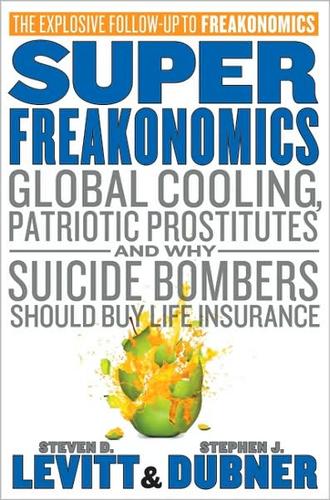
Superfreakonomics
by Steven D. Levitt · 2009
Steven D. Levitt's take on business, the honest verdict is below.
Worth reading? Levitt and Dubner's second round of 'the hidden side of everything,' weirder and more trivia-driven than the first. Read it for fun on a plane, not for a coherent thesis. Skip it if you wanted Freakonomics's tighter argument, this one wanders.
| Author | Steven D. Levitt |
|---|---|
| Published | 2009 |
| Category | Business & Money |
| Favorite quote | “People respond to incentives, although not necessarily in ways that are predictable or manifest.” |
The Verdict
Levitt and Dubner’s second round of ‘the hidden side of everything,’ weirder and more trivia-driven than the first. Read it for fun on a plane, not for a coherent thesis. Skip it if you wanted Freakonomics’s tighter argument, this one wanders.
anyone weighing whether Superfreakonomics belongs on their business and money shelf
you want a different angle than Steven D. Levitt's
Top 8 Lessons from Superfreakonomics
- Conventional wisdom is usually someone's story, not the data.
- Incentives explain behavior better than morals do, follow the incentive.
- Terrorism is statistically less deadly than everyday hazards we ignore.
- Information changes everything: know more and you act completely differently.
- Cheap, boring fixes (like fertilizer) beat splashy ones for saving lives.
- Names, police timing, and seatbelts have counterintuitive effects on outcomes.
- Experts often defend their field's myths; data doesn't care about their pride.
- Small behavioral nudges produce big shifts in huge systems.
Top 1 Quotes from Superfreakonomics
"People respond to incentives, although not necessarily in ways that are predictable or manifest."
Steven D. Levitt, Superfreakonomics
Frequently Asked Questions
Is Superfreakonomics worth reading?
Yes for an entertaining read full of surprising stats. No if you want a single strong argument.
What is the main idea of Superfreakonomics?
The world is weirder than the headlines say; follow incentives and data to see the real story.
Who should read Superfreakonomics?
Curious readers who like pop-economics puzzles over a serious textbook.
Should I read Freakonomics first?
Not required, but the first book is tighter. This one is looser and more trivia-heavy.
Ready to read it?
Get Superfreakonomics on Amazon