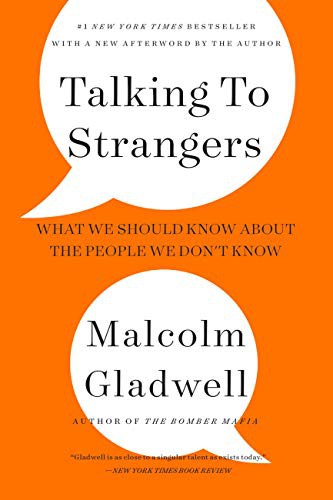
Talking to Strangers
by Malcolm Gladwell · 2019
Malcolm Gladwell's take on self-improvement, the honest verdict is below.
Worth reading? Gladwell on why we misread people we don't know, hung on high-profile cases. Provocative and readable; skip if his story-first, argument-loose style frustrates you, because critics fairly note he cherry-picks.
| Author | Malcolm Gladwell |
|---|---|
| Published | 2019 |
| Category | Self-Improvement & Psychology |
| Favorite quote | “The right way to talk to a stranger is with caution and humility.” |
The Verdict
Gladwell on why we misread people we don’t know, hung on high-profile cases. Provocative and readable; skip if his story-first, argument-loose style frustrates you, because critics fairly note he cherry-picks.
anyone weighing whether Talking to Strangers belongs on their self-improvement and psychology shelf
you want a different angle than Malcolm Gladwell's
Top 8 Lessons from Talking to Strangers
- We default to assuming strangers are telling the truth.
- That 'truth-default' is usually useful but sometimes catastrophic.
- We badly overestimate our ability to read faces and demeanor.
- Transparency is a myth: people's insides don't match their outsides.
- Behavior is coupled to context, not portable across situations.
- Mismatched signals cause us to misjudge honest and dishonest people alike.
- Institutions punish the truth-default even though it's mostly rational.
- Understanding strangers requires humility about how little we can tell.
Top 3 Quotes from Talking to Strangers
"We think we can easily see into the hearts of others based on the flimsiest of clues."
Malcolm Gladwell, Talking to Strangers
"The right way to talk to a stranger is with caution and humility."
Malcolm Gladwell, Talking to Strangers
"Strangers are not easy."
Malcolm Gladwell, Talking to Strangers
Frequently Asked Questions
Is Talking to Strangers worth reading?
Yes for the counterintuitive ideas and engaging cases. Read it critically; the arguments lean on selective examples.
What is the main idea of Talking to Strangers?
We're bad at judging people we don't know because we default to trusting them and wrongly assume transparency.
Who should read Talking to Strangers?
Anyone interested in social psychology, misjudgment, and Gladwell's storytelling.
Ready to read it?
Get Talking to Strangers on Amazon