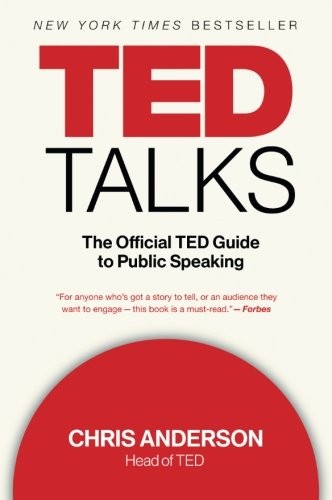
TED Talks
by Chris Anderson · 2016
The TED curator who worked with hundreds of the platform's speakers distills what actually makes an 18-minute talk spread, and what kills one.
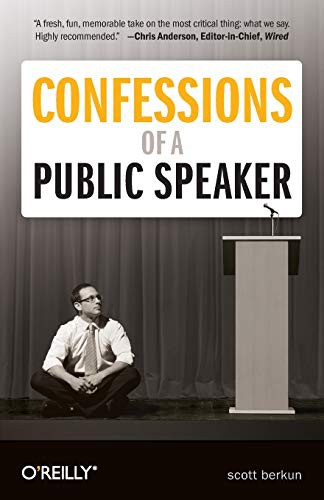
Worth reading? Anderson has a vantage point almost nobody else writing about public speaking has: he's personally worked with the speakers behind hundreds of TED talks, including many of the most-watched in the platform's history, and this book distills the patterns he's observed across that unusually large, unusually well-documented sample. The core framework -- build a talk around one idea worth spreading, not several -- is more disciplined and format-specific than Confessions of a Public Speaker's broader approach, which makes this the better choice when you have one specific important talk to build, not general speaking comfort to develop.
| Full Title | TED Talks: The Official TED Guide to Public Speaking |
|---|---|
| Author | Chris Anderson |
| Published | 2016 |
| Category | Business & Money |
| Favorite quote | “There's a simple way to think about it. You have a big idea inside your head, and you want to get it inside theirs.” |
The Verdict
Anderson’s sample size is the differentiator – most speaking books draw on one person’s experience, and this one draws on patterns observed across hundreds of talks watched by hundreds of millions of people. The one-idea, one-throughline discipline is worth adopting even outside the TED format specifically; it’s the single most common thing overstuffed presentations get wrong.
you're building one specific important talk (a keynote, a pitch, a TED-style presentation) and want the exact structural playbook
you want general speaking comfort for everyday situations, this is optimized specifically for the polished, idea-driven, single-talk format TED popularized, not casual or frequent speaking
Book Summary
A great talk is built around exactly one idea, developed with enough depth that the audience actually understands and can explain it afterward -- trying to cover multiple ideas in a single talk, even related ones, dilutes all of them and leaves the audience with nothing solid to hold onto. Anderson calls this "idea building": constructing a coherent, connected explanation rather than a list of points.
He also identifies specific "talk killers" that undermine otherwise good content: selling from the stage (audiences immediately distrust a pitch disguised as an idea), rambling without a throughline, reading from slides, and generic inspiration without specific, concrete substance underneath it. The throughline -- being able to state your talk's core idea in one sentence -- is his test for whether a talk is ready.
Top 7 Lessons from TED Talks
- Build a talk around exactly one idea, developed deeply, rather than covering several ideas superficially.
- State your talk's core idea (the throughline) in one sentence before building anything else.
- Avoid selling from the stage -- audiences distrust a pitch disguised as an idea and disengage immediately.
- Use specific, concrete stories and examples rather than generic inspiration without substance.
- Don't read from slides -- slides should support the talk, not replace the speaker's own delivery.
- Structure matters as much as content: a clear connective thread between points beats a list of disconnected insights.
- Rehearse enough to speak naturally around your structure, not to recite a memorized script word for word.
Top 2 Quotes from TED Talks
"There's a simple way to think about it. You have a big idea inside your head, and you want to get it inside theirs."
Chris Anderson, TED Talks
"The only true failure in public speaking is if you don't connect."
Chris Anderson, TED Talks
Frequently Asked Questions
Is TED Talks by Chris Anderson worth reading?
Yes, especially if you're building one specific, important presentation. Anderson's direct experience working with hundreds of TED speakers gives the framework unusual credibility and specificity.
What is the throughline in TED Talks?
The single core idea of your talk, stated in one clear sentence, that everything else in the presentation should connect back to. Anderson uses it as the primary test of whether a talk is structurally ready.
Who is Chris Anderson (TED)?
The curator of TED since 2001, who has worked directly with the speakers behind many of the platform's most-watched talks, distinct from the Chris Anderson who wrote The Long Tail and Free.
How is this different from Confessions of a Public Speaker?
This book is more structured and specifically optimized for the TED-style single-idea talk format. Confessions of a Public Speaker is broader, more anecdotal, and better suited to general speaking comfort across many settings.
Ready to read it?
Get TED Talks on Amazon