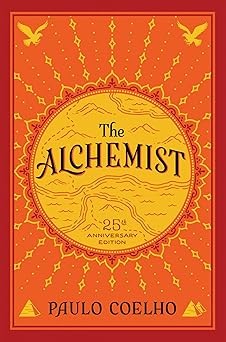
The Alchemist
by Paulo Coelho · 1988
A shepherd's journey to the Egyptian pyramids, and one of the best-selling books alive, read as fiction, absorbed as a self-improvement fable.
Worth reading? The Alchemist is technically a novel, but it functions on this site the way Man's Search for Meaning does: a story that hands you a life philosophy, not a framework. Santiago's journey toward his 'Personal Legend' is really an extended metaphor for pursuing purpose despite fear, setbacks, and comfortable distractions -- read it in one sitting, and don't expect exercises or research, just a fable that's stuck with tens of millions of readers for a reason.
| Full Title | The Alchemist: A Fable About Following Your Dream |
|---|---|
| Author | Paulo Coelho |
| Published | 1988 |
| Category | Self-Improvement & Psychology |
| Favorite quote | “And, when you want something, all the universe conspires in helping you to achieve it.” |
The Verdict
Coelho’s fable format does something a straight self-help book can’t: it makes the abstract fear of pursuing a calling concrete through a specific character’s journey, which is probably why it’s outsold most actual self-help books combined. Read it once, in one sitting if you can, and don’t overanalyze the mysticism – take the Personal Legend idea and leave the rest.
you want an easy, symbolic, one-sitting story about pursuing a calling ('Personal Legend'), not a research-based framework
you want practical, actionable advice, this is allegorical fiction, and its lessons are metaphorical, not step-by-step
Book Summary
Coelho's central metaphor is the "Personal Legend" -- the unique purpose or calling each person is meant to pursue, which the universe (in the book's mystical framing) actively conspires to help you fulfill if you commit to the pursuit. Most people abandon their Personal Legend for comfort, safety, or others' expectations, and the book treats that abandonment as the real tragedy, more than any external failure along the way.
The journey itself matters as much as the destination: Santiago's treasure, when he finally finds it, turns out to be back where he started, which reframes the entire quest as being about who the pursuit made him become, not just what it materially delivered. Fear of loss, in Coelho's framing, is the primary obstacle to pursuing a calling -- more than any external obstacle the journey throws at you.
Top 7 Lessons from The Alchemist
- Identify your 'Personal Legend' -- the specific purpose you're avoiding out of comfort or fear.
- Fear of loss, more than actual obstacles, is usually what stops people from pursuing a calling.
- Signs and omens are worth paying attention to, per the book's framing, if you're already oriented toward your purpose.
- The pursuit of a goal changes who you become, independent of whether you get the exact outcome you expected.
- Comfort and safety are the most common reasons people abandon a meaningful pursuit, not dramatic failure.
- Sometimes the thing you're searching for was near where you started -- the point is what the journey built in you.
- Commitment to a purpose tends to align circumstances in your favor over time, at least according to the book's philosophy.
Top 4 Quotes from The Alchemist
"And, when you want something, all the universe conspires in helping you to achieve it."
Paulo Coelho, The Alchemist
"It's the fear of failure that most prevents us from seeking our Personal Legend."
Paulo Coelho, The Alchemist
"The secret of life, though, is to fall seven times and to get up eight times."
Paulo Coelho, The Alchemist
"People are capable, at any time in their lives, of doing what they dream of."
Paulo Coelho, The Alchemist
Frequently Asked Questions
Is The Alchemist worth reading?
Yes, as a short, symbolic story about pursuing purpose. It's fiction rather than a self-help framework, but its themes of fear and calling have resonated with tens of millions of readers for a reason.
What is the main idea of The Alchemist?
Everyone has a unique purpose ('Personal Legend') worth pursuing, and fear -- not external obstacles -- is usually the real barrier to pursuing it.
Is The Alchemist a self-help book or a novel?
It's a novel, a fable specifically, but it's widely read and shelved as inspirational/self-improvement literature because of its explicit life-philosophy themes.
How long does it take to read The Alchemist?
It's short -- around 160-190 pages depending on edition, and most readers finish it in a single sitting or two.
Ready to read it?
Get The Alchemist on Amazon