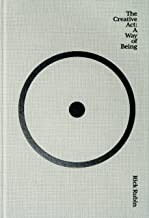
The Creative Act
by Rick Rubin · 2023
Legendary music producer Rick Rubin argues creativity isn't a skill you learn -- it's a state of awareness you practice, and this book is a collection of short, aphoristic chapters trying to put you in it.
Worth reading? The Creative Act works best in small doses -- read a few pages, put it down, come back later -- and falls apart if you try to read it front to back like a normal nonfiction book, because Rubin never builds a linear argument. It's genuinely different from the productivity-and-habits crowd it gets shelved next to, closer to a spiritual text than a business book, and that's exactly why it'll frustrate readers who came in wanting Atomic Habits with better production credits.
| Full Title | The Creative Act: A Way of Being |
|---|---|
| Author | Rick Rubin |
| Published | 2023 |
| Category | Self-Improvement & Psychology |
| Favorite quote | “Art is not a result. It is a way of being in the world.” |
The Verdict
What separates this from the usual creativity book is Rubin’s own resume doing a lot of quiet persuading – he’s produced albums across nearly every genre, and the book’s insistence that technique matters less than awareness carries more weight coming from someone who’s actually shipped decades of work under that philosophy. Whether that translates to your own field is the real test, and it won’t for everyone.
you want to think differently about creative work as a practice or mindset, and you're open to a book that reads more like a meditation guide than a how-to manual
you want concrete step-by-step frameworks (a la Atomic Habits or a craft-specific guide) -- this book is deliberately abstract and mystical, with almost no actionable tactics, and readers wanting a system will find it frustrating
Book Summary
Rubin's central claim is that everyone is creative by default -- creativity isn't a talent some people have and others don't, it's a mode of attention available to anyone willing to notice and act on it. The book's job is to strip away the mental blocks (self-judgment, comparison, the need for originality) that keep people from that mode.
Structurally it's made of nearly 80 very short chapters, some barely a page, meant to be read in any order or returned to individually rather than consumed as a linear argument. That format matches the book's own advice: don't force a system onto something that works better as intuition.
Rubin repeatedly separates the making of art from the judging of it -- his advice is to create without an audience in mind, then edit and curate with the audience in mind, and never blend the two mindsets in the same sitting.
Top 8 Lessons from The Creative Act
- Creativity isn't a talent reserved for artists -- it's a mode of attention anyone can practice.
- Separate the making phase (no self-judgment) from the editing phase (full judgment) -- blending them kills output.
- Constraints and limitations often produce better work than total freedom, because they force decisions.
- The work you're avoiding is often the work you most need to do -- resistance is information, not just an obstacle.
- Inspiration should be captured immediately in some form, even badly, rather than waited on to arrive polished.
- Comparing your work to others' finished output (instead of their own messy process) distorts your sense of your own progress.
- Silence and boredom are productive conditions for creative work, not empty time to be filled.
- Finishing and releasing work matters more than making it perfect -- perfectionism is often fear wearing a productive costume.
Top 6 Quotes from The Creative Act
"Art is not a result. It is a way of being in the world."
Rick Rubin, The Creative Act
"The way you do anything is the way you do everything."
Rick Rubin, The Creative Act
"All that matters is that you are making something you love, to the best of your ability, here and now."
Rick Rubin, The Creative Act
"In terms of priority, inspiration comes first. You come next. The audience comes last."
Rick Rubin, The Creative Act
"Failure is the information you need to get where you're going."
Rick Rubin, The Creative Act
"Zoom in and obsess. Zoom out and observe. We get to choose."
Rick Rubin, The Creative Act
Frequently Asked Questions
Is The Creative Act worth reading?
Yes, if you want a mindset-level book on creativity rather than a tactical guide. It's best read slowly, a few chapters at a time, not straight through.
Is The Creative Act only for musicians or artists?
No. Rubin deliberately writes for anyone doing creative work -- writers, entrepreneurs, designers -- the examples lean musical because of his background, but the ideas are general.
Does The Creative Act give practical creativity techniques?
Very few. It's intentionally more philosophical and aphoristic than tactical -- readers wanting concrete exercises or frameworks will find it thin on specifics.
How is The Creative Act structured?
Almost 80 short chapters, many under two pages, meant to be read out of order or revisited individually rather than as one continuous argument.
Ready to read it?
Get The Creative Act on Amazon