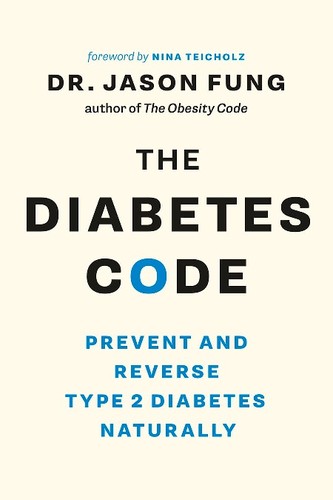
The Diabetes Code
by Jason Fung, M.D. · 2018
Fung argues type 2 diabetes isn't a one-way, lifelong sentence -- it's a reversible disease of too much insulin, and fasting is the most direct way to bring insulin back down.
Worth reading? Fung's case builds directly on his insulin-resistance argument from The Obesity Code and applies it specifically to type 2 diabetes: the disease is framed as too much insulin over too many years, driven by chronically high-refined-carb eating, and reversible by lowering insulin through fasting and dietary change rather than just medicating the blood sugar number. That reframe -- diabetes as reversible rather than a one-way, lifelong diagnosis -- is the book's most important and most useful claim. The weak spot is the same as Fung's other books: real confidence delivered as settled fact, with less space given to the medical complexity of tapering medications safely under supervision.
| Full Title | The Diabetes Code: Prevent and Reverse Type 2 Diabetes Naturally |
|---|---|
| Author | Jason Fung, M.D. |
| Published | 2018 |
| Publisher | Greystone Books |
| Category | Health & Fitness |
| Favorite quote | “Diabetes is not a chronic and progressive disease. It is a reversible dietary disease.” |
The Verdict
Fung’s biggest service here is reframing type 2 diabetes as something other than a one-way street. Most patients are told the disease only gets managed, never reversed, and medication only increases over time. Fung’s insulin-centered explanation for why that’s not automatically true is clear, well-argued, and backed by real case examples from his own clinic.
The caution required is the same one that applies to Fung’s other books: he writes with more certainty than a genuinely complex, actively-studied area of medicine warrants, and readers on medication need a doctor actively managing dose changes alongside any fasting protocol, not just this book as a guide.
Read it if you want the clearest case for type 2 diabetes as a reversible insulin problem rather than a permanent diagnosis. Skip it if you’re looking for a self-directed plan to run without medical supervision – this approach genuinely needs a doctor adjusting medication in real time.
you or someone close to you has type 2 diabetes and you want the case that it's a reversible condition of insulin resistance, not a permanent diagnosis to be managed with more medication indefinitely
you're on diabetes medication and looking for a plan to try alone -- fasting and carb changes described here need to be managed with a doctor, since they can require real-time medication adjustment
Book Summary
Fung's central claim is that type 2 diabetes is fundamentally a disease of too much insulin (not too little), built up over years of chronically high insulin levels overwhelming the body's insulin resistance defenses, which means the standard treatment of adding more insulin or insulin-boosting medication treats the symptom (blood glucose) while worsening the underlying cause.
The book argues type 2 diabetes exists on a continuum with obesity and fatty liver rather than as a separate disease -- excess sugar not burned for energy gets stored as fat in the liver and pancreas, driving further insulin resistance, in a self-reinforcing cycle that Fung frames as reversible if you break it early enough.
The practical case centers on intermittent and extended fasting combined with a lower-refined-carbohydrate diet as the most direct way to lower insulin and let the body burn off the excess liver and pancreatic fat driving the disease, with Fung presenting real-world patient cases from his own fasting clinic as evidence the approach can reduce or eliminate medication under medical supervision.
Top 9 Lessons from The Diabetes Code
- Type 2 diabetes is reframed as a disease of chronically too much insulin, not too little -- the opposite emphasis from how it's often explained to patients.
- Standard treatment that adds more insulin or insulin-boosting medication is argued to treat the visible blood sugar number while potentially worsening the underlying insulin-resistance problem.
- Type 2 diabetes, obesity, and fatty liver are presented as points on the same continuum driven by the same mechanism, rather than three separate diagnoses.
- Excess dietary sugar not immediately burned for energy is described as getting stored as fat in the liver and pancreas specifically, which is framed as the direct driver of worsening insulin resistance over time.
- Fung frames type 2 diabetes as reversible, not a permanent, lifelong diagnosis, if the underlying insulin resistance is addressed early enough through diet and fasting.
- Refined carbohydrates and sugar are singled out as the dietary drivers most directly tied to the chronic insulin elevation behind the disease, more so than dietary fat.
- Extended and intermittent fasting are presented as the most direct lever for lowering insulin, since fasting periods keep insulin low for longer than any dietary composition change alone.
- The book stresses that fasting or major carbohydrate changes while on diabetes medication requires medical supervision, since falling blood sugar can require real-time medication dose adjustments to avoid dangerous lows.
- Case examples from Fung's own fasting clinic are used to argue that patients have reduced or eliminated insulin and medication use under supervised fasting protocols, framed as real-world evidence for the reversibility claim.
Top 4 Quotes from The Diabetes Code
"Type 2 diabetes is a disease of too much sugar, but more specifically, it is a disease of too much insulin."
Jason Fung, M.D., The Diabetes Code
"Diabetes is not a chronic and progressive disease. It is a reversible dietary disease."
Jason Fung, M.D., The Diabetes Code
"The root cause of the hyperglycemia in type 2 diabetes is high insulin resistance."
Jason Fung, M.D., The Diabetes Code
"Metabolic syndrome, of which obesity and type 2 diabetes are a key part, are ultimately caused by—you guessed it—too much sugar."
Jason Fung, M.D., The Diabetes Code
Frequently Asked Questions
Is The Diabetes Code worth reading?
Yes, if you or someone you know has type 2 diabetes and you want the case that it's a reversible insulin-resistance condition rather than a permanent, ever-worsening diagnosis -- Fung's mechanism explanation is clear, though any fasting or medication changes need real medical supervision, not just the book.
What is The Diabetes Code about?
Jason Fung argues type 2 diabetes is caused by chronically elevated insulin, not simply high blood sugar, and lays out a case for fasting and lower-refined-carbohydrate eating as a way to lower insulin and potentially reverse the disease under a doctor's supervision.
Can you fast while on diabetes medication, according to The Diabetes Code?
The book is explicit that fasting and major dietary changes require close medical supervision if you're on diabetes medication, since falling blood sugar can require real-time dose adjustments to avoid dangerously low levels.
Is The Diabetes Code the same argument as The Obesity Code?
Related -- both are built on Fung's insulin-resistance framework, but The Obesity Code focuses on obesity and weight in general, while The Diabetes Code applies the same insulin argument specifically to preventing and reversing type 2 diabetes.
Does The Diabetes Code claim diabetes can always be reversed?
It argues reversal is possible for many patients, especially earlier in the disease, using real patient cases from Fung's clinic as evidence, but it doesn't claim every case is reversible and stresses that any attempt needs medical supervision.
Ready to read it?
Get The Diabetes Code on Amazon