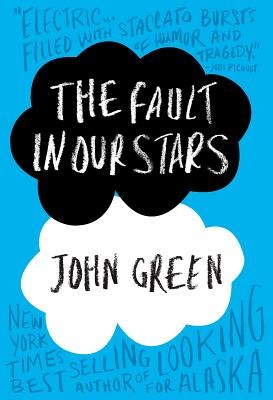
The Fault in Our Stars
by John Green · 2012
Two teenagers with cancer fall in love at a support group, and the book refuses to let either the romance or the illness turn into a cliche.
Worth reading? The Fault in Our Stars earns its tears the hard way -- by making Hazel and Gus specific, funny, and aware of their own cliches, rather than by manufacturing sentimental moments. Green's real target is the genre of 'inspirational cancer stories,' and he's writing against it even while writing one.
| Author | John Green |
|---|---|
| Published | 2012 |
| Publisher | Dutton Books |
| Category | Fiction |
| Favorite quote | “I fell in love the way you fall asleep: slowly, and then all at once.” |
The Verdict
What separates this from the sentimental-illness-novel pack is that Hazel narrates her own resentment of the genre in real time. She’s aware she’s supposed to be an inspiration, and she pushes back on it, which gives the book permission to be funny and sharp instead of maudlin.
Green’s dialogue is the most divisive element – Hazel and Gus talk like they’ve read every novel worth reading and have opinions ready on all of them. It’s a stylistic choice, not an accident, and whether it lands for you probably determines whether the whole book lands for you.
The Amsterdam sequence, where the quest for meaning runs headlong into a bitter, unhelpful author, is the book’s smartest move: it refuses to give Hazel the tidy answer she’s looking for, which is the same refusal the book extends to its readers.
Read it if you want a YA romance that’s honest about what dying young actually looks like, logistics and boredom included. Skip it if hyper-articulate teenage dialogue takes you out of the story instead of into it.
you want a YA romance that's honest about what dying young actually looks like -- the boredom, the logistics, the anger -- instead of a sanitized 'inspiring cancer kid' story
you find precocious, hyper-articulate teenage dialogue grating -- Green's characters talk like philosophy majors, which some readers find charming and others find implausible
Book Summary
Hazel Grace Lancaster has stage IV thyroid cancer and drags an oxygen tank everywhere; she meets Augustus Waters, a former basketball player who lost a leg to osteosarcoma, at a cancer support group neither of them wants to be at. Their relationship is built on a shared, deliberately unsentimental sense of humor about their own mortality, which Green uses to sidestep the genre's usual inspirational-cancer-kid tropes.
Hazel's obsession with a fictional novel, An Imperial Affliction, and its unresolved ending drives the plot toward Amsterdam, where she and Gus hope to get answers from the reclusive author -- a trip that becomes the book's emotional and literal turning point, and that deliberately subverts the "story gets resolved" expectation the characters themselves are hoping for.
Green's real subject is how you make meaning out of a life you know will be short, without lying to yourself about it being "worth it" in some tidy narrative sense. The book is explicitly skeptical of stories that turn dying kids into inspirational lessons for the living, and it says so directly through Hazel's own narration.
Top 8 Lessons from The Fault in Our Stars
- Hazel and Gus meet at a cancer support group and bond over a shared refusal to perform the 'brave cancer kid' role that the adults around them expect.
- Hazel's fixation on the unresolved ending of a fictional novel, An Imperial Affliction, mirrors her own fear of an unresolved life -- she needs to know what happens after the story stops, because her own story might stop the same way.
- The trip to Amsterdam to meet the novel's author subverts the expectation that a quest like this resolves neatly -- the author turns out to be bitter and unhelpful, not a source of wisdom.
- Gus's insistence on 'a good story' and heroic meaning clashes with Hazel's more clear-eyed acceptance that some deaths don't come with a lesson attached, and the book sides more with Hazel's view by the end.
- The novel is explicitly critical of the genre of inspirational illness stories -- Hazel resents being treated as a lesson for healthy people rather than a person living her own life.
- Isaac, Gus's friend who loses his eyesight to cancer, provides a parallel arc of loss and dark humor that keeps the book from being only about Hazel and Gus's romance.
- The book treats the practical realities of terminal illness -- oxygen tanks, medical bills, parents managing their own grief in advance -- as part of the story rather than background detail.
- Gus's death, when it comes, is handled with less ceremony than the book's earlier chapters might suggest, which is part of Green's point about how death actually happens versus how stories usually stage it.
Top 4 Quotes from The Fault in Our Stars
"That's the thing about pain, Hazel. It demands to be felt."
John Green, The Fault in Our Stars
"I fell in love the way you fall asleep: slowly, and then all at once."
John Green, The Fault in Our Stars
"The world is not a wish-granting factory."
John Green, The Fault in Our Stars
"You don't get to choose if you get hurt in this world, old man, but you do have some say in who hurts you."
John Green, The Fault in Our Stars
Frequently Asked Questions
Is The Fault in Our Stars worth reading?
Yes -- it's an emotionally honest YA romance that deliberately pushes back against sentimental 'inspiring cancer kid' cliches even while telling a story about two teenagers with cancer.
What is The Fault in Our Stars about?
Hazel and Gus, two teenagers who meet at a cancer support group, fall in love, and travel to Amsterdam to meet the reclusive author of Hazel's favorite novel.
Is The Fault in Our Stars sad?
Yes -- it's a book about teenagers with terminal illness, and it doesn't soften the ending to spare you.
Is The Fault in Our Stars appropriate for teens?
It's written for a young-adult audience and handles illness, death, and grief directly but not gratuitously.
Is the movie faithful to the book?
The 2014 film adaptation follows the book's plot and dialogue closely, including much of Green's original wording.
Ready to read it?
Get The Fault in Our Stars on Amazon