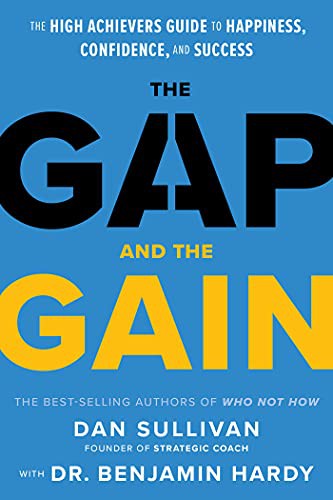
The Gap and the Gain
by Dan Sullivan & Benjamin Hardy · 2021
The book that explains why hitting every goal on your list still feels like losing.
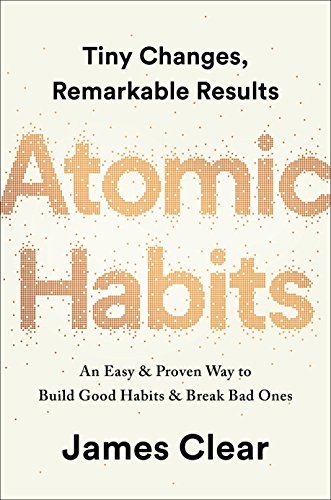
Worth reading? Atomic Habits tells you how to build the system that gets you the win. The Gap and the Gain tells you how to actually feel the win once you've got it -- a problem Atomic Habits doesn't really address, because it assumes progress will feel good once it happens. Sullivan and Hardy's argument is that for high achievers, it usually doesn't, because they're measuring against an ideal instead of their starting point. Skip it if you're not already the type who sets ambitious goals and hits most of them -- the whole book is built around a specific failure mode of high achievers, and if that's not your problem, the framework won't have much to grab onto. It's a lens correction, not a general-purpose happiness book.
| Full Title | The Gap and the Gain: The High Achievers' Guide to Happiness, Confidence, and Success |
|---|---|
| Author | Dan Sullivan & Benjamin Hardy |
| Published | 2021 |
| Publisher | Hay House |
| Category | Self-Improvement & Psychology |
| Favorite quote | “Winners focus on and measure their progress: the Gain. Losers focus on and measure what's missing: the Gap.” |
The Verdict
Dan Sullivan’s core insight is simple and easy to miss: you can measure your life against an ideal or against your starting point, and only one of those measurements will ever let you feel like you’re winning. The Gap and the Gain is short, repetitive by design, and built for the specific kind of person who’s great at achieving and bad at noticing it.
you keep achieving your goals and still feel behind
you're not high-achieving or goal-driven -- the whole framework is built around ambitious people who keep moving the finish line
Book Summary
There are only two ways to measure your progress: against the Gap (the distance between where you are and some ideal) or against the Gain (the distance between where you are and where you started). Sullivan and Hardy argue that ambitious people default to measuring the Gap, which means the goalposts move every time you hit one, and you never actually feel the win.
High achievers are especially vulnerable to this because they keep setting new, bigger ideals the moment they reach the old one, which guarantees a permanent feeling of falling short even while objectively winning. The book frames this as a measurement problem, not a motivation problem -- you don't need to want less, you need to measure differently.
Practicing "the Gain" is a discipline, not a mood: regularly and deliberately looking backward at how far you've come, not just forward at how far you have left. Done consistently, it changes confidence, gratitude, and relationships, because you stop treating your own progress as invisible.
Top 8 Lessons from The Gap and the Gain
- There are two ways to measure progress: against an ideal (the Gap) or against your starting point (the Gain).
- Measuring the Gap guarantees you'll feel behind, because the ideal keeps moving.
- High achievers are especially prone to Gap-thinking because they keep raising the ideal.
- Feeling like you're failing while objectively winning is a measurement problem, not a motivation problem.
- Deliberately looking back at how far you've come is a discipline, not just a nice feeling.
- Confidence comes from seeing your own progress, not from hitting an external bar.
- Comparing yourself to other people's highlight reel is Gap-thinking with extra steps.
- Gratitude and achievement aren't in tension -- you can want more and still measure the Gain.
Top 3 Quotes from The Gap and the Gain
"Winners focus on and measure their progress: the Gain. Losers focus on and measure what's missing: the Gap."
Dan Sullivan & Benjamin Hardy, The Gap and the Gain
"There will always be a new and better future to work toward, which means you'll never fully arrive if you're only measuring against your ideals."
Dan Sullivan & Benjamin Hardy, The Gap and the Gain
"Confidence, gratitude, and self-esteem all come from measuring yourself in the Gain, not the Gap."
Dan Sullivan & Benjamin Hardy, The Gap and the Gain
Frequently Asked Questions
Is The Gap and the Gain worth reading?
Yes, if you're a high achiever who keeps hitting goals and still feels behind. It's a short, focused fix for one specific problem rather than a general happiness book.
What is the main idea of The Gap and the Gain?
You can measure progress two ways: against an ideal (the Gap, which always leaves you feeling short) or against your starting point (the Gain, which shows you how far you've actually come). Successful people learn to measure the Gain.
Is The Gap and the Gain just about mindset?
Mostly, yes -- it's a reframe more than a tactical system. Pair it with a goal-setting or habit book if you also want the mechanics of how to make progress, not just how to feel about it.
Who should read The Gap and the Gain?
Ambitious people who keep raising the bar the moment they clear it. Skip it if chronic overachieving and moving goalposts isn't your problem.
Ready to read it?
Get The Gap and the Gain on Amazon