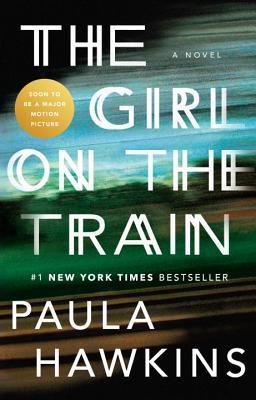
The Girl on the Train
by Paula Hawkins · 2015
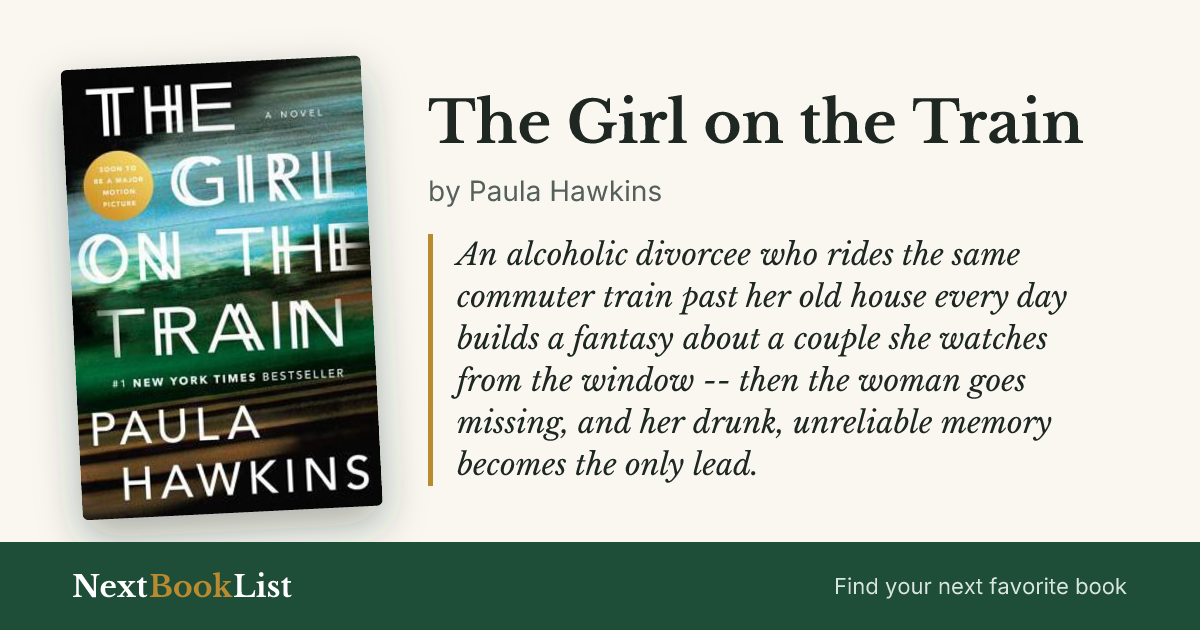
An alcoholic divorcee who rides the same commuter train past her old house every day builds a fantasy about a couple she watches from the window -- then the woman goes missing, and her drunk, unreliable memory becomes the only lead.
Worth reading? The Girl on the Train earns the Gone Girl comparisons it got at launch, and it's a legitimately well-constructed thriller, but it's a product of its 2015 commercial-fiction moment more than a book that's proven decades of staying power. The unreliable-narrator gimmick (a blackout drinker trying to piece together what she actually saw) is executed well and the twist lands, but the prose and character work don't reach past 'good page-turner.'
| Author | Paula Hawkins |
|---|---|
| Published | 2015 |
| Publisher | Riverhead Books |
| Category | Fiction |
The Verdict
The unreliable-narrator trick only works if the author actually commits to it, and Hawkins does – Rachel’s blackouts aren’t a device used once and forgotten, they’re the mechanism the entire mystery turns on. You’re piecing together the truth at the same rate she is, which is a harder trick to sustain across a full novel than it looks.
Where the book is weaker than its Gone Girl comparison suggests is in the prose and the depth of its non-Rachel characters. Megan and Anna get their own chapters, but neither has quite Rachel’s specificity, and the twist, while well-executed, doesn’t reinvent the format the way Gone Girl’s did.
It’s a legitimately good commercial thriller from a specific mid-2010s wave of domestic suspense novels, and it holds up fine as exactly that – a fast read for a plane or a weekend, not a book you’re likely to reread for the prose.
Read it if you want a well-built, twisty thriller with a genuinely unreliable narrator and don’t need every character to be likeable. Skip it if you’re looking for something with staying power beyond a page-turning plot – this is a very good example of its genre, not a book that transcends it.
you want a fast, twisty domestic thriller with an unreliable narrator you genuinely can't trust, in the vein of Gone Girl
you want a narrator you can root for cleanly -- Rachel is often frustrating, and the book's three alternating narrators are a deliberate structural choice, not a bonus feature you can skip
Book Summary
Rachel Watson, divorced and drinking heavily, takes the same commuter train every day past the house she used to share with her ex-husband, now occupied by his new wife and baby. A few doors down, she becomes fixated on a couple she's never met, projecting a happy marriage onto them from the window.
When the woman she's been watching, Megan, goes missing, Rachel realizes she may have seen something relevant the night before -- but her alcoholism has left her memory unreliable, and she has to piece together fragments while also becoming a suspect herself, given her history of drunk, erratic behavior near her ex-husband's house.
The novel alternates between three women's perspectives -- Rachel, Megan, and Anna (Rachel's ex-husband's new wife) -- across overlapping timelines, using the structural gaps between what each woman knows and what the reader knows to build the mystery's central twist.
Top 10 Lessons from The Girl on the Train
- Rachel's alcoholism isn't a quirky character trait, it's the plot's central engine -- her blackouts create real gaps in what she (and the reader) knows, which is what makes her an unreliable narrator rather than just an unlikeable one.
- The novel splits time between three women's points of view (Rachel, Megan, Anna), and the gaps between what each one knows -- not just what happened -- are what the mystery is actually built on.
- Rachel's fantasy about the couple she watches from the train projects a happy marriage onto strangers as compensation for her own failed one, and the book uses that projection to comment on how little we actually know about other people's relationships.
- The book plays deliberately on how society treats a drunk, disheveled woman as an unreliable and suspicious witness, using that bias both as a plot obstacle for Rachel and as something the book asks the reader to notice they're doing too.
- Megan's own backstory, revealed gradually, complicates the 'missing woman' trope by giving her a full interior life and secrets of her own, rather than making her just a victim for the other characters to investigate.
- The eventual reveal of who's responsible for Megan's disappearance depends on domestic violence hiding in plain sight behind a normal-looking marriage, which is the book's sharpest actual point underneath the twisty plotting.
- Tom, Rachel's ex-husband, is revealed as a serial gaslighter who manipulated Rachel into doubting her own blackout memories long before the investigation started, turning her self-doubt into his alibi.
- Rachel keeps commuting on the same train after losing her job, hiding the firing from her flatmate, which shows how far she'll go to maintain the appearance of a normal life she no longer has.
- Anna starts the book resenting Rachel as the ex-wife who won't let go, but ends up allied with her once she recognizes the same manipulation from Tom that Rachel spent years being gaslit about.
- The train's routine, daily pause at the same signal near the house gives Rachel a fixed vantage point that structures the book's fractured, three-timeline narrative around one repeated physical location.
Frequently Asked Questions
Is The Girl on the Train worth reading?
Yes, if you want a fast, well-plotted psychological thriller with an unreliable narrator -- it's not a literary landmark, but it does exactly what it sets out to do.
Is The Girl on the Train similar to Gone Girl?
Yes, and the comparison was made constantly at launch -- both use unreliable narration and alternating perspectives to build a domestic-suspense mystery, though Gone Girl's twist is more structurally ambitious.
How many narrators does The Girl on the Train have?
Three -- Rachel, Megan, and Anna -- with the story told across overlapping, non-linear timelines.
Is Rachel a reliable narrator in The Girl on the Train?
No, deliberately not -- her alcoholism causes real memory gaps and blackouts that the plot depends on, which is the entire point of the structure.
Was The Girl on the Train made into a movie?
Yes, a 2016 film adaptation starring Emily Blunt as Rachel, relocated from London to New York.
Ready to read it?
Get The Girl on the Train on Amazon