The Girl Who Played with Fire
by Stieg Larsson · 2006
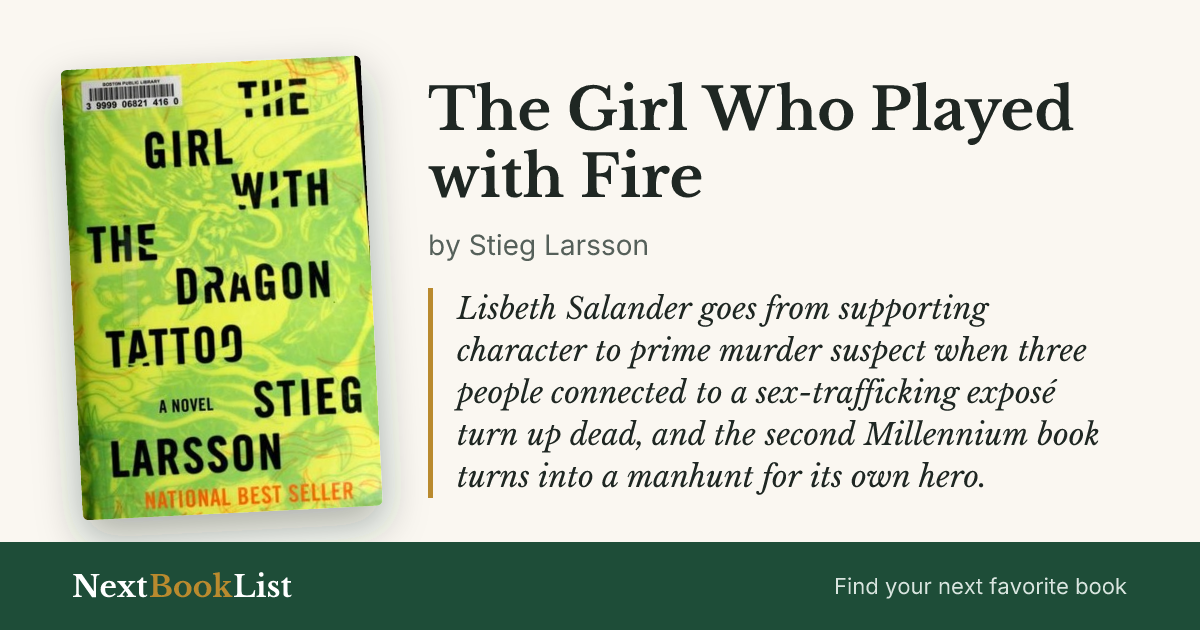
Lisbeth Salander goes from supporting character to prime murder suspect when three people connected to a sex-trafficking exposé turn up dead, and the second Millennium book turns into a manhunt for its own hero.
Worth reading? The Girl Who Played with Fire trades the first book's contained murder mystery for something messier and more personal: Salander isn't investigating anymore, she's the suspect, and the plot digs into exactly why the state has spent her whole life trying to control her. It's a slower build than book one, but the payoff explains her more than anything in Dragon Tattoo did.
| Author | Stieg Larsson |
|---|---|
| Published | 2006 |
| Publisher | Vintage Crime/Black Lizard |
| Category | Fiction |
The Verdict
Larsson takes a real risk removing Salander from the driver’s seat for most of the book, and it mostly pays off – watching Blomkvist fight for her from the outside makes her isolation land harder than it did in Dragon Tattoo, where she was mostly self-sufficient by choice.
The backstory chapters are the book’s strongest material. They don’t just explain Salander, they indict the specific Swedish guardianship and psychiatric systems that failed her, which keeps the book’s anger pointed at institutions instead of settling for a generic abuse backstory.
It’s a baggier book than the first one – subplots, secondary characters, and setup for book three all compete for space, and the pace sags in the middle stretch before the manhunt kicks into gear.
Read it if you want Salander’s past finally explained and don’t mind a slower burn to get there. Skip it if you want the tighter, more contained mystery structure of the first book – this one trades that for scope.
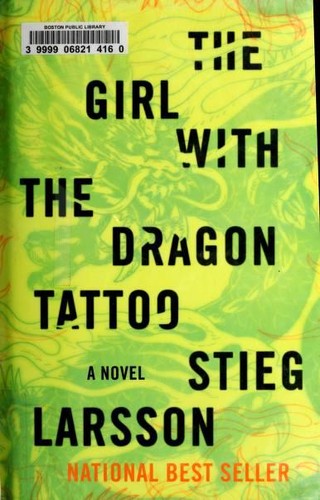
you liked The Girl with the Dragon Tattoo and want Salander pushed to the center of the plot, with a slower-burn mystery that pays off in a violent, personal confrontation with her past
you want a tighter, more contained mystery like the first book -- this one sprawls wider, spends real time on Salander's backstory, and takes longer to get moving
Book Summary
Lisbeth Salander returns to Sweden after a year abroad and becomes the prime suspect when her old guardian and two journalists working on a sex-trafficking exposé are murdered, forcing Mikael Blomkvist to prove her innocence while the police, press, and her own past close in.
The book spends real time excavating Salander's childhood, revealing the state-sanctioned abuse and cover-up that shaped her adult distrust of every institution meant to protect her -- a backstory the first book only gestured at.
Larsson keeps his focus on institutional failure -- the sex trade, corrupt guardianship systems, a security state protecting its own secrets -- as the real villain, with Salander's personal enemies functioning as the sharpest, most direct expression of that larger rot.
Top 10 Lessons from The Girl Who Played with Fire
- Removing Salander from the investigator's chair and making her the suspect flips the series' power dynamic and forces the plot to justify, rather than just showcase, why she's so guarded.
- The backstory reveal (what actually happened to Salander as a child, and who covered it up) reframes her behavior across both books as a rational response to institutional betrayal, not just a personality quirk.
- Blomkvist's dogged belief in Salander's innocence, based on character rather than alibi, is the emotional throughline that keeps the book from feeling like a pure procedural.
- Larsson uses the sex-trafficking investigation as the plot engine but keeps the real target on the institutions -- guardianship law, police complacency, journalistic access -- that let abuse continue unchecked.
- The book's pacing genuinely front-loads slower than Dragon Tattoo, spending more time on backstory and less on forward momentum, which pays off in the last third but tests patience getting there.
- Salander's technical skill (hacking, surveillance, financial manipulation) is used less as a plot-solving superpower here and more as a survival mechanism she's built over a lifetime of not trusting anyone else to protect her.
- Zalachenko, Salander's father and a protected former Soviet defector, is revealed as both the architect of her childhood abuse and the source of the state cover-up, tying her personal trauma directly to institutional corruption.
- Niedermann, Zalachenko's nearly unkillable henchman with a rare condition that prevents him from feeling pain, gives the book's back half a straightforward physical-threat momentum to balance its slower investigative first half.
- The book ends on an unresolved cliffhanger, Salander shot and buried, that refuses the genre norm of wrapping up its central mystery, committing the story directly into the trilogy's third book.
- Blomkvist's loyalty to Salander repeatedly overrides his usual journalistic caution, and the book treats that personal loyalty, not procedural investigation, as what actually saves her.
Frequently Asked Questions
Is The Girl Who Played with Fire worth reading?
Yes, especially if you finished Dragon Tattoo -- it's slower to start but gives Salander a real backstory and raises the stakes of the series considerably.
Do I need to read The Girl with the Dragon Tattoo first?
Yes -- this is a direct sequel that assumes you know Salander and Blomkvist's established relationship and history from the first book.
What is The Girl Who Played with Fire about?
Lisbeth Salander becomes the prime suspect in a triple murder tied to a sex-trafficking investigation, and Mikael Blomkvist works to clear her name while her hidden past comes to light.
Is the book different from the Swedish or American film versions?
The plot stays close across versions, but the book has significantly more space for Salander's backstory and the institutional subplots that the films compress or cut.
Is The Girl Who Played with Fire as dark as the first book?
Yes, and in some ways darker -- it directly confronts the abuse Salander survived as a child, which the first book only referenced.
Ready to read it?
Get The Girl Who Played with Fire on Amazon