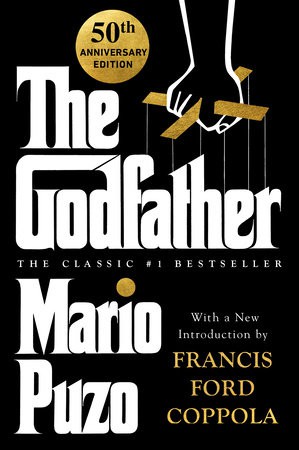
The Godfather
by Mario Puzo · 1969
Puzo's novel about the Corleone crime family did more to shape how America pictures the Mafia than any book before or since -- and large stretches of it (an entire subplot about a movie star's Hollywood problems) never made it into Coppola's film.
Worth reading? The Godfather the novel is the reason the movie exists, but it's a pulpier, less disciplined book than the film it inspired. Puzo's instincts for the Corleone family's internal logic and code are exactly what Coppola kept -- the subplots he cut (Johnny Fontane's Hollywood arc, Lucy Mancini's storyline) are exactly the parts that show why the film improved on its source.
| Author | Mario Puzo |
|---|---|
| Published | 1969 |
| Publisher | Signet |
| Category | Fiction |
| Favorite quote | “I'm going to make him an offer he can't refuse.” |
The Verdict
Puzo’s real gift is the family’s internal logic – the code of loyalty, favors, and violence that Don Vito runs like its own shadow justice system. That material is exactly what Coppola kept, almost line for line in places, because it’s genuinely the best writing in the book.
Where the novel shows its age as a 1969 pulp bestseller is in the subplots the film cut. The Johnny Fontane Hollywood material and the Lucy Mancini storyline are the parts that read like a different, pulpier book, and they’re not hard to see why Coppola’s screenplay left them out.
If you’ve only seen the films, Michael’s transformation reads slightly differently on the page – you get more direct access to his rationalizations, which either deepens the character or removes some of the ambiguity Pacino brought to the role, depending on your read.
Read it if you want the source material’s extra subplots and a more explicit look at the Corleone family’s internal code. Skip it if you want the discipline of the film – Coppola trimmed this book for good reason.
you love the films and want the source material, including the subplots Coppola cut -- a full storyline about Johnny Fontane's Hollywood career, and a much more explicit medical subplot about Lucy Mancini
you want the film's discipline and pacing -- Puzo's novel is baggier, with pulpier subplots (the Lucy Mancini material especially) that Coppola's screenplay wisely trimmed
Book Summary
Puzo traces the Corleone crime family through Michael's transformation from reluctant outsider, determined to stay out of the family business, into his father's ruthless successor, set against a war between New York's Mafia families in the years after WWII.
The novel spends significant time on subplots the film either compressed or cut entirely, including singer Johnny Fontane's Hollywood career troubles and a detailed medical subplot involving Lucy Mancini, giving 1969 readers a much broader (and pulpier) picture of the Corleone world than the film's tighter focus.
Puzo's real subject is the family as its own moral and legal system, complete with a code of loyalty, honor, and violence that operates in explicit opposition to (and sometimes in league with) the official American institutions it claims to distrust.
Top 10 Lessons from The Godfather
- Michael's arc from war-hero outsider to ruthless Don is more gradual and more interior on the page, giving readers direct access to his rationalizations in a way the film has to convey visually and through Al Pacino's performance instead.
- The Johnny Fontane Hollywood subplot, almost entirely cut from the film, was clearly Puzo drawing on real Frank Sinatra rumors and gives the book a showbiz-corruption angle the movie doesn't have room for.
- Puzo builds the Corleone 'family as its own justice system' theme explicitly through Don Vito's opening scenes, where supplicants come to him for favors the official legal system won't or can't deliver.
- The book is markedly pulpier and more sexually explicit than the film, especially in subplots like Lucy Mancini's storyline, reflecting Puzo's stated intent to write a commercially successful potboiler rather than literary fiction.
- Coppola and Puzo's own screenplay collaboration meant the film kept the novel's strongest material (the family's internal codes, Michael's transformation, the core plot mechanics) while cutting the weaker pulp subplots almost entirely.
- Puzo has said he wrote the book primarily for money and was surprised by both its literary reception and the film's prestige -- worth knowing given how seriously the book and film are now treated as classics.
- Don Vito's refusal to enter the narcotics trade, unlike the other Five Families, is framed by the book's own logic as principled -- even though that refusal is exactly what triggers the war that nearly kills him.
- Sonny's impulsiveness against Michael's cold calculation sets up the generational contrast Puzo uses to justify why Michael, not the obvious heir Sonny, was always the more dangerous successor.
- Michael's exile in Sicily and marriage to Apollonia works as his real initiation into the family's older, more traditional code of honor and vendetta, distinct from the Americanized version he grew up around.
- Tom Hagen's standing as the non-Sicilian, adopted consigliere makes Puzo's point directly: loyalty and competence earn a place inside the Corleone family's code, not blood.
Top 4 Quotes from The Godfather
"I'm going to make him an offer he can't refuse."
Mario Puzo, The Godfather
"A lawyer with his briefcase can steal more money than a thousand men with guns."
Mario Puzo, The Godfather
"Great men are not born great, they grow great."
Mario Puzo, The Godfather
"It's a Sicilian message. It means Luca Brasi sleeps with the fishes."
Mario Puzo, The Godfather
Frequently Asked Questions
Is The Godfather book worth reading if I've seen the movies?
Yes, if you're curious about the source material -- the core plot and Michael's arc are similar, but the book includes subplots (especially Johnny Fontane's Hollywood arc) the films cut entirely.
What is The Godfather about?
The Corleone crime family's power struggle in post-WWII New York, centered on Michael Corleone's transformation from a reluctant outsider into his father's ruthless successor as head of the family.
Is the book different from the movie?
Yes -- the book is pulpier and baggier, with subplots (Johnny Fontane's Hollywood troubles, a detailed Lucy Mancini storyline) that Coppola's screenplay cut or heavily trimmed.
Should I read the book or watch the movie first?
The film is generally considered the tighter, more essential version -- reading the book afterward works well for readers curious about the subplots and interior detail Coppola cut.
Is The Godfather based on a true story?
Not directly -- it's fiction, though Puzo drew on real organized-crime history and rumors (including ones associated with Frank Sinatra for the Johnny Fontane character) for texture.
Ready to read it?
Get The Godfather on Amazon