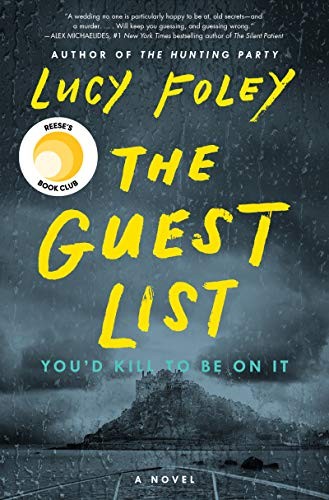
The Guest List
by Lucy Foley · 2020
A glamorous wedding on a remote Irish island turns into a murder scene by the reception's end -- and nearly every guest has a reason to want someone dead.
Worth reading? The best closed-circle wedding thriller of its wave -- earns its multi-narrator structure instead of using it as a gimmick.
| Author | Lucy Foley |
|---|---|
| Published | 2020 |
| Publisher | William Morrow |
| Category | Fiction |
| Favorite quote | “In my experience, those who have the greatest respect for the rules also take the most enjoyment in breaking them.” |
The Verdict
Foley’s structural trick is withholding two things at once – who dies and who did it – and it works because every narrator gets enough page time to earn genuine suspicion. By the time the murder actually happens roughly a third of the way in, you’ve already built a private suspect list from half-buried tells in each character’s account.
The island setting is doing more work than scenery. No phone signal and no way off once the storm rolls in gives the book a real locked-room mechanic without needing an actual locked room, and it raises the stakes on every secret that’s already simmering among the guest list before anyone dies.
Skip it if you want a single trustworthy narrator to root for – everyone here is hiding something, including the bride. Read it if you want a wedding thriller that treats “perfect day” culture as inherently suspicious, and rewards patient attention to what each narrator isn’t saying.
you want a locked-room mystery with a rotating cast of narrators, all lying by omission, and a slow-burn reveal of exactly who dies and why
you want a single clear protagonist to root for -- the multi-narrator structure means everyone gets page time and everyone is at least a little unreliable, including the bride and groom
Book Summary
A wedding between a magazine star and a reality-TV personality takes place on a remote, storm-battered island off the Irish coast, with a guest list that includes the groom's oldest friends, the bride's estranged half-sister, and a wedding planner with her own history on the island. The novel jumps between multiple narrators and between the wedding day and its immediate aftermath, withholding both the identity of the victim and the killer until deep into the book.
Foley's structure is the point -- by the time the murder actually happens, the reader has spent enough time in each narrator's head to have a private list of suspects and motives, and the island setting (no signal, no way off once the storm hits) turns the wedding into a genuine locked-room mystery despite its glamorous surface. Old grudges, an old assault, and a wedding-industry culture built on performing perfect happiness all turn out to be connected.
The book's real argument is that a wedding, as a ritual, is designed to paper over exactly the kind of resentment and history that eventually erupts into violence -- everyone at this wedding is performing happiness for a camera, and the murder is what happens when the performance cracks.
Top 8 Lessons from The Guest List
- The novel treats a wedding as a pressure cooker by design -- a single day built around forced proximity, old grudges, and performed happiness, which is exactly the kind of setting that produces violence.
- Withholding both the victim's identity and the killer's until late in the book turns ordinary guest behavior into constant, low-grade suspicion, which is the real engine of the tension.
- Multiple unreliable narrators each conceal something different, and the mystery's real pleasure is in noticing what each of them is choosing not to say rather than what they say outright.
- The island setting (no phone signal, no way off once the weather turns) does the same narrative work a locked room does in a classic mystery, just dressed as a wedding destination.
- An old assault in the bride's or groom's circle is treated as the buried root of the present-day violence, showing how unaddressed harm doesn't disappear, it resurfaces at the worst possible moment.
- The wedding-industry obsession with a 'perfect day' is shown as actively hostile to honesty -- everyone at this event has a incentive to perform contentment regardless of what they actually feel.
- Class and social status quietly shape who gets believed and who gets suspected once the murder happens, even among a guest list that's nominally all friends.
- The book resists giving its cast a clean moral hierarchy -- nearly everyone with a motive also has a sympathetic reason for having one, which keeps the whodunit genuinely uncertain.
Top 3 Quotes from The Guest List
"In my experience, those who have the greatest respect for the rules also take the most enjoyment in breaking them."
Lucy Foley, The Guest List
"I have my own ghosts. I carry them with me wherever I go."
Lucy Foley, The Guest List
"That's nostalgia for you, the tyranny of those memories of childhood that feel so golden, so perfect."
Lucy Foley, The Guest List
Frequently Asked Questions
Is The Guest List worth reading?
Yes -- the multi-narrator, locked-room structure is genuinely well-executed, and withholding the victim's identity until late keeps the tension high throughout.
Is The Guest List told from one point of view?
No, it rotates between several narrators including the bride, the best man, the wedding planner, and the bride's half-sister, each with their own secrets.
How many narrators does The Guest List have?
Five main narrators carry the book, and part of the puzzle is figuring out what each of them is deliberately leaving out.
Does The Guest List have trigger warnings?
Yes -- sexual assault is a significant plot element, referenced and discussed rather than depicted on the page in detail.
Ready to read it?
Get The Guest List on Amazon