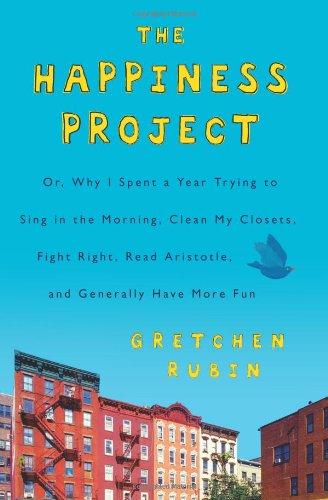
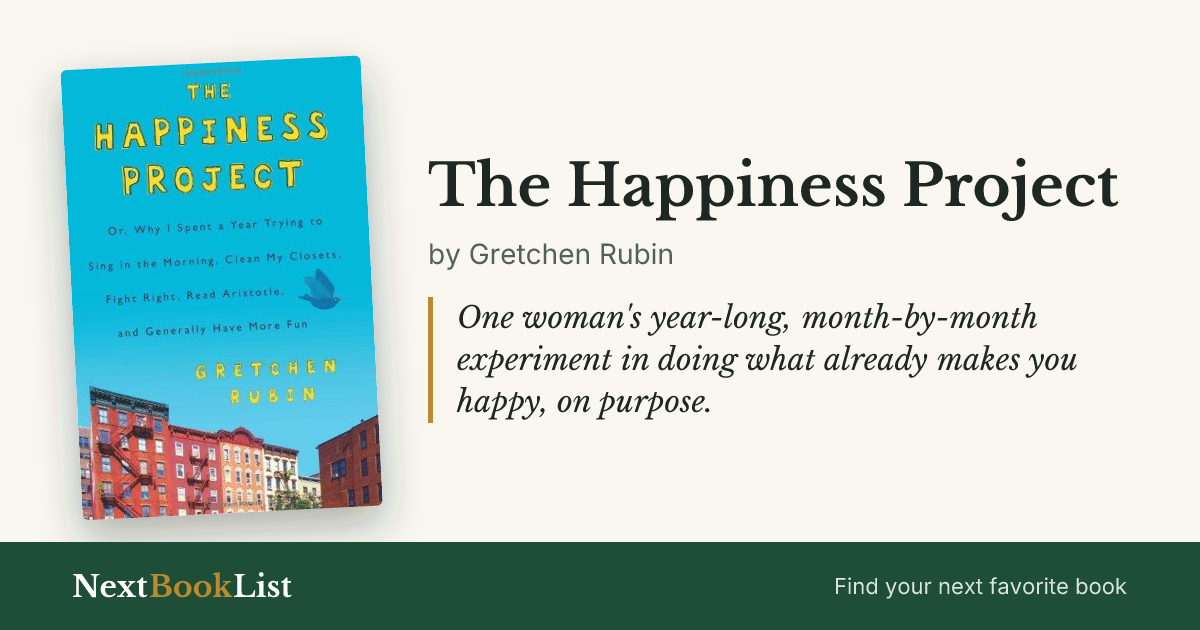
The Happiness Project
by Gretchen Rubin · 2009
One woman's year-long, month-by-month experiment in doing what already makes you happy, on purpose.
Worth reading? The Happiness Project works because Rubin doesn't pretend to have discovered anything new -- she picks twelve months, twelve themes (energy, marriage, work, parenthood, and so on), and tests small resolutions against her own life in public. That structure is the whole appeal: it's replicable. Her later book, Better Than Before, narrows in on the habit-formation mechanics she only touches on here, organized by her Four Tendencies framework. Read The Happiness Project first if you want the broad, memoir-style version of "what actually makes daily life better." Read Better Than Before instead if you already know happiness isn't your bottleneck and habit consistency is. Skip this one if you want data over anecdote -- it's one smart person's yearlong journal, not a study.
| Full Title | The Happiness Project: Or, Why I Spent a Year Trying to Sing in the Morning, Clean My Closets, Fight Right, Read Aristotle, and Generally Have More Fun |
|---|---|
| Author | Gretchen Rubin |
| Published | 2009 |
| Publisher | Harper |
| Category | Self-Improvement & Psychology |
| Favorite quote | “The days are long, but the years are short.” |
The Verdict
Rubin’s trick is treating her own life like a lab – twelve months, twelve themes, real successes and real failures logged in public. It’s more useful than most happiness books because it’s specific: not “be more grateful” but “start a gratitude notebook on the first of the month and see what happens.”
you want a structured, lived-in experiment instead of one big life overhaul
you want hard science -- this is a personal memoir and experiment, not a research book
Book Summary
Happiness isn't a mood, it's a byproduct of daily structure. Rubin's core move is breaking a vague goal ("be happier") into twelve concrete monthly themes -- boost energy, remember love, aim higher, lighten up -- each with small, testable resolutions rather than one dramatic life change.
Small, unglamorous actions compound: going to bed earlier, decluttering a closet, giving other people the benefit of the doubt. None of these sound like a "happiness" book on their own, which is the point -- Rubin argues the accumulation of small daily choices matters more than any single big insight.
Happiness research says more money past a certain point doesn't move the needle much, but small, engineered daily habits do -- so the project treats happiness as something you build with routine and attention, not something that happens to you.
Top 8 Lessons from The Happiness Project
- Break a vague goal like 'be happier' into specific, testable monthly resolutions.
- Energy (sleep, exercise, decluttering) is the foundation everything else sits on.
- Give people the benefit of the doubt -- it costs you nothing and improves every relationship.
- Acting the way you want to feel can actually change how you feel.
- Money buys happiness mainly by removing scarcity stress, not by adding luxury.
- Novelty and challenge matter as much as comfort for a satisfying life.
- Keep a resolutions chart -- what gets tracked gets done.
- Fighting right (choosing your battles, not winning every one) matters more than never fighting.
Top 4 Quotes from The Happiness Project
"The days are long, but the years are short."
Gretchen Rubin, The Happiness Project
"Happiness doesn't always make you feel happy."
Gretchen Rubin, The Happiness Project
"One of the most dangerous words in the happiness vocabulary is 'should'."
Gretchen Rubin, The Happiness Project
"It's easy to be heavy: hard to be light."
Gretchen Rubin, The Happiness Project
Frequently Asked Questions
Is The Happiness Project worth reading?
Yes, if you want a structured, month-by-month template for improving daily life rather than a research-heavy argument. Skip it if you want data over one person's tested experience.
What is the main idea of The Happiness Project?
Happiness is built through small, specific, testable resolutions applied consistently across a year, not through one big life change or a single insight.
How long does it take to read The Happiness Project?
About 6 hours. It's 320 pages, organized by month, and easy to read in short sessions.
Should I read The Happiness Project or Better Than Before first?
Read The Happiness Project first if you want the broad, memoir-style version. Read Better Than Before if you already know your gap is habit consistency, not happiness in general.
Ready to read it?
Get The Happiness Project on Amazon