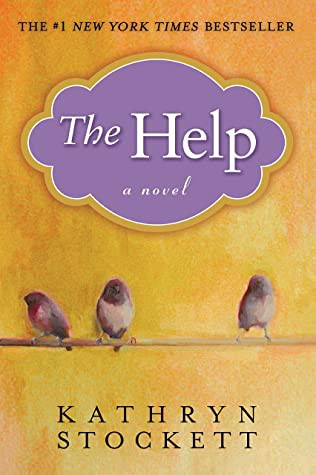
The Help
by Kathryn Stockett · 2009
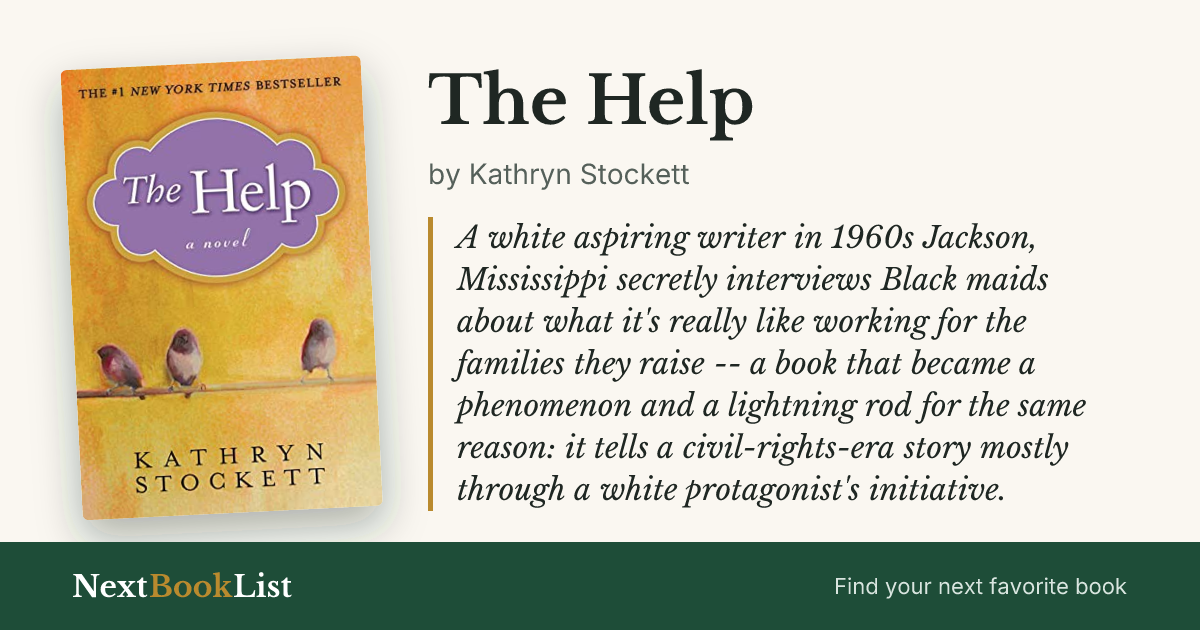
A white aspiring writer in 1960s Jackson, Mississippi secretly interviews Black maids about what it's really like working for the families they raise -- a book that became a phenomenon and a lightning rod for the same reason: it tells a civil-rights-era story mostly through a white protagonist's initiative.
Worth reading? The Help is a well-constructed, readable novel that also deserves the criticism it's gotten for its framing. Aibileen and Minny are the book's strongest characters, and their sections carry real weight, but the plot mechanics require a white woman's initiative to make their stories 'count,' which is exactly the white-savior structure critics have flagged since publication. It's worth reading with that tension in mind, not despite it.
| Author | Kathryn Stockett |
|---|---|
| Published | 2009 |
| Publisher | Amy Einhorn Books / Putnam |
| Category | Fiction |
| Favorite quote | “You is kind. You is smart. You is important.” |
The Verdict
Aibileen and Minny are why this book connected with so many readers, and they earn it: Stockett gives them real specificity, contradictory feelings toward the families they work for, sharp humor, genuine fear. Read those chapters on their own merits and they hold up.
The structural problem is harder to wave away. The plot needs Skeeter to organize and publish the maids’ stories before those stories carry any narrative weight, which quietly tells you whose initiative the book actually believes matters. That’s not a minor quibble, it’s baked into the plot mechanics.
Read it if you want an accessible, well-drawn novel about Jim Crow-era domestic work, while staying alert to its framing. Skip it if you’d rather read Black-authored accounts of this same history instead of a white-centered lens on it.
you want an accessible, character-driven entry point into Jim Crow-era Mississippi domestic life, with genuinely well-drawn maid characters in Aibileen and Minny carrying much of the book's emotional weight
you're looking for a Black-authored or Black-centered account of this history -- the novel has been widely criticized for centering a white savior narrative and for Stockett's use of dialect that many reviewers found reductive
Book Summary
Skeeter Phelan, a recent college graduate back in Jackson, Mississippi in 1962, decides to secretly interview Black maids about their experiences working for white families, a project that becomes a book manuscript and puts everyone involved at real physical risk under Jim Crow.
Aibileen and Minny, two maids who agree to be interviewed, are given substantial narrative space of their own, alternating first-person chapters that detail the specific indignities and dangers of domestic work, unequal pay, no bathroom access, casual cruelty from employers, alongside real tenderness toward the white children they raise.
The novel is structured so that the maids' stories only become public, and only carry consequence, once Skeeter compiles and publishes them, a structural choice that has drawn sustained criticism for positioning a white character as the necessary conduit for Black testimony.
Stockett wrote Aibileen's and Minny's sections in a rendered vernacular dialect that several reviewers and scholars have criticized as reductive or inconsistent with how Stockett rendered the white characters' speech, reinforcing rather than undercutting a racial hierarchy in the prose itself.
Top 9 Lessons from The Help
- The novel documents specific, well-researched indignities of Jim Crow-era domestic work, segregated bathrooms, unequal pay, no legal protection, that ground the book's stakes in real historical practice.
- Aibileen's relationship with the white child she raises, genuine love complicated by the knowledge that the child will likely grow up to treat Black women the way her own mother does, is one of the book's most emotionally honest threads.
- The novel's plot structure, in which the maids' risk and testimony only matter once channeled through a white writer's project, is a recurring point of legitimate criticism and worth sitting with rather than reading past.
- Minny's arc, defined by her sharp tongue getting her fired repeatedly and her own experience of domestic abuse at home, complicates the maid characters beyond pure victimhood, giving her real interiority and agency.
- The book shows how white women in this social world enforced Jim Crow's domestic rules as much as their husbands did, particularly through the character of Hilly Holbrook, complicating a simplistic gendered read of the era's racism.
- Skeeter's own arc, breaking from her social circle's expectations, is treated with more narrative sympathy and detail than some readers think is proportionate given the actual risk borne by Aibileen and Minny.
- Skeeter's search for what happened to Constantine, the maid who raised her, supplies her personal motive for the project and mirrors the buried history the maids are risking to reveal.
- Minny's 'terrible awful' act of revenge against Hilly is the book's most morally messy scene, satisfying but not straightforwardly heroic, and the novel doesn't fully resolve the discomfort it creates.
- The novel's commercial success and the historical and dialect criticism it's drawn have run in parallel since publication, a tension worth understanding as part of the book's legacy rather than a footnote to it.
Top 1 Quotes from The Help
"You is kind. You is smart. You is important."
Kathryn Stockett, The Help
Frequently Asked Questions
Is The Help worth reading?
It's a well-crafted, readable novel, but it's worth going in aware of the substantial criticism around its white-savior structure and its rendering of Black dialect.
What is The Help about?
A white writer in 1962 Jackson, Mississippi secretly interviews Black maids about their experiences working for white families, risking real danger for everyone involved under Jim Crow.
Why is The Help controversial?
Critics, including descendants of domestic workers and scholars, have argued the novel centers a white protagonist's initiative over the Black maids' own agency, and that its dialect writing is reductive.
Is The Help based on a true story?
It's fiction, though Stockett drew on her own family's history employing a Black maid in Mississippi, which itself became a source of controversy and a lawsuit.
Is there a movie version of The Help?
Yes, a 2011 film adaptation that was itself criticized on similar white-savior grounds.
Ready to read it?
Get The Help on Amazon