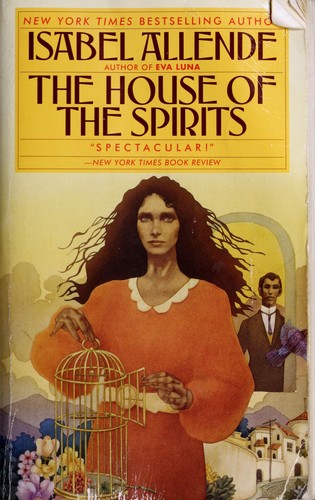
The House of the Spirits
by Isabel Allende · 1982
A clairvoyant matriarch, a tyrannical patriarch, and three generations of women who keep outlasting him -- Allende's family saga doubles as an unofficial history of 20th-century Chile, coup and all.
Worth reading? The House of the Spirits gets compared to One Hundred Years of Solitude constantly, and the comparison is fair but also undersells it, Allende's novel has a sharper, more explicit political spine, building toward a thinly veiled account of Chile's 1973 coup. The magical realism (Clara's clairvoyance, the ghosts that populate the family estate) never overwhelms the political and generational story underneath it. It's a genuinely great entry point into the genre for readers who find Garcia Marquez's density intimidating.
| Author | Isabel Allende |
|---|---|
| Published | 1982 |
| Publisher | Bantam |
| Category | Fiction |
| Favorite quote | “Barrabas came to us by sea, the child Clara wrote in her delicate calligraphy.” |
The Verdict
The magical realism front-loads the novel, Clara’s clairvoyance and the household’s resident ghosts set the tone early, but the book gets steadily more grounded and more political as it moves into the second and third generations. That shift is deliberate, and it’s what separates this from being just a Garcia Marquez imitation.
Esteban Trueba is a genuinely hard character to spend this much time with, brutal to his workers, his wife, and eventually his own family, but Allende never lets him become a cartoon. His late-life reckoning with the harm he’s caused is one of the book’s better achievements.
Read it if you want a family saga that actually goes somewhere politically, not just decoratively magical. Skip it if you need a tight, single-thread plot, the three-generation scope demands you keep a fairly large cast straight in your head.
you want a magical-realist family saga with real political teeth, following women who keep finding ways to resist the men and the regimes trying to control them
you want a tightly plotted single storyline -- this spans three generations and decades, and it asks you to hold a large family tree in your head
Book Summary
The novel follows three generations of the Trueba family, starting with the clairvoyant Clara and her domineering husband Esteban, through their daughter Blanca and eventually their granddaughter Alba, tracking the family's fortunes against the backdrop of Chile's shifting 20th-century politics.
Esteban Trueba's authoritarian control over his household, land, and workers mirrors, deliberately, the authoritarian politics that eventually seize the country itself, and Allende draws a direct line between domestic patriarchy and national dictatorship without ever naming Pinochet or Chile explicitly.
The women of the Trueba family, Clara, Blanca, and Alba, each find different ways to resist or outlast the men and political forces constraining them, and the novel's magical realism, clairvoyance, ghosts, prophetic dreams, functions largely as an expression of that female resistance and interior life.
Top 7 Lessons from The House of the Spirits
- Clara del Valle's clairvoyant and telekinetic abilities are treated matter-of-factly by the novel, establishing its magical-realist register from the opening pages.
- Esteban Trueba's brutal treatment of his tenant workers and his own family functions as a microcosm for the authoritarian politics the novel builds toward.
- The novel's unnamed country and unnamed dictator are widely understood as Chile and Augusto Pinochet, and the 1973 military coup is depicted, thinly fictionalized, in the book's final chapters.
- Each generation of Trueba women, Clara, Blanca, Alba, responds differently to the same patriarchal and political pressures, giving the novel a layered argument about how resistance changes across generations.
- Alba's imprisonment and torture under the military regime, drawn from accounts Allende gathered from real survivors, shifts the novel's tone sharply from magical realism toward unflinching political testimony in its final section.
- The novel began as a letter Allende wrote to her dying grandfather, and the character of Esteban Trueba is loosely based on her own grandfather.
- Ghosts and the spirit world remain present and unremarkable throughout the family's history, treated with the same narrative weight as ordinary historical events like elections and land disputes.
Top 1 Quotes from The House of the Spirits
"Barrabas came to us by sea, the child Clara wrote in her delicate calligraphy."
Isabel Allende, The House of the Spirits
Frequently Asked Questions
Is The House of the Spirits worth reading?
Yes -- it's a magical-realist family saga with real political weight, tracking three generations of women against the backdrop of a country's slide into dictatorship.
What is The House of the Spirits about?
Three generations of the Trueba family, starting with the clairvoyant Clara and her authoritarian husband Esteban, set against a fictionalized version of Chile's 20th-century political history, including its 1973 military coup.
Is The House of the Spirits based on real events?
Yes, loosely. The unnamed country and dictator are widely read as Chile and Augusto Pinochet, and Isabel Allende drew on her own family and real accounts of the coup's aftermath, including political imprisonment.
Is The House of the Spirits similar to One Hundred Years of Solitude?
Often compared, fairly, for its multigenerational structure and magical realism, but Allende's novel has a more explicit political throughline and is generally considered more accessible.
Do I need to know Chilean history to understand the book?
No, the political history is folded into the family story and explained through it, though knowing the outline of Pinochet's 1973 coup adds context to the final chapters.
Ready to read it?
Get The House of the Spirits on Amazon