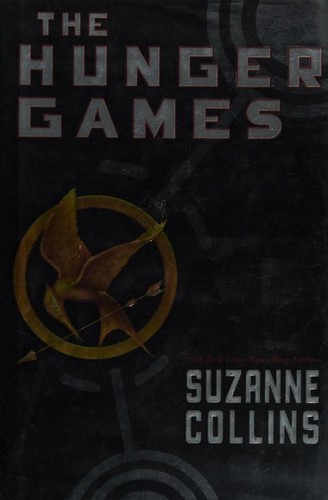
The Hunger Games
by Suzanne Collins · 2008
A teenage girl volunteers to fight to the death in a televised gladiator spectacle to save her little sister -- and turns out to be genuinely great at both surviving and, without meaning to, sparking a revolution.
Worth reading? The Hunger Games earns its status as the book that defined a decade of YA dystopia because Katniss Everdeen is a genuinely well-built protagonist: resourceful, guarded, more interested in survival than romance, which the love-triangle marketing around the series undersold. Collins keeps the plot moving relentlessly, and the arena sequences are tense enough to carry the book even when the worldbuilding stays thin.
| Author | Suzanne Collins |
|---|---|
| Published | 2008 |
| Publisher | Scholastic Press |
| Category | Fiction |
| Favorite quote | “May the odds be ever in your favor.” |
The Verdict
Katniss is what makes this hold up past its initial YA-dystopia wave. She’s guarded, calculating, and more concerned with keeping her family alive than with either boy in the marketing materials, which gives the book a spine a lot of its imitators never had.
The arena sequences are genuinely well-paced, tense in a way that earns the violence instead of exploiting it, and Collins is disciplined about making Katniss’s survival choices costly rather than easy. Where the book is thinner is Panem itself: you get sketches of the Capitol and the districts, not real depth, which the sequels have to do more work to fill in.
Read it if you want a fast, well-constructed survival story with a protagonist worth following. Skip it if you need your dystopia’s politics and worldbuilding fully fleshed out in book one, because that’s mostly still to come.
you want a fast, tightly plotted YA dystopia with a protagonist who's competent and morally serious rather than a passive audience surrogate, and you don't mind violence involving teenagers as the book's central premise
you want your dystopian fiction to build out its world's politics and history in real depth -- Panem's backstory is sketched rather than developed, and this first book is more interested in the Games than the regime that runs them
Book Summary
In the dystopian nation of Panem, the Capitol forces each of its twelve impoverished districts to send two teenage "tributes" annually into the Hunger Games, a televised fight to the death, as punishment for a past rebellion and as ongoing social control through fear and spectacle.
Katniss Everdeen volunteers to take her younger sister Prim's place after Prim is selected, entering the arena alongside Peeta Mellark, a boy from her district who publicly declares his love for her, a move Katniss suspects, correctly, is partly strategy for capturing sponsor sympathy.
Collins uses the Games' televised format, sponsors, forced romance narratives, audience manipulation, to critique reality television and media spectacle directly, making the Capitol's citizens complicit consumers of state violence rather than passive bystanders.
Katniss's small, mostly unplanned acts of defiance inside the arena, refusing to let the Games turn her and Peeta against each other in the way the Capitol wants, plant the seed of the rebellion that drives the rest of the trilogy, without Katniss herself initially understanding the political weight of what she's doing.
Top 9 Lessons from The Hunger Games
- The novel uses the Games' televised spectacle to argue that media consumption of real suffering isn't a neutral act, the Capitol's audience is implicated in the violence they watch and are entertained by.
- Katniss's competence, hunting, tracking, reading people, is established through her family's poverty before the Games even start, grounding her survival skills in lived necessity rather than convenient plot magic.
- The forced romance narrative between Katniss and Peeta, manufactured partly for sponsor appeal, is used to critique how public narratives get shaped and performed for an audience, a theme that runs through the whole trilogy.
- District poverty and Capitol excess are drawn in sharp visual contrast throughout the book, using material inequality as the clearest evidence of the regime's exploitation, not just its cruelty inside the arena.
- Katniss's refusal to become the ruthless killer the Games are designed to produce, her alliance with young tribute Rue, her joint suicide pact with Peeta rather than kill him, is framed as a genuinely subversive act precisely because it isn't a grand political gesture.
- The book treats survival itself as morally complicated -- staying alive in the arena requires calculated, sometimes ugly choices, and Collins doesn't let Katniss off the hook for the compromises that keeps her alive.
- The tesserae system, trading reaping entries for food rations, shows how the Capitol's economic policy quietly forces the poorest families to raise their own children's odds of being picked.
- Haymitch's role as Katniss and Peeta's cynical, alcoholic mentor shows that surviving the Games doesn't grant peace afterward, foreshadowing the trilogy's ongoing trauma theme.
- Cinna's costume design for Katniss, the 'girl on fire' look, shapes her political symbolism before she has any conscious political intent, illustrating how image can outpace a person's own choices.
Top 4 Quotes from The Hunger Games
"May the odds be ever in your favor."
Suzanne Collins, The Hunger Games
"I volunteer! I volunteer as tribute!"
Suzanne Collins, The Hunger Games
"You don't forget the face of the person who was your last hope."
Suzanne Collins, The Hunger Games
"There's a level of security that comes from a full stomach that I've never experienced before."
Suzanne Collins, The Hunger Games
Frequently Asked Questions
Is The Hunger Games worth reading?
Yes -- it's a tightly plotted dystopian survival story with a genuinely strong protagonist, and it holds up well beyond its YA marketing.
What is The Hunger Games about?
A teenage girl volunteers to compete in a televised fight-to-the-death competition in place of her younger sister, in a dystopian nation that uses the Games to control its impoverished districts.
Is The Hunger Games appropriate for younger readers?
It involves teenagers killing each other on-page, so while it's marketed as YA, parents of younger or more sensitive readers should preview it first.
Do I need to read the sequels?
The first book stands reasonably well on its own, but the trilogy's larger political arc (the actual rebellion) only develops in Catching Fire and Mockingjay.
Is The Hunger Games more about romance or survival?
Survival and political control are the book's actual focus -- the romance is present but is explicitly framed within the story as partly performance for the Games' audience.
Ready to read it?
Get The Hunger Games on Amazon