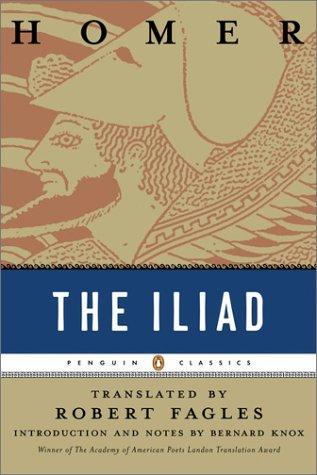
The Iliad
by Homer · -750
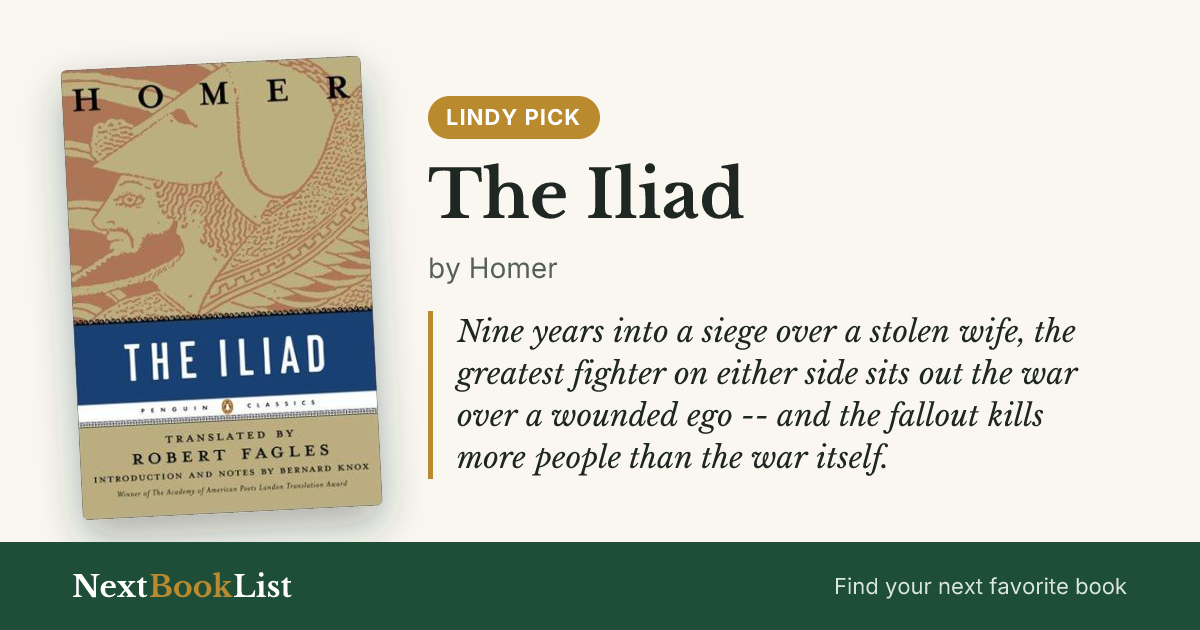
Nine years into a siege over a stolen wife, the greatest fighter on either side sits out the war over a wounded ego -- and the fallout kills more people than the war itself.
Worth reading? The Iliad isn't really about the Trojan War, it's about rage: Achilles pulls himself out of the fighting over an insult to his honor, and the poem tracks the human cost of that choice with more precision than most modern war novels manage. Fagles's translation is the one to reach for first, it keeps the poem's momentum without burying you in archaic diction. Translation matters enormously here, since the Greek verse doesn't survive a wooden, literal rendering.
| Full Title | The Iliad (Robert Fagles Translation) |
|---|---|
| Author | Homer |
| Published | -750 |
| Publisher | Penguin Classics |
| Category | Fiction |
| Favorite quote | “Rage—Goddess, sing the rage of Peleus' son Achilles, murderous, doomed, that cost the Achaeans countless losses.” |
The Verdict
The battle scenes are the hardest part to push through, Homer catalogs deaths with a repetitive, almost ritual brutality that can wear you down before you’re used to the rhythm. Stick with it, because the poem’s real power is in Achilles’s arc: an ego-driven withdrawal that spirals into grief he never fully recovers from.
Translation is not a minor detail here. A stiff, literal version will make the poem feel like homework. Fagles’s translation earns its reputation by keeping the verse moving at something like narrative speed.
Read it before any war story that leans on “the cost of pride” or “grief turning into rage” – this poem is doing that work three thousand years before anyone else got credit for it. Skip it if you’re only interested in the Trojan Horse story, which this poem doesn’t actually cover.
you want the source text behind almost every Western war story, and you're ready for brutal, repetitive battle scenes alongside genuinely moving scenes of grief
you're expecting the whole Trojan War, horse and all -- the poem covers a few weeks near the end of the siege, and the wooden horse isn't even in it
Book Summary
In the ninth year of the Greek siege of Troy, Agamemnon strips Achilles of a war prize as an insult, and Achilles responds by withdrawing from battle entirely, letting the Greeks suffer devastating losses rather than set aside his wounded honor.
The poem's real subject is rage and its consequences, mēnis, the Greek word that opens the poem, and Homer refuses to make Achilles simply heroic for it: his anger gets his closest friend Patroclus killed, and only that grief, not persuasion or strategy, finally pulls him back into the fight.
The poem doesn't end with Troy's fall, it ends with Achilles returning Hector's body to Hector's father, Priam, for burial, a moment of shared grief between enemies that reframes the entire epic around loss rather than victory.
Top 8 Lessons from The Iliad
- The poem opens mid-war, in year nine of the ten-year siege, and ends before Troy actually falls, the famous wooden horse belongs to later stories, not this poem.
- Achilles withdraws from the war not out of cowardice but wounded honor, after Agamemnon publicly claims his war prize, the enslaved woman Briseis.
- The Greek gods actively take sides and intervene directly in the fighting, this isn't a war between mortals alone, it's a proxy conflict among Olympian rivalries.
- Hector, the Trojan hero, is written with as much sympathy as any Greek character, a devoted husband and father who fights knowing his city is likely doomed.
- Patroclus's death, fighting in Achilles's armor while Achilles sits out the war, is the emotional hinge of the poem, it's what finally overrides Achilles's anger at Agamemnon.
- Achilles's grief-fueled slaughter of Hector, and his desecration of the body afterward, is presented as excessive even by the poem's own brutal standards.
- The poem closes with Priam, Hector's father, begging Achilles for his son's body, and Achilles granting it, a moment of mutual grief between mortal enemies.
- Homeric warfare is rendered in graphic, repetitive detail, deliberately so, the poem doesn't romanticize combat even while it glorifies individual heroism.
Top 2 Quotes from The Iliad
"Rage—Goddess, sing the rage of Peleus' son Achilles, murderous, doomed, that cost the Achaeans countless losses."
Homer, The Iliad
"As is the generation of leaves, so is that of humanity."
Homer, The Iliad
Frequently Asked Questions
Is The Iliad worth reading?
Yes, if you want the foundational war epic of Western literature -- read it for Achilles's rage and grief, not for the fall of Troy, since the poem ends before that happens.
What is The Iliad about?
Achilles's withdrawal from the Trojan War over a wounded ego, and the devastating cost, for the Greeks and for himself, once his closest friend Patroclus dies fighting in his place.
Does The Iliad include the Trojan Horse?
No. The poem covers a few weeks in the ninth year of a ten-year siege and ends before Troy falls -- the wooden horse comes from later sources like Virgil's Aeneid.
Which translation of The Iliad should I start with?
Robert Fagles's translation is the most commonly recommended starting point for readability, it keeps the poem moving without sacrificing its weight.
Is The Iliad hard to read?
The battle sequences repeat and can feel exhausting, but the emotional through-line, Achilles's rage and eventual grief, is clear and genuinely moving in a good translation.
Ready to read it?
Get The Iliad on Amazon