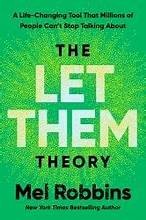
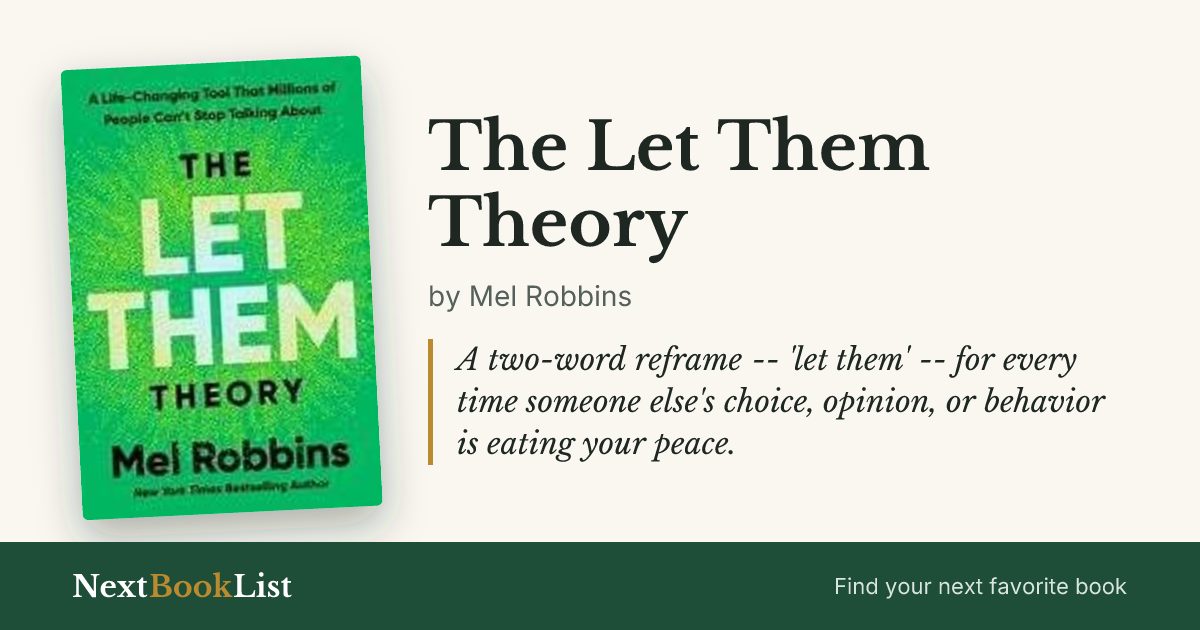
The Let Them Theory
by Mel Robbins · 2024
A two-word reframe -- 'let them' -- for every time someone else's choice, opinion, or behavior is eating your peace.
Worth reading? The Let Them Theory takes a two-word phrase and builds a full framework around it: let them be who they are, let them do what they do, and stop spending your energy trying to manage other people's choices. Compared to The Subtle Art of Not Giving a F*ck, it's gentler and more repeatable as a daily mantra, less about caring less and more about redirecting your control instinct toward yourself. It's a simple idea stretched to book length, which is both the appeal and the limit. Skip it if you want depth. Read it if you need a phrase you'll actually remember in the moment someone's behavior is wrecking your day.
| Full Title | The Let Them Theory: A Life-Changing Tool That Millions of People Can't Stop Talking About |
|---|---|
| Author | Mel Robbins |
| Published | 2024 |
| Publisher | Hay House |
| Category | Self-Improvement & Psychology |
| Favorite quote | “Let them. Two of the most powerful words you will ever learn.” |
The Verdict
Robbins built a full book around two words, and it works because the phrase is genuinely stickier than most mindset advice. “Let them” is easy to recall mid-argument in a way a four-step framework never is. Thin on research, strong on repeatability.
you're exhausted trying to control how other people act, think, or feel about you
you want deep research citations -- this is a mantra-driven mindset book, not an academic one
Book Summary
A huge amount of daily stress comes from trying to control things that were never yours to control, other people's opinions, choices, moods, and behavior. "Let them" is the release valve: let them not text back, let them be wrong about you, let them make the choice you wouldn't.
The second half of the phrase matters as much as the first: "let me." Once you stop spending energy managing someone else's behavior, you redirect it to what you actually control, your own response, effort, and boundaries.
This isn't passivity. Robbins frames it as the fastest way to stop being disappointed by people who were never going to change, and start acting on the one person who can, you.
Top 7 Lessons from The Let Them Theory
- Most daily frustration comes from trying to control things that were never yours to control.
- 'Let them' is the release: stop managing other people's choices, moods, and opinions of you.
- 'Let me' is the second half of the phrase -- redirect the energy you freed up toward your own response.
- Disappointment usually comes from expecting someone to be who they've never been.
- You can't lose people by being yourself; you can only lose people who needed you to be someone else.
- Boundaries and 'let them' aren't opposites -- letting them act freely doesn't mean you tolerate the consequences without limits.
- Repeating a simple phrase in the moment beats a complex framework you can't recall under stress.
Frequently Asked Questions
Is The Let Them Theory worth reading?
Yes, if you want a simple, repeatable mental phrase for letting go of control over other people's behavior. It's light on research, heavy on practical mantra.
What is the Let Them Theory in one sentence?
Stop spending energy trying to control other people's choices and opinions; redirect that energy to 'let me' -- your own response and effort.
Is this the same as not caring what people think?
Close, but framed more actively. It's less 'stop caring' and more 'stop managing' -- you still have boundaries, you just stop trying to control the input.
Ready to read it?
Get The Let Them Theory on Amazon