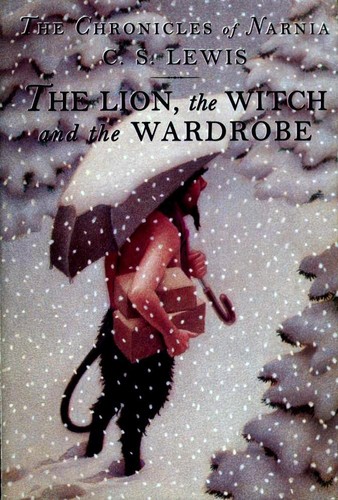
The Lion, the Witch and the Wardrobe
by C.S. Lewis · 1950
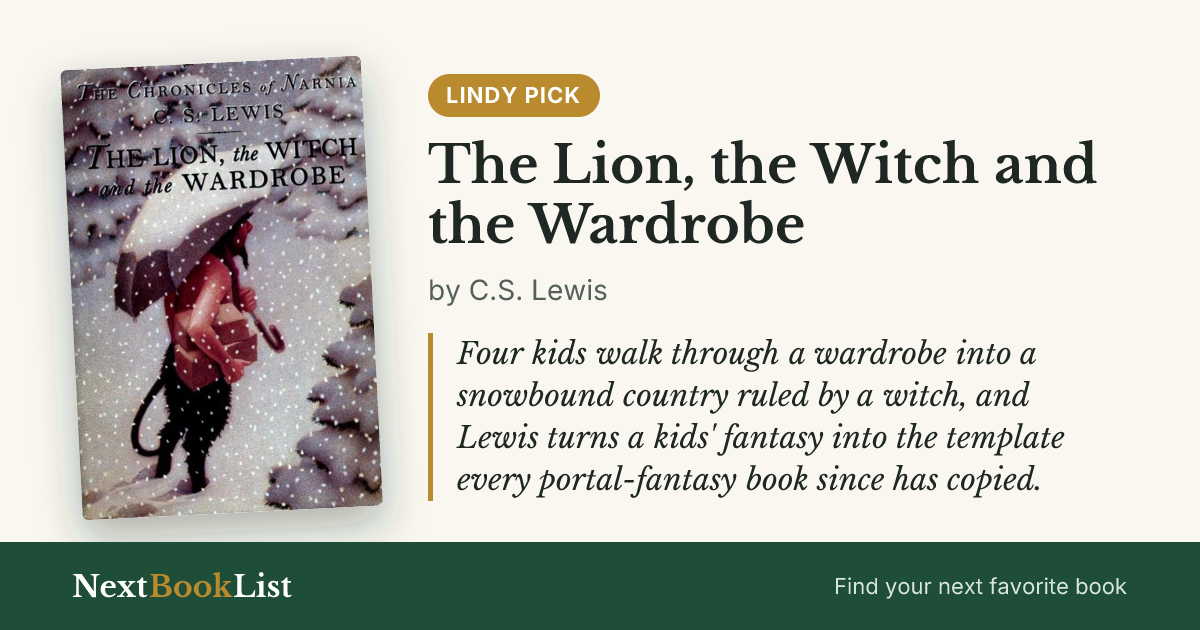
Four kids walk through a wardrobe into a snowbound country ruled by a witch, and Lewis turns a kids' fantasy into the template every portal-fantasy book since has copied.
Worth reading? The Lion, the Witch and the Wardrobe is short, fast, and still works after 75 years because Lewis never slows down to explain Narnia -- he just puts you in it. The allegory is obvious once you're an adult reading it, but a kid reading it cold just gets a great adventure.
| Author | C.S. Lewis |
|---|---|
| Published | 1950 |
| Publisher | HarperCollins |
| Category | Fiction |
| Favorite quote | “Safe? Who said anything about safe? 'Course he isn't safe. But he's good. He's the King, I tell you.” |
The Verdict
Lewis doesn’t waste a page. You’re through the wardrobe by chapter one, meeting Mr. Tumnus by chapter two, and the whole book is over before most modern fantasy would finish its prologue. That pace is the book’s biggest advantage over anything it inspired.
The allegory is the thing you can’t unsee once someone points it out to you, but it’s also not the point on a first read. Aslan’s death works as a gut-punch fantasy beat on its own terms – you don’t need the theology to feel it.
Where it shows its age is Lewis’s asides about “what girls do” versus “what boys do,” which land oddly now even if they’re brief. It’s a product of 1950 in ways the plot mostly isn’t.
Read it if you want the book that built the portal-fantasy genre, in a version short enough to read to a kid in a few sittings. Skip it if the Christian allegory bothers you once you clock it – it only gets more obvious as the series goes on.
you want the book that invented the modern portal-fantasy formula, in a version short enough to read in an afternoon and clean enough to hand to a kid
you're allergic to the Christian allegory once you notice it -- the lion, the sacrifice, the resurrection aren't subtle once you're looking for them
Book Summary
Four siblings evacuated from London during the Blitz find a wardrobe that opens into Narnia, a country under the White Witch's spell of permanent winter, and get pulled into the local prophecy about ending it.
Lewis builds the book around betrayal and cost: Edmund sells out his siblings for Turkish Delight and status, and the book doesn't let him off easy -- Aslan's sacrifice to cover Edmund's debt is the emotional center, not a footnote.
The Christian allegory (a lion who dies and comes back to break a deeper magic than the witch understands) is baked into the plot mechanics, not just the theme -- kids can read it as a straight fantasy and still feel the weight of it.
Top 7 Lessons from The Lion, the Witch and the Wardrobe
- The book opens with zero setup -- Lewis trusts you to accept the wardrobe-as-portal without explanation, which is why the device still feels effortless instead of gimmicky.
- Edmund's betrayal isn't cartoonish villainy -- it's petty jealousy and hunger for status, which is why his arc back to being trusted lands instead of feeling like a plot requirement.
- 'Always winter and never Christmas' does more worldbuilding in five words than most fantasy novels manage in a chapter.
- Aslan's death and return work as both a fantasy plot beat (defeating the witch's claim on Edmund) and a religious allegory, without one undercutting the other.
- The Pevensie kids age into adult rulers by the book's end and then age back down stepping through the wardrobe -- a strange, melancholy note Lewis never fully explains.
- Mr. Tumnus and the Beavers do the worldbuilding work through hospitality scenes -- tea, conversation, warnings -- rather than exposition dumps.
- The book's length (barely 200 pages) is a feature: nothing overstays its welcome, which is part of why it survives as a read-aloud.
Top 4 Quotes from The Lion, the Witch and the Wardrobe
"It is winter in Narnia, and has been for ever so long, and we're both of us afraid of catching cold."
C.S. Lewis, The Lion, the Witch and the Wardrobe
"Wrong will be right, when Aslan comes in sight."
C.S. Lewis, The Lion, the Witch and the Wardrobe
"Once a king or queen in Narnia, always a king or queen."
C.S. Lewis, The Lion, the Witch and the Wardrobe
"Safe? Who said anything about safe? 'Course he isn't safe. But he's good. He's the King, I tell you."
C.S. Lewis, The Lion, the Witch and the Wardrobe
Frequently Asked Questions
Is The Lion, the Witch and the Wardrobe worth reading as an adult?
Yes -- it's short enough to read in one sitting, and the Christian allegory that goes over most kids' heads is genuinely interesting to notice as an adult reader.
What is The Lion, the Witch and the Wardrobe about?
Four siblings step through a wardrobe into Narnia, a country trapped in eternal winter under the White Witch, and get swept into the prophecy and war that ends her rule.
Do I need to read the other Narnia books first?
No -- this is the most commonly recommended entry point, whether you go by original publication order (where it's first) or internal chronology (where it's second after The Magician's Nephew).
Is the book appropriate for young kids?
Yes, it's written for middle-grade readers, though the witch's cruelty and Aslan's death scene are more intense than most picture books.
How is the book different from the movies?
The 2005 film adds action set pieces and expands battle scenes, but the core plot and dialogue stay close to the book -- it's one of the more faithful adaptations on this list.
Ready to read it?
Get The Lion, the Witch and the Wardrobe on Amazon