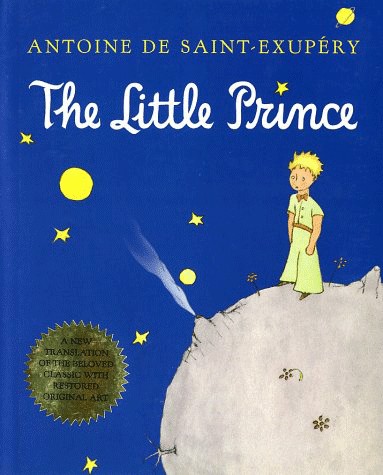
The Little Prince
by Antoine de Saint-Exupery · 1943
A pilot stranded in the Sahara meets a small boy from another planet, and Saint-Exupery uses the encounter to say more about love and loneliness in 90 pages than most novels manage in 400.
Worth reading? The Little Prince works because Saint-Exupery never explains its central metaphors -- the rose, the fox, the baobabs -- he just lets them sit there and trusts you to feel what they mean. That restraint is why it still gets quoted eight decades later, at weddings and funerals both.
| Author | Antoine de Saint-Exupery |
|---|---|
| Published | 1943 |
| Publisher | Harcourt |
| Category | Fiction |
| Favorite quote | “It is only with the heart that one can see rightly; what is essential is invisible to the eye.” |
The Verdict
Saint-Exupery doesn’t build a plot so much as string together encounters, and that structure is exactly why the book holds up. You’re not tracking a mystery or a romance, you’re sitting with a series of small, sad portraits of people who’ve lost the plot on their own lives.
The fox scene is the one people actually remember, and for good reason – it’s the clearest statement in the book of what Saint-Exupery is actually arguing: love isn’t a feeling you have, it’s time you put in.
It’s a short book that doesn’t feel slight, which is a rare combination. Read it once as a kid for the fable, read it again as an adult for the loneliness underneath it.
Read it if you want a short, quotable book that means something different every time you return to it. Skip it if you need conventional plot momentum – this is closer to a philosophical fable in vignettes than a story with a beginning, middle, and end in the usual sense.
you want a short book that rewards rereading at different ages -- it reads as a children's fable at ten and as something much sadder at forty
you want plot -- this is a philosophical fable told in vignettes, not a story with rising action and a resolution in the conventional sense
Book Summary
A pilot crash-landed in the Sahara meets a young prince who has traveled from a tiny asteroid, and who describes the strange, lonely adults he met on other planets before landing on Earth -- a king with no subjects, a businessman counting stars he can't use, a lamplighter obeying orders that no longer make sense.
The prince's attachment to a single rose on his home planet, and his later friendship with a fox who teaches him what "taming" means, becomes the book's real argument: love is specific and effortful, not abstract, and what makes something valuable is the time you've invested in it.
Saint-Exupery wrote the book while exiled in New York during WWII, and the pilot's isolation in the desert mirrors his own -- the book's melancholy about adults who've forgotten how to see what matters isn't incidental, it's the whole point.
Top 7 Lessons from The Little Prince
- The book's satire of adults -- the king, the businessman, the geographer -- targets a specific kind of hollow self-importance, not adulthood itself, which is why the fable doesn't read as simple anti-adult sentimentality.
- The fox's 'taming' scene is the book's actual thesis: relationships that matter are built through repeated, deliberate attention, not declared once and left alone.
- The rose isn't perfect or even particularly kind to the prince -- the book's point is that he loves her because of the time he's spent on her, not because she deserves it in some objective sense.
- 'What is essential is invisible to the eye' is delivered as the fox's lesson, not narrator commentary -- it's earned through the story rather than stated as a moral upfront.
- The pilot's own arc (a grown-up who once drew a boa constrictor that adults mistook for a hat) frames the whole book as being about recovering a childhood way of seeing, not a children's story told down to kids.
- The book was written in exile during WWII, and its loneliness -- a man alone in a desert, a prince alone on an asteroid -- reads differently once you know that context.
- The ending, with the prince's departure via snakebite, is genuinely ambiguous about whether it's a death, and Saint-Exupery never resolves it -- he lets the grief sit unexplained.
Top 5 Quotes from The Little Prince
"It is only with the heart that one can see rightly; what is essential is invisible to the eye."
Antoine de Saint-Exupery, The Little Prince
"You become responsible, forever, for what you have tamed."
Antoine de Saint-Exupery, The Little Prince
"All grown-ups were once children... but only few of them remember it."
Antoine de Saint-Exupery, The Little Prince
"It is the time you have wasted for your rose that makes your rose so important."
Antoine de Saint-Exupery, The Little Prince
"What makes the desert beautiful is that somewhere it hides a well."
Antoine de Saint-Exupery, The Little Prince
Frequently Asked Questions
Is The Little Prince worth reading as an adult?
Yes -- most readers get more out of it as adults than as kids, since the loneliness and satire of adult self-importance land harder with age.
What is The Little Prince actually about?
On the surface, a pilot's encounter with a boy-prince from another planet. Underneath, a meditation on love, loss, and how adults lose the ability to see what actually matters.
Is The Little Prince a children's book?
It's shelved as one and works for kids, but Saint-Exupery wrote it with adult readers in mind too -- the dedication is literally to an adult friend, 'when he was a little boy.'
Which translation should I read?
Richard Howard's 2000 translation is the most widely available modern English edition; Katherine Woods's original 1943 translation has its own devoted following for its more old-fashioned tone.
How long does it take to read The Little Prince?
Under 90 pages with illustrations -- most readers finish it in one sitting, well under two hours.
Ready to read it?
Get The Little Prince on Amazon