The Lord of the Rings
by J.R.R. Tolkien · 1954
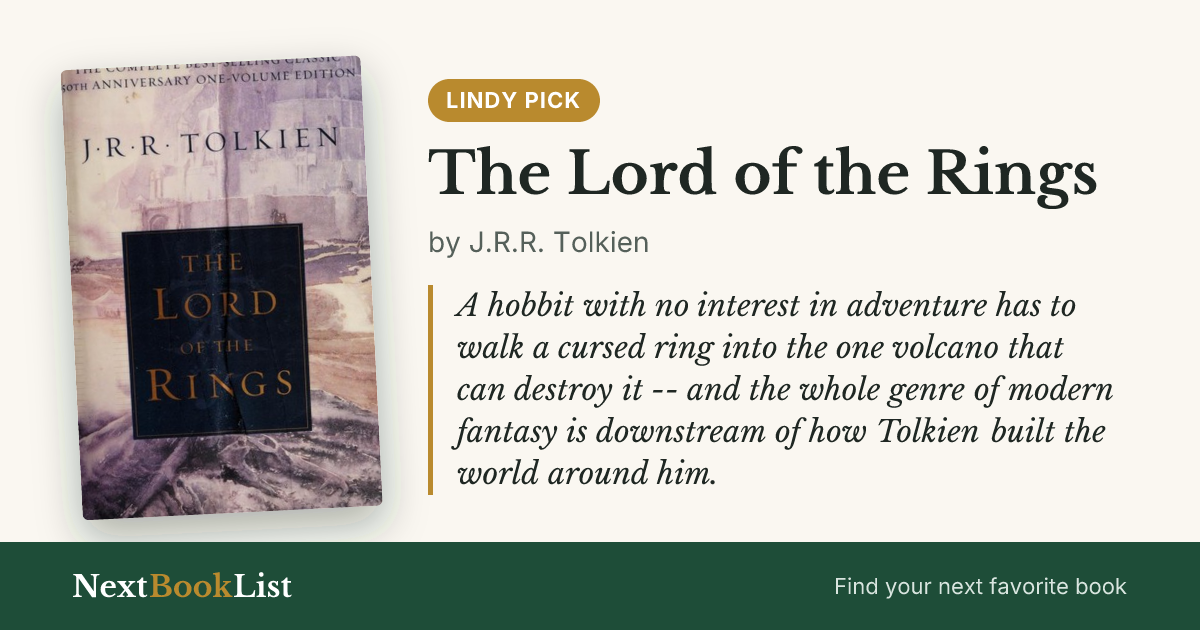
A hobbit with no interest in adventure has to walk a cursed ring into the one volcano that can destroy it -- and the whole genre of modern fantasy is downstream of how Tolkien built the world around him.
Worth reading? The Lord of the Rings is the book every modern fantasy epic is quietly imitating, and the density that slows some readers down in Fellowship is exactly what makes Middle-earth feel real rather than invented on the fly. Start here before any of its imitators -- most of them are borrowing structure Tolkien built first.
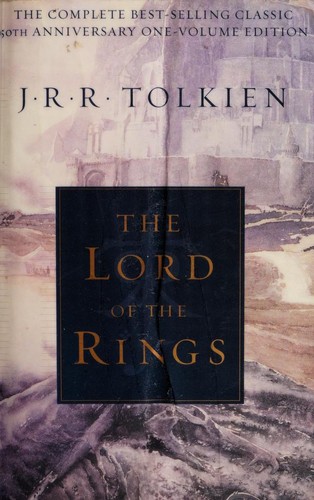
| Full Title | The Lord of the Rings: 50th Anniversary, One Vol. Edition |
|---|---|
| Author | J.R.R. Tolkien |
| Published | 1954 |
| Publisher | Houghton Mifflin Harcourt |
| Category | Fiction |
| Favorite quote | “Not all those who wander are lost.” |
The Verdict
What holds up best decades later isn’t the battles, it’s the ache underneath the ending – the sense that saving the world and getting to keep living in it peacefully are two different, not always compatible, things.
you want the foundational modern fantasy epic, built with enough invented history, language, and geography that the world feels older than the plot
you want a fast read -- this is dense, slow in stretches (especially early in Fellowship), and rewards patience with world-building more than plot momentum
Book Summary
Tolkien built the languages, histories, and mythology of Middle-earth before he built the plot, which is why the world feels load-bearing rather than decorative -- every place name and ruin implies centuries of history the reader never fully sees.
The Ring's corrupting power works on everyone regardless of their virtue -- Boromir, Frodo, even Gandalf and Galadriel refuse to touch it -- which is Tolkien's argument that power itself, not the character of the person wielding it, is the real danger.
The 'small and overlooked' hobbits succeed where the powerful and heroic (Gondor's armies, the wizards) cannot, because the quest requires humility and endurance rather than strength or ambition -- a deliberate inversion of the typical epic hero.
Top 8 Lessons from The Lord of the Rings
- Absolute power corrupts regardless of the wielder's intentions -- the Ring tempts the good as readily as the wicked.
- The unassuming and overlooked can succeed where the strong and famous fail, because the real virtue needed is humility, not strength.
- Fellowship and loyalty (Sam's refusal to leave Frodo) matter more to the outcome than individual heroism.
- Even minor, seemingly disposable characters (Gollum) can be essential to the ultimate resolution.
- A fully imagined history and geography make a fictional world feel inhabited rather than staged.
- Industrialized destruction of nature (Saruman's Isengard) is framed as its own form of corruption, distinct from the Ring's.
- Victory in the book often costs something permanent -- the Shire is saved, but the world that saved it can't stay the same afterward.
- Courage is repeatedly shown as acting despite fear and doubt, not the absence of either.
Top 5 Quotes from The Lord of the Rings
"Not all those who wander are lost."
J.R.R. Tolkien, The Lord of the Rings
"I will take the Ring, though I do not know the way."
J.R.R. Tolkien, The Lord of the Rings
"Even the smallest person can change the course of the future."
J.R.R. Tolkien, The Lord of the Rings
"There is some good in this world, and it's worth fighting for."
J.R.R. Tolkien, The Lord of the Rings
"All we have to decide is what to do with the time that is given us."
J.R.R. Tolkien, The Lord of the Rings
Frequently Asked Questions
Is The Lord of the Rings worth reading?
Yes -- it's the foundation modern fantasy is built on, and the depth of invented history and language still isn't matched by most of its imitators.
Is The Lord of the Rings hard to read?
It's slower and denser than most fantasy, especially the opening chapters of Fellowship, but the pace picks up and the world-building pays off.
What is the main theme of The Lord of the Rings?
That power corrupts regardless of virtue, and that humility and endurance, not strength or ambition, are what the world actually needs in a crisis.
Should I read The Hobbit first?
It helps but isn't required -- The Hobbit is lighter and sets up some characters, but The Lord of the Rings stands on its own.
Ready to read it?
Get The Lord of the Rings on Amazon