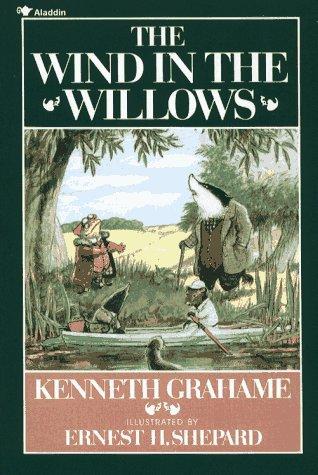
The Wind in the Willows
by Kenneth Grahame · 1908
A mole, a rat, a badger, and a reckless toad prove a story can be gentle and still hold together for a century.
Worth reading? If you want cozy, unhurried nature writing with real prose quality, this beats most modern 'gentle' fiction that's trying to imitate the same mood. Toad's chapters are the most fun; the Rat-and-Mole chapters are the ones that make the book last. Skip it if you need momentum -- this is a book to read slowly, not to race through.
| Author | Kenneth Grahame |
|---|---|
| Published | 1908 |
| Publisher | Scribner |
| Category | Fiction |
| Favorite quote | “There is nothing -- absolutely nothing -- half so much worth doing as simply messing about in boats.” |
The Verdict
The Toad chapters get all the attention – the stolen car, the prison break, the disguise as a washerwoman – but the reason this book has lasted since 1908 is Rat and Mole on the river, doing nothing in particular and being completely content about it. Grahame’s nature writing is genuinely good, not just pleasant filler between plot points.
Skip it if you’re reading to kids who need momentum every page – some of the riverbank chapters are pure mood. But as a quiet antidote to plot-stuffed modern fiction, it’s held up better than almost anything else from its era.
you want unhurried, pastoral English children's fiction with real prose craft -- riverbank afternoons, an obsessive car-mad toad, and genuine warmth between friends
you want pace -- large stretches of this are mood and description rather than plot, and the Toad chapters (car chases, prison escape) sit oddly next to the slower riverbank chapters
Book Summary
Mole abandons his spring cleaning on impulse, meets Rat on the riverbank, and gets pulled into a loose, episodic year among friends: boating, a winter visit to Badger's underground hall, and repeated attempts to save Toad from his own recklessness. There's barely a plot until Toad's obsession with motorcars escalates into theft, arrest, and a prison break, at which point the book briefly turns into a caper before returning to its real subject.
The real subject is friendship and home. Rat's devotion to the river, Mole's homesickness for his own modest burrow, and Badger's steady, unglamorous decency are all treated as more valuable than Toad's chase for the next thrill. Grahame keeps circling back to the idea that a small, known, loved place beats novelty and status -- Toad has the most money and the least peace.
It's also just gorgeously written nature writing wrapped around a children's story, which is why it's stayed in print for over a century and get treated as seriously by adult readers as by kids.
Top 8 Lessons from The Wind in the Willows
- Rat's contentment with river life over any bigger ambition argues that a small, known life can be enough.
- Mole's homesickness for his own humble burrow, even after seeing Badger's grand underground hall, says home isn't about size or status.
- Toad's addiction to whatever new obsession (boats, then caravans, then cars) satirizes restless status-chasing that never actually satisfies him.
- Badger's plain, unglamorous decency is presented as the most trustworthy trait in the book, even though he's the least social character.
- Friends staging an intervention on Toad (locking him in his room over his car obsession) treats real friendship as sometimes meaning you have to be the annoying one.
- The Wild Wood, dangerous and unmapped, represents everything outside the safety of the riverbank community.
- Toad's prison escape and eventual comeuppance shows consequences catching up with recklessness, even for someone rich enough to usually buy his way out.
- The animals retaking Toad Hall from the weasels and stoats argues that a home has to be actively defended, not just owned.
Top 4 Quotes from The Wind in the Willows
"There is nothing -- absolutely nothing -- half so much worth doing as simply messing about in boats."
Kenneth Grahame, The Wind in the Willows
"This is fine!' he said to himself. 'This is better than whitewashing!'"
Kenneth Grahame, The Wind in the Willows
"Poop-poop!"
Kenneth Grahame, The Wind in the Willows
"Believe me, my young friend, there is nothing -- absolutely nothing -- half so much worth doing as simply messing about in boats."
Kenneth Grahame, The Wind in the Willows
Frequently Asked Questions
Is The Wind in the Willows worth reading?
Yes, especially if you want unhurried pastoral fiction with real literary craft rather than a fast-moving plot.
Is The Wind in the Willows just for children?
It's marketed as a children's book but the prose and the theme of home versus restlessness read as well, or better, to adults.
What is the main theme of The Wind in the Willows?
That a small, known, loved home and steady friendships matter more than status, novelty, or the next big thrill -- embodied by contrasting Toad's chase for excitement with Rat and Mole's contentment.
How long does it take to read The Wind in the Willows?
About 4 to 5 hours. It's a short novel but written in a slower, descriptive style than most modern children's fiction.
Ready to read it?
Get The Wind in the Willows on Amazon