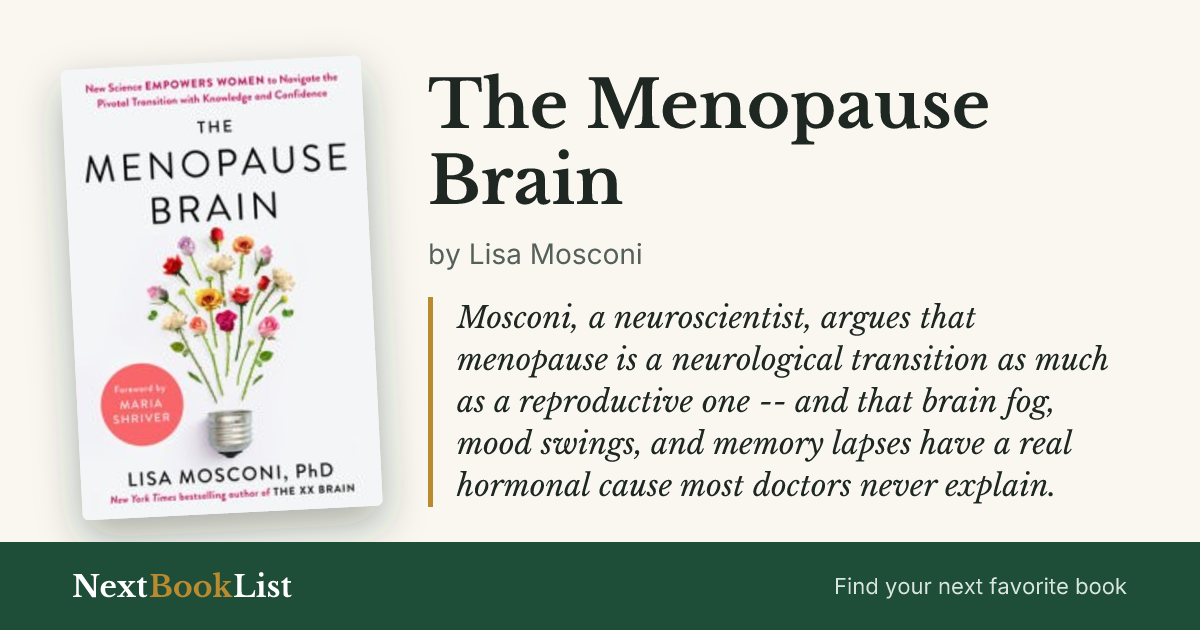
The Menopause Brain
by Lisa Mosconi · 2024
Mosconi, a neuroscientist, argues that menopause is a neurological transition as much as a reproductive one -- and that brain fog, mood swings, and memory lapses have a real hormonal cause most doctors never explain.
Worth reading? Mosconi's core case is overdue: menopause has been treated almost entirely as a reproductive event in medicine, when brain imaging shows real, measurable changes in brain structure and metabolism during the transition. Framing brain fog and memory lapses as neurological, not imagined, is genuinely validating and backed by her own PET-scan research. The book asks more patience of the reader than most health books in this category -- it's built more like a course in menopausal neuroscience than a quick-symptom guide, so it rewards a full read more than a skim.
| Full Title | The Menopause Brain: New Science Empowers Women to Navigate the Pivotal Transition with Knowledge and Confidence |
|---|---|
| Author | Lisa Mosconi |
| Published | 2024 |
| Publisher | Avery |
| Category | Health & Fitness |
| Favorite quote | “Menopause is not the end of anything. It's a transition -- a critical developmental stage in the life of the female brain.” |
The Verdict
Mosconi’s biggest contribution is legitimizing a complaint most women get waved off for. “Brain fog” during perimenopause has long been treated as vague or psychosomatic, and Mosconi’s own brain-imaging work shows it’s neither – there are real, visible changes in how the brain uses energy during this transition. That reframe alone makes the book worth having on hand during perimenopause.
The tradeoff is pace. This isn’t a symptom-by-symptom quick reference; it’s closer to a structured course in menopausal neuroscience, and it asks for a fuller read to get the full payoff rather than rewarding a skim for a specific answer.
Read it if your menopause symptoms have been dismissed as “just stress” or “just aging” and you want the actual neuroscience behind them. Skip it if you want a fast, symptom-by-symptom reference rather than a deeper explainer you sit with over several sessions.
you're in perimenopause or menopause, your brain fog and memory changes have been dismissed as 'just aging' or 'just stress,' and you want the actual neuroscience of what estrogen decline does to the brain
you want a quick symptom-management guide -- this is a research-heavy explainer first and a practical handbook second, closer to a course than a quick-reference
Book Summary
Mosconi's central claim, built substantially on her own brain-imaging research, is that estrogen is a major regulator of brain energy metabolism, and that its decline during perimenopause and menopause produces measurable changes in brain structure and glucose metabolism -- not just mood or reproductive symptoms, but a real neurological transition that's been almost entirely left out of how menopause gets discussed medically.
The book walks through specific symptoms -- brain fog, memory lapses, sleep disruption, mood swings, hot flashes -- and explains each as a downstream effect of estrogen's changing role in the brain, arguing that most women are never told these symptoms have a clear neurological basis, so they get chalked up to stress, aging, or imagination instead.
A further section argues the menopause transition is also a window of both risk and opportunity for long-term brain health -- some of the same changes linked to short-term brain fog are tied to longer-term risk factors for conditions like Alzheimer's, which is why Mosconi frames menopause as a point where proactive brain-health choices (not just symptom management) matter most.
Top 9 Lessons from The Menopause Brain
- Menopause is reframed as a neurological transition, not just a reproductive one -- brain imaging shows measurable changes in structure and glucose metabolism during the shift.
- Estrogen is presented as a major regulator of brain energy metabolism, which is why its decline can produce real cognitive symptoms, not just mood or reproductive ones.
- Brain fog and memory lapses during perimenopause are framed as having a specific, real neurological cause, pushing back on the common dismissal of these symptoms as 'just stress' or 'just aging.'
- The menopause transition is described as happening in stages (perimenopause, menopause, postmenopause), with the brain's biggest adjustment concentrated in the perimenopausal window rather than spread evenly across a woman's later years.
- Some of the same brain changes linked to short-term menopausal brain fog are tied to longer-term risk factors for conditions like Alzheimer's, framing menopause as a meaningful window for proactive brain-health choices.
- Hot flashes and night sweats are connected back to the brain's temperature-regulation centers, not treated as a purely 'hormonal' symptom disconnected from brain function.
- Sleep disruption during menopause is treated as both a symptom of hormonal change and a compounding cause of the memory and mood symptoms attributed to menopause itself.
- Hormone therapy is discussed as one option worth an informed conversation with a doctor, with the book pushing back on decades of both over-caution and under-information about its risks and benefits.
- Lifestyle factors -- diet, exercise, sleep, stress management -- are presented as real levers on how the brain navigates the menopause transition, not as an alternative to acknowledging the biology, but as a complement to it.
Top 1 Quotes from The Menopause Brain
"Menopause is not the end of anything. It's a transition -- a critical developmental stage in the life of the female brain."
Lisa Mosconi, The Menopause Brain
Frequently Asked Questions
Is The Menopause Brain worth reading?
Yes, if you're navigating perimenopause or menopause and want the real neuroscience behind brain fog and memory changes -- Mosconi's brain-imaging research gives the book more scientific weight than most menopause guides, though it reads more like a course than a quick-reference.
What is The Menopause Brain about?
Lisa Mosconi explains menopause as a neurological transition driven by estrogen's changing role in brain energy metabolism, connecting symptoms like brain fog, memory lapses, and mood swings to measurable brain changes rather than dismissing them as unrelated to hormones.
Does The Menopause Brain cover hormone replacement therapy?
Yes -- it discusses hormone therapy as an option worth an informed conversation with a doctor, pushing back on both the overcaution that followed early hormone-therapy scares and the lack of clear information many women receive.
Is The Menopause Brain based on personal research or general reporting?
Both -- Mosconi draws heavily on her own PET-scan studies of the menopausal brain alongside the broader research literature, which is a big part of what distinguishes this book from general-audience menopause guides.
How does The Menopause Brain compare to The Obesity Code or other hormone-focused health books?
Different focus -- The Obesity Code is about insulin and fat storage; The Menopause Brain is specifically about estrogen's role in brain structure and cognition during the menopause transition, aimed at women navigating that specific life stage.
Ready to read it?
Get The Menopause Brain on Amazon